Grevillea, Genus, sericea, Species,
- Genus & species
pink spider flower
Overview
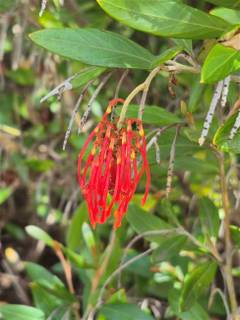
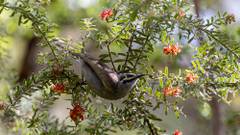
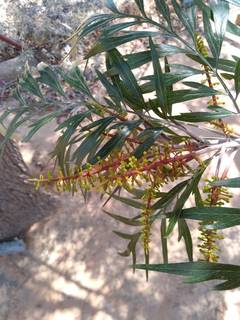
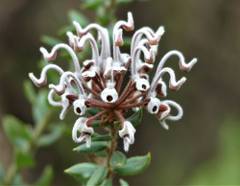
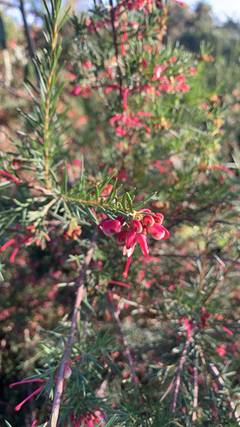
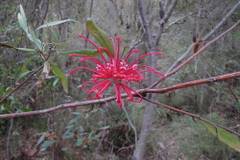
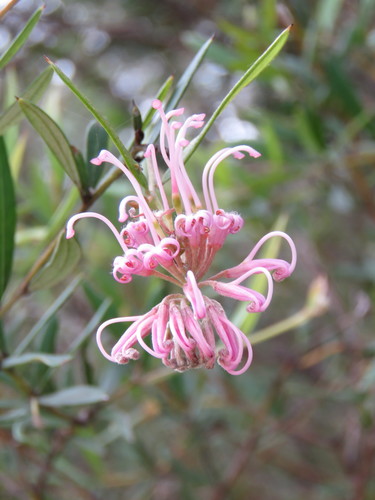
Grevillea sericea is an evergreen shrub growing 1-2 m (3-6.5 ft) tall and wide, native to the sandstone country of central-eastern New South Wales. It has an upright, open habit with slender branches. The narrow leaves are 1-4 cm (0.4-1.6 in) long, flat or with rolled margins, dark green above and silky-hairy beneath, the source of the species name sericea. Clusters of pink, or sometimes white, spider flowers appear at the branch tips, their slender curled styles giving the spidery look, and are carried over much of the year with a peak in winter and spring. The flowers hold nectar taken by honeyeaters and other birds. It grows in heath and open woodland on sandy, low-nutrient, sharply drained soils and tolerates dry spells once established. Many plants are short-lived and become woody and open with age, and the species is intolerant of heavy, wet soils and high-phosphorus fertiliser. Contact with the foliage and flowers can cause skin irritation in some people. Frost damages soft growth, so it performs in milder and coastal districts.
Native Range
Native to central-eastern New South Wales, Australia, where it grows in heath and dry open woodland on sandstone-derived sandy soils, mainly around the Sydney region and adjacent ranges.Suggested Uses
Used in native and habitat gardens, informal screens, and bird-attracting plantings on sandy soils. Suits rockeries and low-water gardens. Spaced 1-1.5 m (3-5 ft) apart in groups.How to Identify
Appearance
Size & Dimensions
Height3'4" - 6'7"
Width/Spread3'4" - 6'7"
Bloom Information
Detailed Descriptions
Flower Description
pink, sometimes whiteFoliage Description
dark green above, silky beneathGrowing Conditions
Sun Requirements
Requires 6-9 hours of direct sunlight daily
• Full Sun: 6+ hours of direct sunlight
• Partial Shade: 3-6 hours of direct sunlight
• Full Shade: Less than 3 hours of direct sunlight
Care & Maintenance
Care Guide
Grow in full sun to light shade on light, sharply drained sandy or gravelly soil of low fertility. Water to establish, then rely on rainfall, as the plant tolerates dry spells and rots in wet ground. Use low-phosphorus native fertiliser only, since the family is damaged by phosphorus. A light trim after the main flush keeps the bush dense and prolongs its life. Contact with foliage can irritate skin in sensitive people. Frost damages soft new growth, so it performs in frost-free and coastal districts.Pruning
Tip prune lightly after the main flowering flush to keep the bush compact and encourage fresh flowering wood. The species reshoots from semi-hard wood but responds poorly to hard cutting into bare old stems. Replace woody, sparse plants rather than cutting them back hard.Pruning Schedule
Prune: October–November
spring
Container Growing
Suitable for container growing
Minimum container size: 5 gallons