Shrubs
Grevillea, Genus, 'Honey Gem', Cultivar,
- Genus
- Cultivar
Honey Gem grevillea
Overview
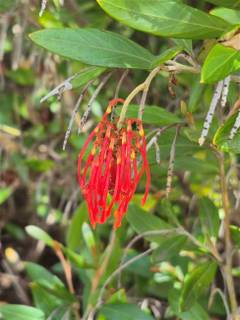
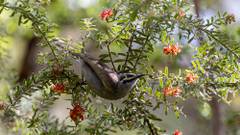
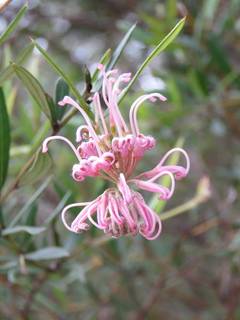
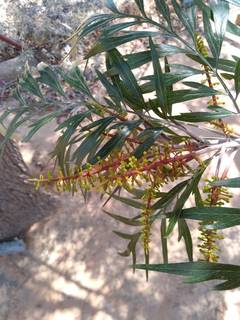
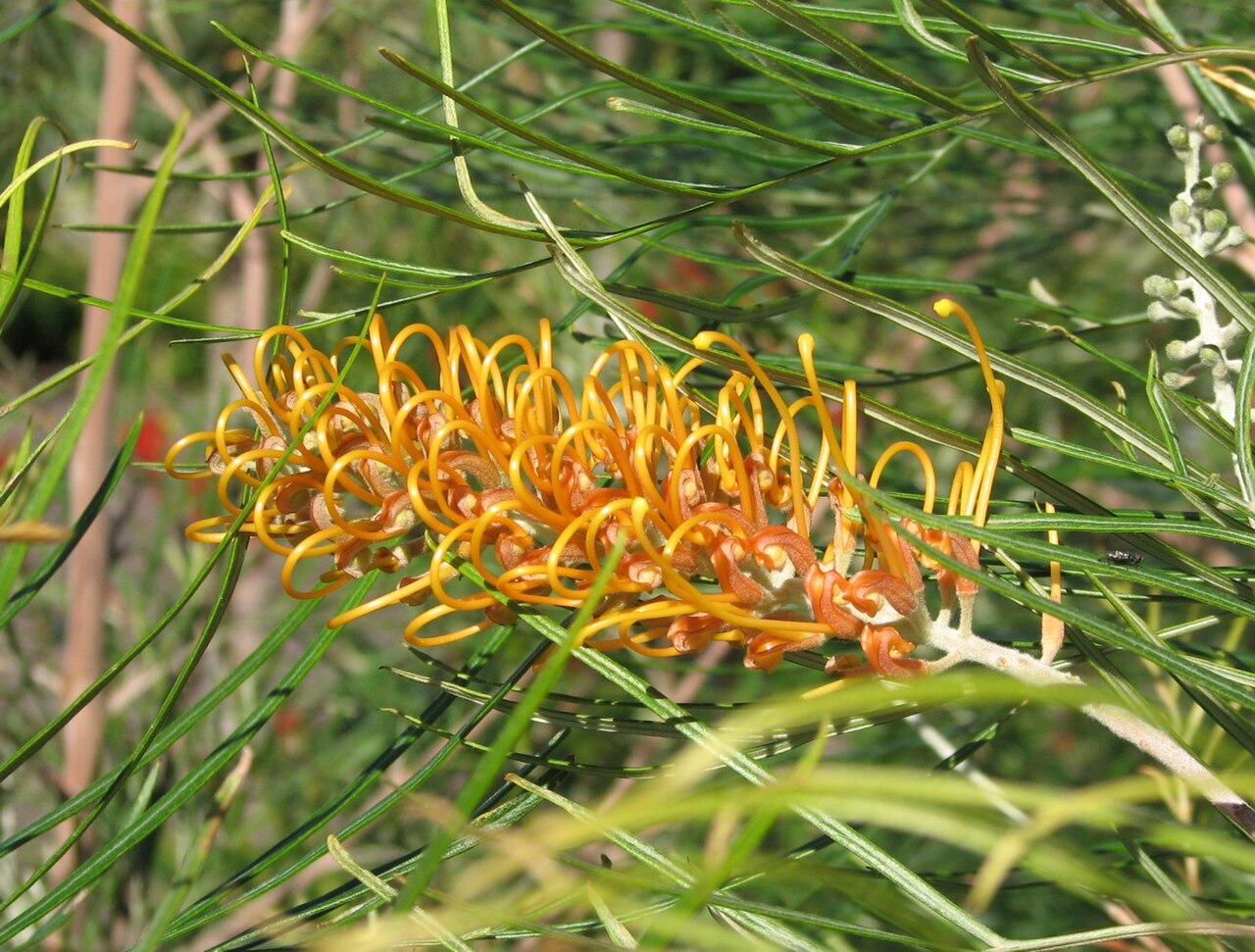
Grevillea 'Honey Gem' is a Grevillea hybrid cultivar grown as a large evergreen shrub, 8–13 feet (2.4–4 m) tall and 6–10 feet (1.8–3 m) wide, with an upright, open habit. Foliage is dark green and leathery. Flowers are held in toothbrush-shaped racemes 3–6 inches (8–15 cm) long, colored gold to orange-apricot, with long, curved styles protruding from the flower head. Flowering extends over many months in mild climates, with the heaviest flush in late winter and spring. Nectar is produced heavily and is visited by honeyeaters, bees, and other insects. Growth is fast at 18–30 inches (45–75 cm) per year in favorable conditions. Plants are sensitive to phosphorus-rich fertilizers and to waterlogged soil, and frost below about 23°F (-5°C) damages new growth. Sap and pollen may irritate skin in sensitive individuals, as reported for several grevillea cultivars.
Native Range
The cultivar is a garden hybrid of Australian Grevillea species; the genus is native to Australia, with a few species in New Caledonia, Sulawesi, and New Guinea.Suggested Uses
Used as a screen, informal hedge, or background shrub in bird gardens, spaced 5–8 feet (1.5–2.4 m) apart. Cut flowers are used in arrangements.How to Identify
Appearance
Size & Dimensions
Height8' - 13'
Width/Spread6' - 10'
Colors
Bloom Information
Blooms for 6–9 months in mild climates, with the heaviest flush from late winter through spring (July–November) and scattered flowers at other times. Each raceme opens over 2–3 weeks. Honeyeaters and other nectar-feeding birds visit the flowers throughout the day.
Detailed Descriptions
Flower Description
Gold to orange-apricotFoliage Description
Dark greenGrowing Conditions
Sun Requirements
Requires 6-10 hours of direct sunlight daily
• Full Sun: 6+ hours of direct sunlight
• Partial Shade: 3-6 hours of direct sunlight
• Full Shade: Less than 3 hours of direct sunlight
Care & Maintenance
Care Guide
Grows in full sun (6–10 hours) and well-drained soil of any texture with a pH of 5.5–7.5. Hardy to about 23°F (-5°C), equivalent to USDA zones 9–11. Established plants tolerate dry periods and are watered every 2–3 weeks in summer. Phosphorus-rich fertilizers damage roots, so only low-phosphorus products are used. Waterlogged soil causes root rot, and mulch of 2–3 inches (5–8 cm) moderates soil temperature. Container plants need a deep pot and free-draining mix.Pruning
Pruning after each main flush removes spent racemes and one-third of the season's growth, maintaining a dense form. Cuts are made into leafy wood, since old leafless stems resprout poorly. Annual pruning limits the height to 6–8 feet (1.8–2.4 m) if required.Pruning Schedule
Prune: November–December
late spring
Container Growing
Suitable for container growing
Minimum container size: 10 gallons