Grevillea, Genus, robusta, Species,
- Genus & species
silk oak
Overview
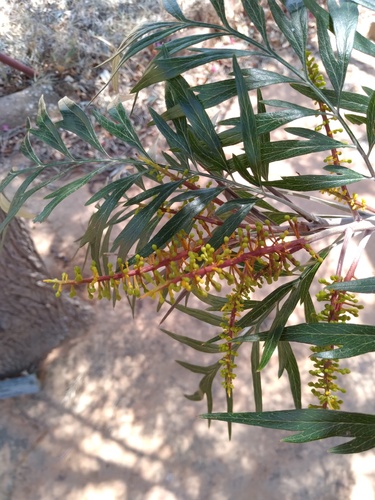
Grevillea robusta is a semi-evergreen to evergreen tree reaching 50-100 feet (15-30 m) tall with a single straight trunk and a conical to spreading crown. The leaves are fern-like, bipinnate, 6-12 inches (15-30 cm) long, dark green above and silvery-grey beneath, and some or all are shed briefly before flowering in dry seasons. Golden-orange flowers are massed in one-sided cylindrical clusters 3-6 inches (8-15 cm) long, resembling a toothbrush, in spring to early summer. The flowers are rich in nectar and draw birds and insects. The fruit is a boat-shaped woody follicle about 0.8 inch (20 mm) long containing winged seeds. Growth is fast, with young trees adding 3-5 feet (0.9-1.5 m) per year. Contact with the foliage, flowers, and sawdust can cause skin irritation and dermatitis in sensitive individuals. The species tolerates a wide range of soils and drought once established but is frost-sensitive when young.
Native Range
Native to eastern Australia, in subtropical coastal and near-coastal districts of southeastern Queensland and northeastern New South Wales. Grows in dry rainforest and riverine forest, and is widely planted in subtropical and warm-temperate regions worldwide.Suggested Uses
Used as a shade, street, and specimen tree in large gardens and parks, spaced 25-40 feet (7.5-12 m) apart. Grown for timber and as a nurse tree in plantations and on coffee and tea estates. Its eventual size and brittle limbs limit its use in small gardens and near buildings.How to Identify
Appearance
Size & Dimensions
Height50' - 100'
Width/Spread20' - 35'
Bloom Information
Detailed Descriptions
Foliage Description
dark greenGrowing Conditions
Sun Requirements
Requires 6-12 hours of direct sunlight daily
• Full Sun: 6+ hours of direct sunlight
• Partial Shade: 3-6 hours of direct sunlight
• Full Shade: Less than 3 hours of direct sunlight
Care & Maintenance
Care Guide
Grows in full sun in well-drained soils and tolerates sandy, loamy, and clay types. Water young trees through the first two summers; established trees are drought-tolerant and need little irrigation. Phosphorus-rich fertilizers can damage the roots. The tree is frost-sensitive when young and may shed leaves in cold or dry spells. Contact with foliage and sawdust causes skin irritation in sensitive individuals. Few serious pests affect it, though scale and borers occur.Pruning
Remove dead, damaged, or crossing branches in late winter to shape young trees. Mature trees need little pruning beyond deadwood removal. Heavy pruning can produce vigorous upright regrowth and weakly attached limbs.Pruning Schedule
Prune: July–August
winter