Grevillea, Genus, lavandulacea, Species,
- Genus & species
lavender grevillea
South Australia and western Victoria
Overview
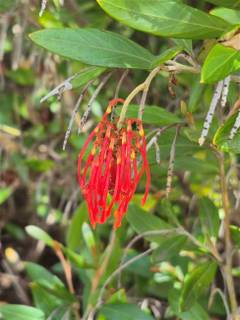
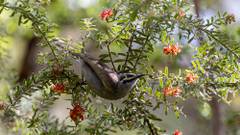
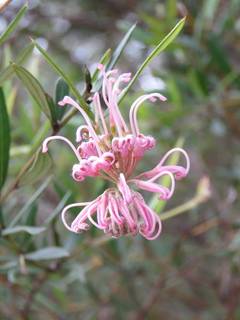
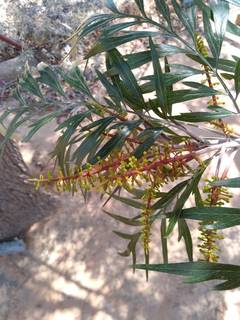
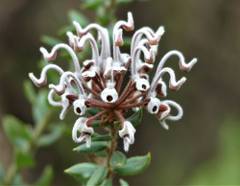
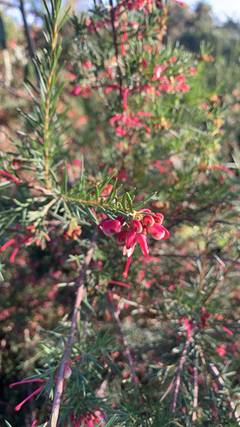
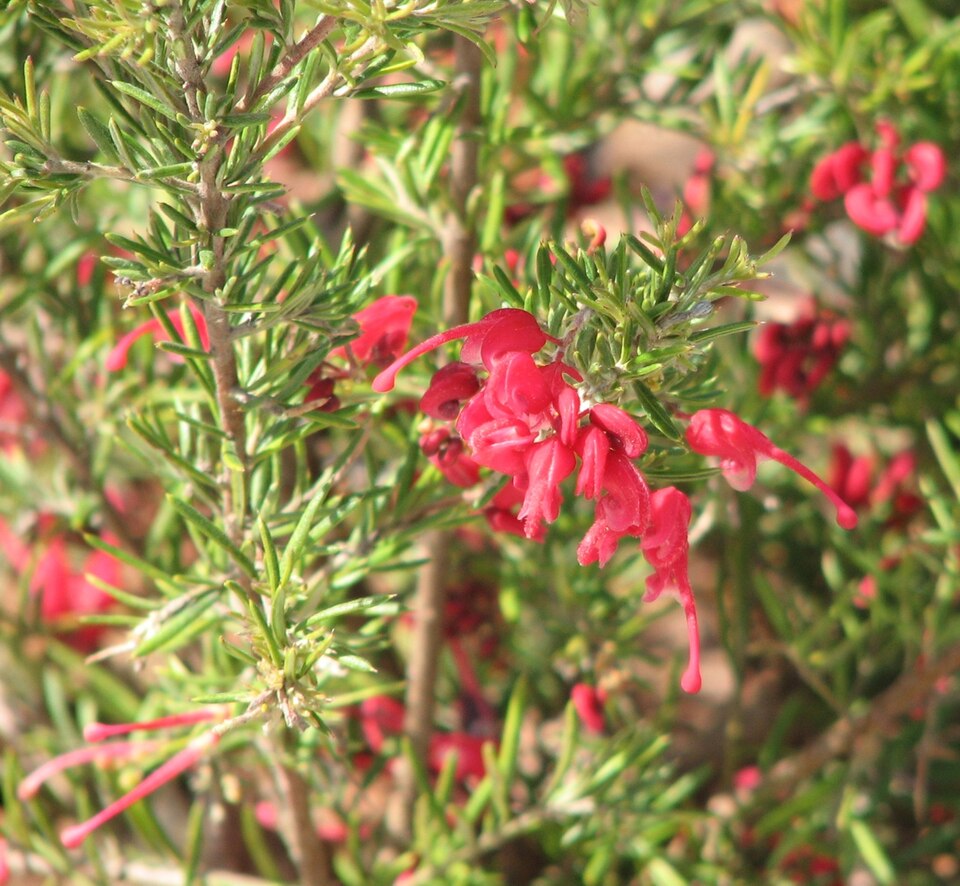
Grevillea lavandulacea is an evergreen shrub ranging from a low spreading form 1.5-3 feet (0.5-1 m) tall to an upright form 3-6 feet (1-2 m) tall, with a spread of 3-6 feet (1-2 m). Leaves are narrow and needle-like, 0.4-1 inch (10-25 mm) long, grey-green and softly hairy, crowded along the stems. Clusters of spider-type flowers in pink, red, and cream open at the branch tips, each cluster 0.8-1.5 inches (20-40 mm) across, with strongly curved styles. Flowering is heaviest in winter and spring, with scattered bloom at other times. The nectar-bearing flowers draw honeyeating birds and insects. Forms vary widely across the natural range in leaf width, flower colour, and habit. The plant tolerates dry conditions and low-fertility soils once established but is sensitive to root rot in wet, heavy ground and to phosphorus in fertilisers. Lifespan is generally 8-15 years, with plants becoming woody and sparse at the base with age.
Native Range
Native to South Australia and western Victoria, where it grows in mallee, open woodland, and heath on well-drained sandy and rocky soils. Found mainly in regions with dry summers and cool, moist winters.Suggested Uses
Planted in low-water and native gardens, on embankments, and as an informal low hedge or groundcover depending on the form, spaced 3-5 feet (1-1.5 m) apart. Low spreading forms cover slopes and spill over walls. Grows in large containers of at least 10 gallons (38 L) with a free-draining low-phosphorus mix.How to Identify
Appearance
Size & Dimensions
Height1'6" - 6'
Width/Spread3' - 6'
Colors
Bloom Information
Flowers most heavily from late autumn through spring, mainly May to November in its native range, with scattered flowers in other months. Individual clusters last 3-5 weeks, and a plant carries bloom over several months. The cool-season flowers hold nectar at a time when few other shrubs are in flower.
Detailed Descriptions
Flower Description
pink to redFoliage Description
grey-greenGrowing Conditions
Sun Requirements
Requires 6-10 hours of direct sunlight daily
• Full Sun: 6+ hours of direct sunlight
• Partial Shade: 3-6 hours of direct sunlight
• Full Shade: Less than 3 hours of direct sunlight
Care & Maintenance
Care Guide
Establishes in well-drained sandy, loamy, or rocky soil in full sun to light shade and tolerates extended dry spells once the root system is developed. Young plants need water through the first one to two summers, then water only during prolonged drought, as established plants are harmed by constant moisture. Phosphorus-sensitive roots are damaged by standard fertilisers, so low-phosphorus native blends are used instead. Root rot from Phytophthora develops in poorly drained or overwatered soil. Honeyeaters and bees visit the flowers. A light trim after the main flush keeps plants dense and slows the bare, woody base that develops with age.Pruning
Light tip pruning after the main flowering flush maintains a compact, bushy habit. Cutting back into bare old wood is poorly tolerated and may not reshoot, so trimming is kept within green growth. Removing spent flower clusters reduces seed set.Pruning Schedule
Prune: November–December
springsummer
Container Growing
Suitable for container growing
Minimum container size: 10 gallons