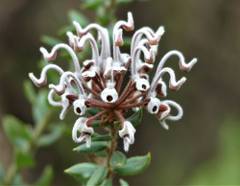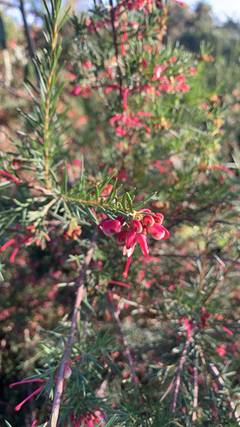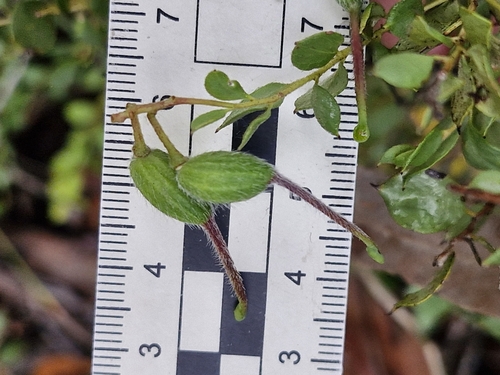
Grevillea, Genus, mucronulata, Species,
- Genus & species
green spider flower
Overview
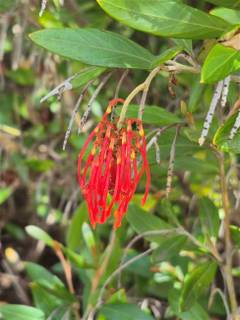
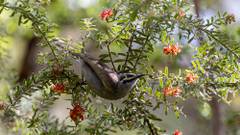
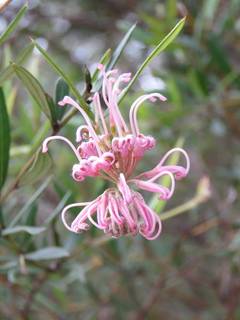
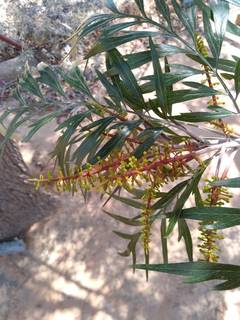
Grevillea mucronulata is an evergreen shrub 3-10 feet (1-3 m) tall and 3-8 feet (0.9-2.4 m) wide, with a spreading, sometimes straggling habit. The stiff leaves are 0.6-2 inches (1.5-5 cm) long, narrow to oval, and tipped with a short sharp point. Spider-type flower clusters appear from autumn to spring in green, yellow-green, and red tones, with curved styles that give the flowerheads a spidery outline. The flowers hold nectar and draw honeyeaters and other nectar-feeding birds. It grows in dry sclerophyll forest and woodland on sandstone-derived sandy soils in eastern New South Wales. The plant grows on well-drained, low-phosphorus soils and can decline in heavy or fertilised ground because, like other Grevillea, it is sensitive to high phosphorus. Plant form varies between populations, from low and spreading to more erect. Contact with the foliage or sap causes skin irritation in some people.
Native Range
Grevillea mucronulata is native to eastern New South Wales, Australia, where it grows in dry sclerophyll forest, heath, and woodland on sandy, sandstone-derived soils.Suggested Uses
Grown in native and habitat gardens, low-phosphorus shrub borders, and bird-attracting plantings for its autumn-to-spring nectar flowers. Suited to informal screens and dry, sandy banks in frost-free to light-frost areas.How to Identify
Appearance
Size & Dimensions
Height3' - 10'
Width/Spread3' - 8'
Bloom Information
Detailed Descriptions
Flower Description
green to redFoliage Description
greenGrowing Conditions
Sun Requirements
Requires 6-10 hours of direct sunlight daily
• Full Sun: 6+ hours of direct sunlight
• Partial Shade: 3-6 hours of direct sunlight
• Full Shade: Less than 3 hours of direct sunlight
Care & Maintenance
Care Guide
Grevillea mucronulata grows in full sun to light shade in well-drained sandy or gravelly soil low in phosphorus. Once established it tolerates drought and needs little or no supplementary feeding, and phosphorus-rich fertilisers can damage the roots. It withstands light frost and is suited to a warm, open position. Growth can be open and straggly, and light tip pruning keeps the plant bushier. It is propagated from cuttings or from seed, though seed can be slow and erratic to germinate.Pruning
Light tip pruning after flowering keeps the shrub compact and encourages branching. The plant tolerates cutting back into younger wood but resprouts slowly from bare old stems. Removing spent flower clusters is not necessary.Container Growing
Suitable for container growing
Minimum container size: 5 gallons