Glyceria, Genus, maxima, Species,
- Genus & species
reed meadowgrass
Overview
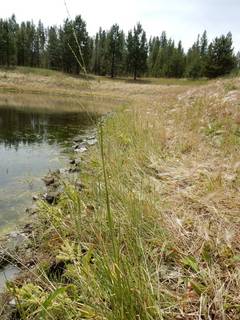
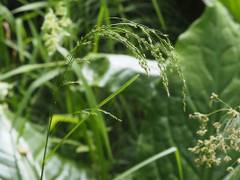
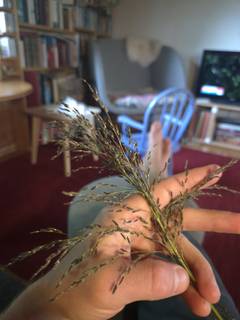
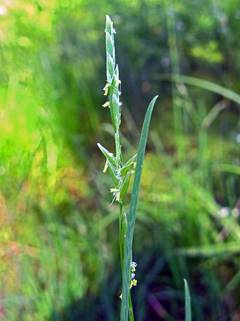
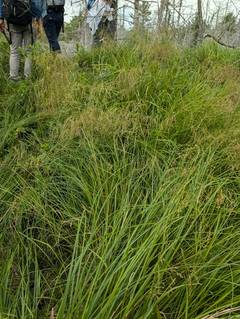
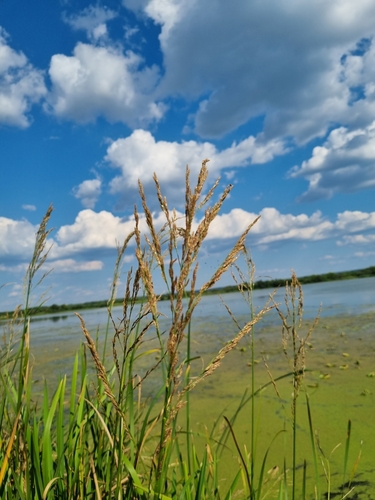
Glyceria maxima is a tall, rhizomatous aquatic grass that forms dense stands in shallow water and on wet ground, reaching 90-250 cm (3-8 ft) tall. Spreading rhizomes and rooting lower stems weave it into solid colonies that can choke ditches and pond margins. The flat leaf blades are bright green, 8-20 mm (0.3-0.8 in) wide and up to 60 cm (24 in) long, with a short brownish ligule and a small dark spot where blade meets sheath. In summer the stems carry an open, much-branched flower head (panicle) 15-45 cm (6-18 in) long, green to purple-tinged, that nods as the seed ripens. The plant spreads fast and roots from floating stem pieces, so it has become an aggressive invader of waterways in North America and elsewhere. Under stress the foliage can build cyanide compounds that have poisoned grazing livestock. Top growth dies back to the rhizome in winter and the dead stems collapse into the water.
Native Range
Glyceria maxima is native to Europe and temperate Asia, growing in the shallow margins of rivers, ponds, ditches, and slow streams. It has been introduced to North America, New Zealand, and elsewhere, where it is listed as a noxious or invasive weed of wetlands.Suggested Uses
Used in large wildlife ponds, lake margins, and reedbed filtration for cover and bank stabilization, mainly in its less vigorous variegated form. It binds soft mud along water edges. Its aggressive spread rules out the plain green species for small ponds and natural waterways.How to Identify
Appearance
Size & Dimensions
Height3' - 8'
Width/Spread2' - 6'
Bloom Information
Wind-pollinated panicles open from June to August (early to late summer), green at first and ageing to straw or purple-tinged. The branched heads nod as the seed fills. Flowering stems and seed heads persist into autumn before collapsing.
Detailed Descriptions
Flower Description
green to purple-tingedFoliage Description
bright greenGrowing Conditions
Sun Requirements
Requires 6-12 hours of direct sunlight daily
• Full Sun: 6+ hours of direct sunlight
• Partial Shade: 3-6 hours of direct sunlight
• Full Shade: Less than 3 hours of direct sunlight
Care & Maintenance
Care Guide
Glyceria maxima grows in full sun in shallow standing water up to about 75 cm (30 in) deep or in permanently wet, fertile soil. It tolerates a wide pH from 5.5 to 8.0 and rich, silty mud. The vigorous rhizomes spread fast and root from stem fragments, so it is grown only in lined ponds, baskets, or contained beds where its spread can be checked, and is banned from sale in some regions. It needs no feeding in fertile water. It is increased by dividing rhizomes in spring. Cutting stems below the waterline through summer weakens established stands.Pruning
Dead stems are cut to the waterline or base in late winter before new shoots appear. Repeated summer cutting below water level reduces the spread of established stands. Rhizomes are dug out where colonies need to be contained.Pruning Schedule
Prune: February–March
winter
Container Growing
Suitable for container growing
Minimum container size: 5 gallons