Glyceria, Genus, spp., Multiple species,
- Genus
- Multiple species
sweet grasses
Northern Hemisphere temperate zones across Europe, Asia, and North America
Overview
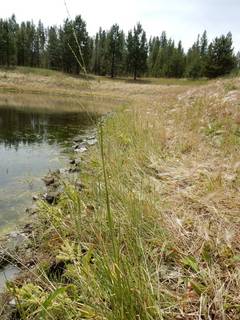
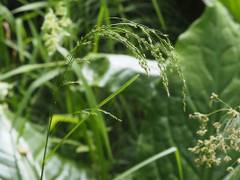
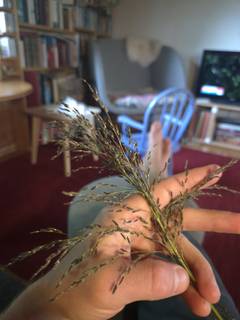
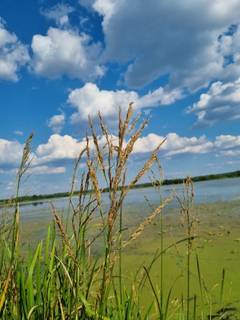
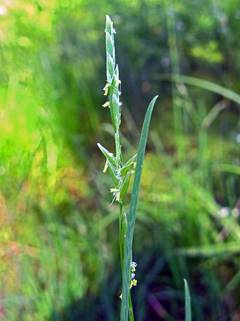
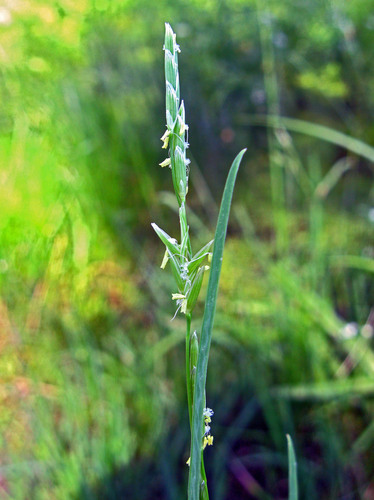
Glyceria is a genus of about 40 species of perennial aquatic and semi-aquatic grasses in the family Poaceae, distributed across temperate regions of the Northern Hemisphere with a few species in the Southern Hemisphere. Plants spread by creeping rhizomes and form colonies in shallow water, pond margins, ditches, and wet meadows, reaching 1-8 ft (0.3-2.5 m) tall depending on species. The flat leaf blades measure 4-24 in (10-60 cm) long and 0.2-0.8 in (5-20 mm) wide, sometimes floating on the water surface in deeper sites. Open or narrow panicles, 4-16 in (10-40 cm) long, carry cylindrical spikelets that ripen from green to straw-brown. Several species, including G. maxima and G. striata, accumulate cyanogenic compounds in the foliage and have caused cyanide poisoning in grazing livestock. The genus is tied to wetland habitats and rarely persists in dry soil. Common names such as manna grass and sweet grass refer to the sweet grain of some species, historically gathered for food in parts of Europe. Colonies can expand rapidly along waterways, and some species spread weedily outside their native range.
Native Range
Species occur across temperate Eurasia and North America, with the greatest diversity in Europe and the northern United States. A smaller number extend into temperate South America, southern Africa, and Australia. Glyceria grows in freshwater wetlands throughout this range.Suggested Uses
Planted along pond and stream margins and in rain gardens for erosion control and wetland restoration. Variegated forms of G. maxima are grown as marginal plants in water gardens, usually in submerged containers. The dense colonies supply cover and seed for waterfowl and marsh birds.How to Identify
Appearance
Size & Dimensions
Height1' - 8'
Width/Spread1' - 3'
Bloom Information
Flowering panicles emerge from late spring through summer, generally May to August across the genus. Wind-pollinated florets shed pollen over several weeks, and the grain ripens by late summer to early autumn. Flowering shifts later at higher latitudes and elevations.
Detailed Descriptions
Flower Description
green maturing to straw-brownFoliage Description
green to yellow-greenGrowing Conditions
Sun Requirements
Requires 4-8 hours of direct sunlight daily
• Full Sun: 6+ hours of direct sunlight
• Partial Shade: 3-6 hours of direct sunlight
• Full Shade: Less than 3 hours of direct sunlight
Care & Maintenance
Care Guide
Most species grow in full sun to part shade in consistently wet soil or shallow standing water up to 12 in (30 cm) deep. They tolerate a soil pH from about 5.5 to 7.5 and adapt to clay, loam, and silt substrates with high organic content. Growth is strongest in nutrient-rich water, and colonies spread by rhizome into dense stands. In garden ponds the rhizomes are often confined to containers to limit spread. Plants die back to the rhizome after frost and regrow in spring.Pruning
Old foliage is cut to the waterline in late autumn or early spring before new shoots emerge. Dividing the rhizome mass every few years limits the spread of established colonies. Removing seed heads before they ripen reduces self-seeding.Container Growing
Suitable for container growing
Minimum container size: 3 gallons