Glyceria, Genus, elata, Species,
- Genus & species
tall mannagrass
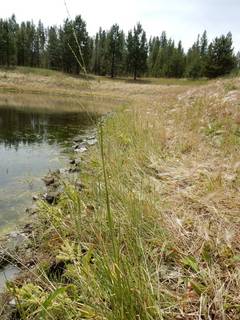
Alaska south through British Columbia, Washington, Oregon, California to Baja California; east through the Rocky Mountains; streambanks, wet mountain meadows, pond margins, and shallow-water edges from sea level to 9,000 feet (2,750 m)
Overview
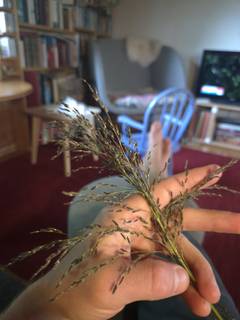
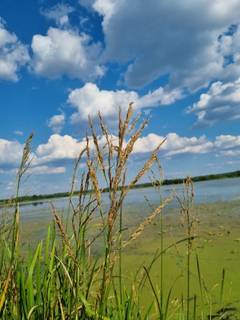
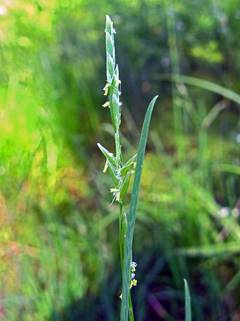
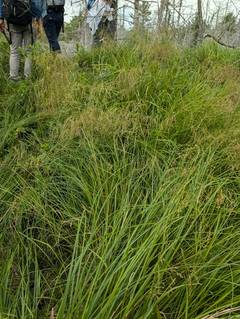
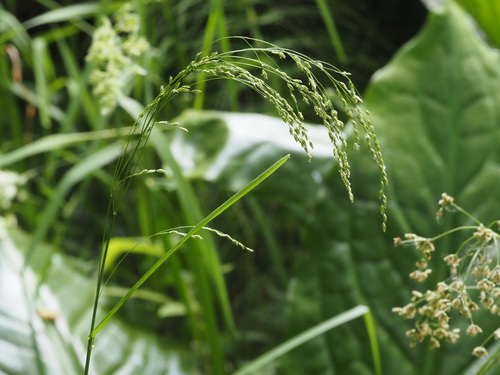
Glyceria elata is a robust rhizomatous wetland grass of the family Poaceae, growing 3-5 feet (90-150 cm) tall in colonies that expand vigorously through long underground stems. Foliage is bright to medium green, with flat leaf blades 0.2-0.5 inch (5-12 mm) wide that arch outward from the culm. Inflorescences are open spreading panicles 6-12 inches (15-30 cm) long with widely diverging branches bearing oval spikelets 0.16-0.28 inch (4-7 mm) long containing 5-8 florets each. The species spreads aggressively by rhizome 18-36 inches (45-90 cm) per year in saturated soils and forms dense single-species stands along stream banks; this rhizomatous habit makes the species too vigorous for small garden plantings. Foliage greens up in April, flowers June through August, and goes dormant by mid-October. Native populations cover montane streambanks, wet meadows, sedge fens, and shallow-water margins across western North America.
Native Range
Native to western North America from Alaska south through British Columbia, Washington, Oregon, and California to Baja California, and east through the Rocky Mountains. In the Pacific Northwest, populations occur along montane stream banks, in wet mountain meadows, and at pond margins from sea level to 9,000 feet (2,750 m).Suggested Uses
Used in large-scale wetland restoration, riparian buffer plantings, and constructed treatment wetlands at one-acre (0.4 ha) and larger scales. Spaced 24-36 inches (60-90 cm) apart at planting; colonies merge within 2 seasons. Aggressive rhizomes restrict use to large naturalistic plantings and exclude small garden ponds where the species would overtake adjacent plantings.How to Identify
Appearance
Size & Dimensions
Height3' - 5'
Width/Spread1'6" - 3'
Bloom Information
Panicles emerge in mid-June and continue producing through August, with each clump in active flower for 6-8 weeks. Spikelets ripen from green to straw-tan by mid-September and shatter through October, with seed dispersing on flowing water and saturated soil.
Detailed Descriptions
Flower Description
green open spreading panicles fading to straw colorFoliage Description
bright to medium green; flat blades 0.2-0.5 inch (5-12 mm) wideGrowing Conditions
Sun Requirements
Requires 4-10 hours of direct sunlight daily
• Full Sun: 6+ hours of direct sunlight
• Partial Shade: 3-6 hours of direct sunlight
• Full Shade: Less than 3 hours of direct sunlight
Care & Maintenance
Care Guide
Plant in saturated mineral or organic soils ranging from clay to silty loam to organic peat in the pH range 5.0-7.0, in part shade to full sun. Soils must remain saturated through the growing season; the species fails in sites that dry out in summer. No fertilizer is required in mineral wetland soils. Rhizomes spread 18-36 inches (45-90 cm) per year and a single plant can colonize 200 square feet (18.6 sq m) within 4 years. Aggressive spread restricts use to restoration sites of one acre (0.4 ha) or larger, or contained sites with a permanent root barrier and continuous water supply.Pruning
Cut spent culms and dormant foliage to the rhizome in late winter (February-March) using a brush mower or string trimmer for large stands. No deadheading is required; seed heads persist through winter as habitat structure. Excavate rhizomes to limit colony spread on a 3-4 year cycle in contained sites.Pruning Schedule
Prune: February–March
late spring