Glyceria, Genus, borealis, Species,
- Genus & species
northern mannagrass
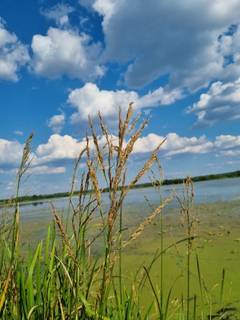
Circumboreal — northern North America from Alaska to Newfoundland and south through the Rocky Mountains and Pacific Northwest, plus Europe and Asia; shallow water, pond margins, lake shores, and wet meadows from sea level to 8,000 feet (2,440 m)
Overview
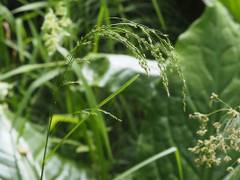
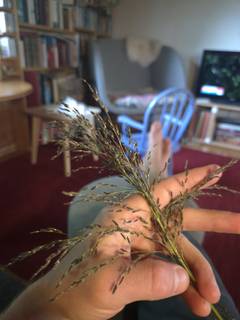
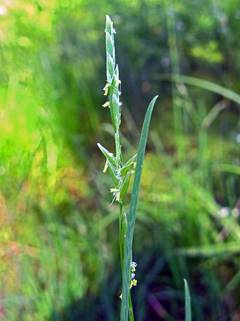
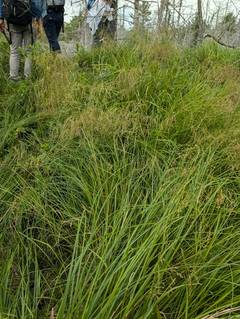
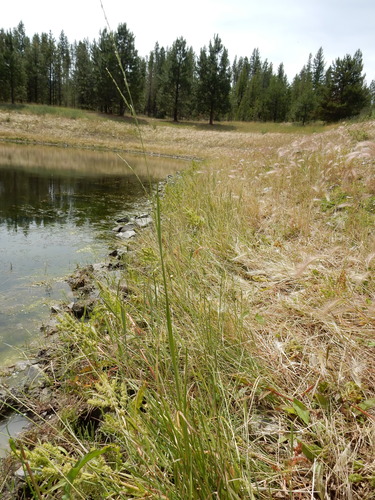
Glyceria borealis is a rhizomatous semi-aquatic grass of the family Poaceae, growing 18-48 inches (45-120 cm) tall with culms that root at the lower nodes when they contact wet soil or shallow water. Foliage is bright green, with flat to V-folded leaf blades 0.08-0.2 inch (2-5 mm) wide that often float on the water surface in shallow ponds. Inflorescences are narrow elongated panicles 6-16 inches (15-40 cm) long with appressed branches bearing cylindrical spikelets 0.4-0.6 inch (10-15 mm) long and 6-12 florets per spikelet. The species spreads by rhizome and stoloniferous rooting at submerged nodes, forming dense colonies in shallow water 2-12 inches (5-30 cm) deep; it cannot persist in dry soils. Foliage greens up in April, flowers June through August, and goes dormant by mid-October. Native populations cover shallow pond margins, slow stream backwaters, lake edges, and seasonal pools across the boreal zone of three continents.
Native Range
Circumboreal in distribution, occurring across northern North America from Alaska to Newfoundland and south through the Rocky Mountains and Pacific Northwest to northern California, with populations also in Europe and northern Asia. In the Pacific Northwest, it grows in shallow ponds, lake margins, and stream backwaters from sea level to 8,000 feet (2,440 m).Suggested Uses
Used in pond-margin plantings, constructed treatment wetlands, and restoration of shallow-water habitats for waterfowl forage. Spaced 18-24 inches (45-60 cm) apart at planting; colonies merge within 2 seasons. The stoloniferous spread restricts use to ponds larger than 100 square feet (9.3 sq m) and excludes formal water gardens where the species would overtake adjacent plantings.How to Identify
Appearance
Size & Dimensions
Height1'6" - 4'
Width/Spread1' - 1'6"
Bloom Information
Panicles emerge in mid-June and continue producing through August, with each clump in active flower for 6-8 weeks. Spikelets ripen from green to straw-tan by September and persist on the standing culms into October before shattering and dispersing on the water surface.
Detailed Descriptions
Flower Description
green narrow elongated panicles fading to straw colorFoliage Description
bright green; flat to folded blades 0.08-0.2 inch (2-5 mm) wide, often floatingGrowing Conditions
Sun Requirements
Requires 4-10 hours of direct sunlight daily
• Full Sun: 6+ hours of direct sunlight
• Partial Shade: 3-6 hours of direct sunlight
• Full Shade: Less than 3 hours of direct sunlight
Care & Maintenance
Care Guide
Plant in saturated mineral or organic soil at the edge of ponds in shallow water 2-12 inches (5-30 cm) deep, in full sun to part shade. Soils ranging from clay to silty loam to organic peat in the pH range 5.0-7.0 are tolerated. Water depth must remain constant; the species fails when ponds dry out in late summer. No fertilizer is required in mineral wetland soils. Stoloniferous rooting at submerged nodes spreads the colony 12-24 inches (30-60 cm) per year, which limits use to large ponds and naturalistic restoration sites with at least 50 square feet (4.6 sq m) of available shallow-water margin.Pruning
Cut spent culms to the rhizome in late winter (February-March) using long-handled shears or a wading rake. No deadheading is required. Thin the colony every 3-4 years by lifting and discarding sections that have spread beyond the desired footprint.Pruning Schedule
Prune: February–March
late spring