Glyceria, Genus, grandis, Species,
- Genus & species
American manna grass
Overview
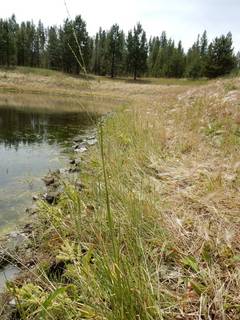
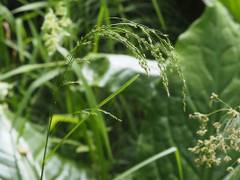
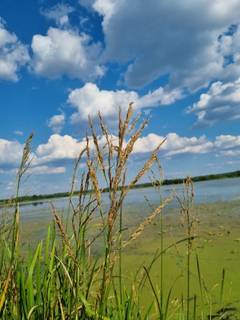
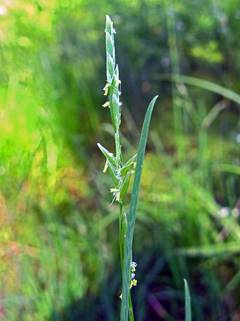
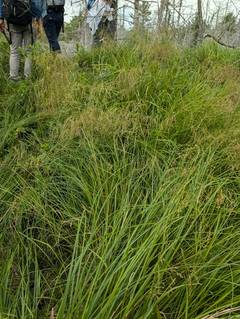
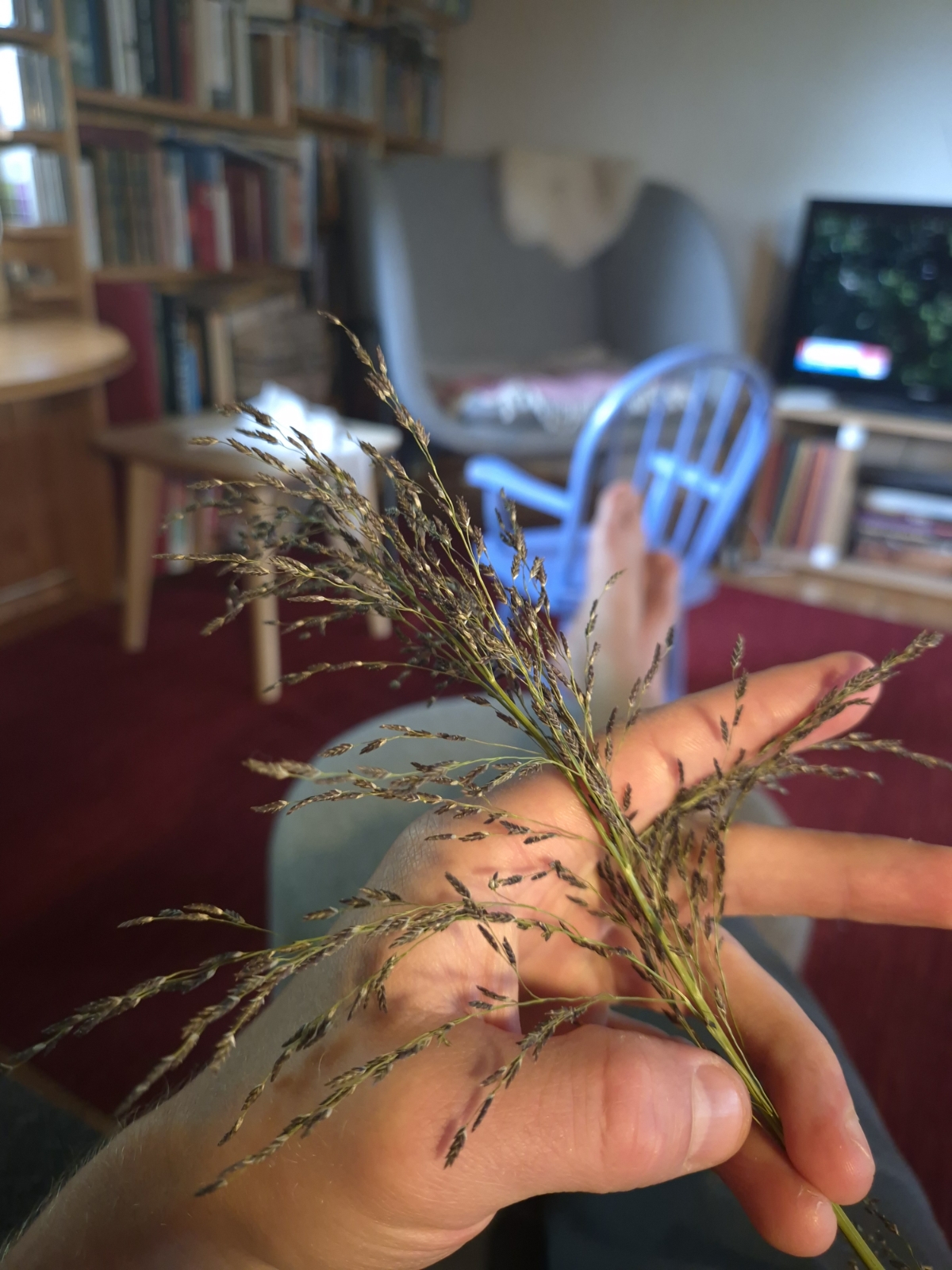
Glyceria grandis is a tall, rhizomatous perennial cool-season grass reaching 3-5 feet (90-150 cm) tall and forming spreading colonies 3-6 feet (90-180 cm) wide via creeping rhizomes. Stems (culms) are stout, hollow, and 0.2-0.4 inch (5-10 mm) thick at the base. Leaf blades are flat, 0.3-0.6 inch (8-15 mm) wide, 6-16 inches (15-40 cm) long, and bright green to slightly glaucous, with rough margins. Sheaths are closed, a Glyceria genus character, and do not split. Flower panicles are open and pyramidal, 8-16 inches (20-40 cm) long, with widely spreading branches drooping at maturity; spikelets are 4-6 mm long, purplish at first, drying tan. Bloom occurs from June through August. Caryopses (seeds) ripen in August-September and are eaten by waterfowl. Plants form dense single-species stands in shallow standing water and along stream margins, persisting 10-20 years on suitable wet sites. Foliage dies back to the rhizome system after the first hard frost; new shoots emerge from rhizomes in early spring as soil thaws.
Native Range
Native to North America from Alaska and Newfoundland south through most of Canada and the northern United States, extending south through the Rocky Mountains to New Mexico and along the Pacific Coast to northern California. Found in marshes, wet meadows, beaver ponds, ditches, slow streams, and pond margins at 0-9,000 feet (0-2,750 m) elevation, often in shallow standing water 2-12 inches (5-30 cm) deep.Suggested Uses
Used in pond margins, rain gardens, constructed wetlands, and stream-bank stabilization plantings at 24-36 inch (60-90 cm) spacing. Suited to waterfowl habitat plantings and water quality treatment cells where rhizome spread is acceptable. Performs poorly in dry sites, mixed perennial borders, and any planting where contained spread is required.How to Identify
Appearance
Size & Dimensions
Height3' - 5'
Width/Spread3' - 6'
Bloom Information
Flower panicles emerge from late June through July, with peak bloom in mid-July. Individual panicles last 4-6 weeks before drying to tan and dispersing seed in August through September. Plants in deeper water bloom 1-2 weeks later than those on saturated banks. Bloom is reduced in years with prolonged drawdown of habitat water levels.
Detailed Descriptions
Flower Description
purplish drying to tanFoliage Description
bright green to slightly glaucous; flat, 8-15 mm wide bladesGrowing Conditions
Sun Requirements
Requires 6-12 hours of direct sunlight daily
• Full Sun: 6+ hours of direct sunlight
• Partial Shade: 3-6 hours of direct sunlight
• Full Shade: Less than 3 hours of direct sunlight
Care & Maintenance
Care Guide
Plants require permanent or seasonal saturation; water 1-3 inches (2.5-7.5 cm) above soil level produces full mature stem height, while saturated but unflooded sites produce shorter stems. Plants tolerate brief flooding to 12 inches (30 cm) but decline within a season under drawdown of more than 4 weeks. Aphids occasionally cluster on flower stems; populations remain low and do not affect vigor. Plants spread aggressively via rhizomes, with colonies expanding 12-24 inches (30-60 cm) per year in saturated soils; this rate of expansion is incompatible with mixed plantings. Replace senescent crowns by digging clumps and resetting healthy rhizome sections every 8-10 years. No fertilizer is required in established wetland sites.Pruning
Cut all dead stems and panicles to 4-6 inches (10-15 cm) above the rhizome layer in late fall after seed dispersal or in early spring before new growth. Remove emergent shoots in adjacent water bodies if spread is unwanted, as the species can colonize new wetland areas via floating rhizome fragments. No other pruning is required.Pruning Schedule
Prune: March & November
fallearly spring