Geranium, Genus, oreganum, Species,
- Genus & species
western geranium
Pacific Northwest from southern Washington to northwestern California
Overview
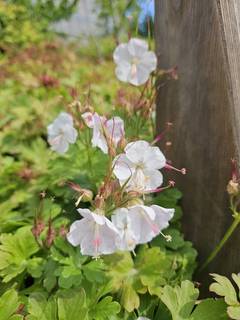
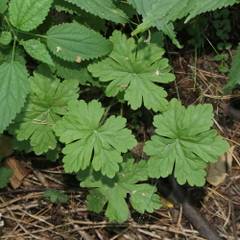
A clump-forming herbaceous perennial reaching 18-30 inches (45-75 cm) tall and 18-24 inches (45-60 cm) wide, growing from a stout fibrous rootstock. Leaves palmately divided into 5-7 deeply cut lobes 2-5 inches (5-13 cm) wide, mid-green and lightly hairy, with each lobe further toothed at the tip. Flowers in open terminal cymes carrying 5-15 blooms; individual flowers saucer-shaped, 1-1.5 inches (2.5-4 cm) across, magenta-pink with darker veining radiating from a paler base. Plants flower May through July across the species' range. Foliage colors yellow to pink-orange in autumn before frost dieback. Stems collapse with first hard frost; plants resprout from the rootstock in early spring. Stands self-seed mildly under garden conditions, producing 5-15 seedlings per parent annually in suitable bare-soil openings. Plants persist 6-10 years on suitable sites; division every 4-5 years on heavy clay extends lifespan and rejuvenates flowering.
Native Range
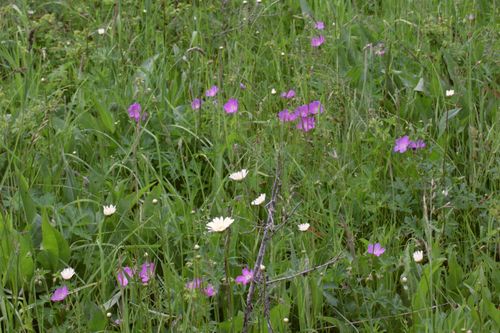
Native to the Pacific Northwest from southern Washington through western Oregon to northwestern California. Found in oak woodlands, prairie remnants, road cuts, and grassy slopes from near sea level to 4,000 feet (1,200 m).Suggested Uses
Planted in naturalistic prairie plantings, oak-savanna restorations, and mixed perennial borders within zones 6-9 at 18-24 inch (45-60 cm) spacing. Pairs with Camassia, Achillea, and native bunchgrasses in dry-summer perennial plantings. Container culture is sustained 2-3 years in pots of at least 3 gallons (11 L) with coarse drainage.How to Identify
Appearance
Size & Dimensions
Height1'6" - 2'6"
Width/Spread1'6" - 2'
Bloom Information
May through July across the species' range, with peak flowering in June. Lower-elevation populations bloom from late April; foothill populations may continue into early August. Each flower lasts 1-2 days; total bloom per stand 5-7 weeks. Deadheading the first flush extends bloom by 2-3 weeks.
Detailed Descriptions
Flower Description
Magenta-pink with darker veiningFoliage Description
Mid-green; yellow-orange in fallGrowing Conditions
Sun Requirements
Requires 4-8 hours of direct sunlight daily
• Full Sun: 6+ hours of direct sunlight
• Partial Shade: 3-6 hours of direct sunlight
• Full Shade: Less than 3 hours of direct sunlight
Care & Maintenance
Care Guide
Plants benefit from supplemental water during the first growing season after planting; established stands tolerate 3-4 weeks of drought but bloom is reduced during prolonged dry spells. Crown rot develops on poorly drained sites that stay saturated through winter. Powdery mildew develops on lower foliage in humid summers and can be cut away without harming the plant. Slugs damage emerging foliage in March and April in coastal climates. Stands typically benefit from division every 4-5 years on heavy clay; on free-draining loam, division is needed only every 7-8 years.Pruning
Spent flower stems are sheared by one-third in late June after the first bloom flush ends to encourage a secondary flush in July. A complete cut to 2 inches (5 cm) above the crown after autumn frost removes collapsed foliage. Spring division replaces complete cutback in renovation years.Pruning Schedule
Prune: June & October
summerfall
Container Growing
Suitable for container growing
Minimum container size: 3 gallons