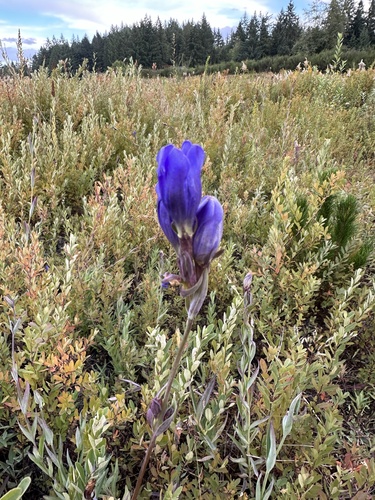
Gentiana, Genus, sceptrum, Species,
- Genus & species
King's scepter gentian
Pacific Northwest from British Columbia to northwestern California
Overview
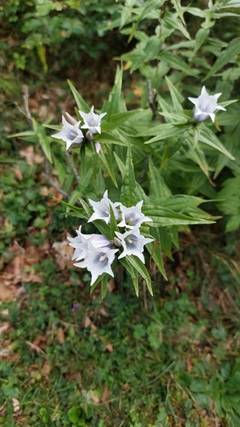
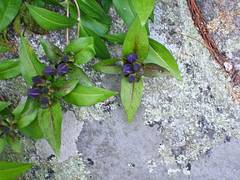
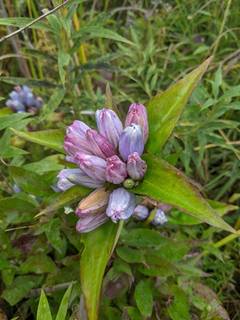
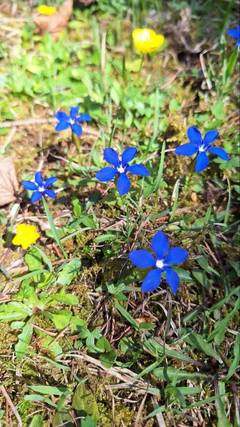
A clump-forming herbaceous perennial reaching 12-36 inches (30-90 cm) tall and 12-18 inches (30-45 cm) wide, growing from a fibrous-rooted basal crown that produces 1-5 erect flowering stems annually. Leaves opposite, lanceolate to oblanceolate, 1-3 inches (2.5-7.5 cm) long, mid-green, sessile (clasping at the base on upper stem nodes). Flowers tubular, 1-1.75 inches (2.5-4.5 cm) long, deep blue with green-spotted throat and five flaring pointed lobes; flowers borne in tight terminal clusters of 3-9 blooms with 1-3 axillary clusters lower on the stem. Plants flower July through September, with peak flowering August. Stems remain erect through bloom and collapse with first hard frost. Stands die back to the rootstock annually. Plants spread slowly and do not self-seed prolifically; mature stands cover 1-2 square feet (0.1-0.2 m²) after 5-7 years. Bog-and-meadow habitat means plants decline rapidly on dry sites and require continuous moisture during summer growth.
Native Range
Native to a narrow region of the Pacific Northwest from southern coastal British Columbia south through western Washington and Oregon to northwestern California. Found in coastal bogs, wet meadows, sphagnum sites, and saturated stream margins from sea level to 2,500 feet (760 m).Suggested Uses
Planted in bog gardens, pond margins, and consistently moist meadow plantings within zones 7-9 at 12-15 inch (30-38 cm) spacing. Pairs with Drosera, Sarracenia, and native sedges in saturated sphagnum-based plantings. Container culture is sustained 2-3 years in pots of at least 3 gallons (11 L) sat in saucers of standing water through summer.How to Identify
Appearance
Size & Dimensions
Height1' - 3'
Width/Spread1' - 1'6"
Bloom Information
July through September across the species' coastal range, with peak flowering in August. Each flower lasts 5-8 days and opens fully only on warm sunny afternoons; flowers remain closed in fog or rain. Total bloom per stand 5-7 weeks. Cool, wet summers extend bloom by 1-2 weeks.
Detailed Descriptions
Flower Description
Deep blue with green-spotted throatFoliage Description
Mid-greenGrowing Conditions
Sun Requirements
Requires 4-8 hours of direct sunlight daily
• Full Sun: 6+ hours of direct sunlight
• Partial Shade: 3-6 hours of direct sunlight
• Full Shade: Less than 3 hours of direct sunlight
Care & Maintenance
Care Guide
Plants require continuously moist, acid soil with high organic matter; bog or sphagnum-based mixes match natural substrates. Garden cultivation in zones 7-9 succeeds on deep loam with morning shade and weekly summer watering, but plants decline within 2-3 years on average garden soil with summer drought. Slugs damage emerging shoots in early spring. Stem rust occurs sporadically on lower leaves and is cosmetic. Stands persist 7-12 years on suitable bog sites; replacement is by division of the basal crown in autumn or fresh seed sown immediately on collection.Pruning
Spent flower stems can be cut at the base after seed dispersal in October, or left in place over winter and removed in early spring before new shoots emerge. Foliage is left to senesce naturally. Mid-season cutting weakens the rootstock because the few stem leaves carry all photosynthetic activity for the season.Pruning Schedule
Prune: March & October
fallearly spring
Container Growing
Suitable for container growing
Minimum container size: 3 gallons