Image 1 of 10
1 / 10
© No machine-readable author provided. Cdrew assumed (based on copyright claims)., some rights reserved (CC-BY) · Wikimedia Commons
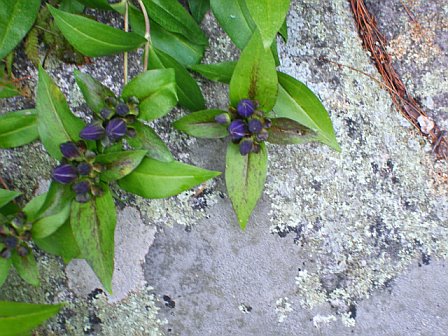
Gentiana, Genus, andrewsii, Species,
- Genus & species
closed bottle gentian
Overview
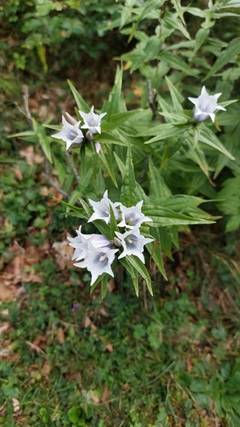
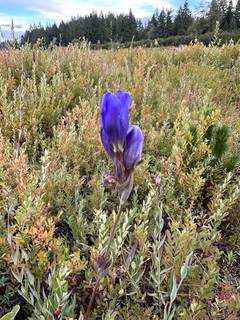
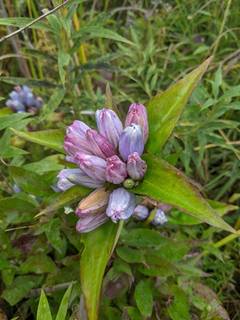
An upright perennial growing 1–2 feet (30–60 cm) tall from a clump of unbranched stems. Leaves are opposite, lance-shaped to oval, 2–4 inches (5–10 cm) long, smooth and medium to dark green, clustered toward the top of the stem. The deep blue to violet flowers are bottle-shaped and remain closed at the tip, never opening fully, 1–1.5 inches (2.5–4 cm) long, clustered tightly at the stem tip and in the upper leaf axils. White-tipped pleated tissue joins the closed petal lobes. Bloom occurs from August to October. Bumblebees force their way into the sealed flowers to reach nectar and pollen. Small capsules with many tiny seeds follow. The plant grows from a slow-spreading crown, dies back each winter, and is slow to establish from seed, taking 3–4 years to flower. Stems may lean under the weight of the flower clusters.
Native Range
Native to central and eastern North America from Quebec and the Great Lakes south to Georgia and west to the Great Plains. Grows in moist meadows, prairie swales, streambanks, and open woodland edges in rich, damp soils.Suggested Uses
Grown in moist meadow plantings, rain gardens, and native borders at 12–18 inch (30–45 cm) spacing. Used in pollinator gardens, where bumblebees are the main visitors able to open the sealed flowers. Suited to damp, rich soils and not to dry sites.How to Identify
Appearance
Size & Dimensions
Height1' - 2'
Width/Spread1' - 1'6"
Bloom Information
Detailed Descriptions
Flower Description
Deep blue to violetFoliage Description
Medium to dark greenGrowing Conditions
Sun Requirements
Requires 4-8 hours of direct sunlight daily
• Full Sun: 6+ hours of direct sunlight
• Partial Shade: 3-6 hours of direct sunlight
• Full Shade: Less than 3 hours of direct sunlight
Care & Maintenance
Care Guide
Grows in full sun to partial shade in consistently moist, rich, slightly acidic soils. Water during dry spells, as the plant declines in drought and needs steady moisture. It is slow to establish and may take several years to reach flowering size. Root disturbance sets the plant back, and it re-establishes slowly after division. Slugs may damage young shoots in spring. Few other pests or diseases affect it.Pruning
Cut dead stems to the ground in late fall or early spring. No deadheading is needed. The plant recovers slowly from division, so it is moved or split only when necessary, in spring. No other pruning is required.Pruning Schedule
Prune: March & November
fallearly spring