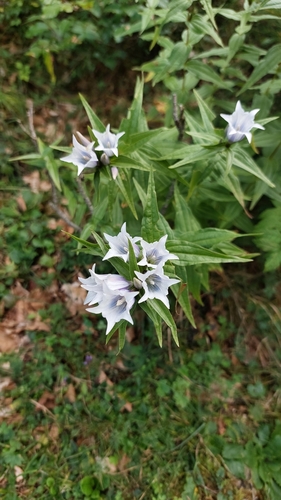
Gentiana, Genus, asclepiadea, Species,
- Genus & species
willow gentian
Mountains of C and S Europe (Alps, Carpathians, Pyrenees, Balkans; moist meadows, 2,000-7,000 ft)
Overview
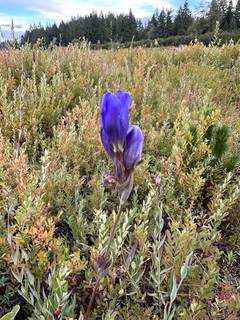
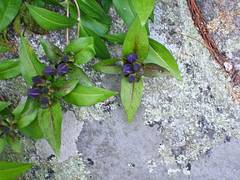
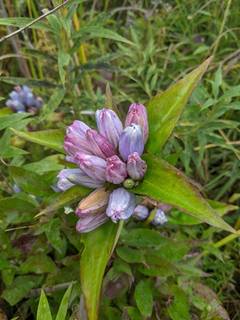
Gentiana asclepiadea is an upright to arching clumping deciduous perennial reaching 18–30 inches (45–75 cm) tall with a spread of 18–24 inches (45–60 cm). The European species carries paired trumpet-shaped flowers 1.5–2 inches (4–5 cm) long along arching stems from July through September—a habit that separates the species from most other cultivated gentians, which are low rosette-forming alpine plants with terminal flowers rather than axillary ones. Flowers are deep blue to violet-blue, often with darker spotting or striping inside the throat, opening from the leaf axils in succession up the stem from bottom to top over several weeks. Leaves are willow-like in shape (a convergent resemblance to Asclepias milkweed foliage that gives the species its Latin epithet)—lance-shaped, 2–4 inches (5–10 cm) long, with prominent parallel veins, arranged in opposite pairs along the arching stems. Growth rate is slow, and newly planted divisions may take 2–3 years to reach flowering size. Long-lived and reliable once established: clumps persist for decades in favorable sites without needing division. Hardy to zone 5.
Native Range
Gentiana asclepiadea is native to the mountains of central and southern Europe—the Alps, Carpathians, Pyrenees, and Balkans—growing in moist meadows, open woodlands, and streamside positions from 2,000 to 7,000 feet (600–2,100 m). The native habitat carries consistent summer moisture from snowmelt runoff and frequent cloud-fog at altitude, which shapes the species' intolerance of hot dry summer conditions in garden cultivation. The specific epithet 'asclepiadea' translates as 'Asclepias-like,' referring to the resemblance of the willow-shaped leaves to the foliage of milkweed species in the genus Asclepias.Suggested Uses
Planted in woodland gardens, along streams, and in moist borders at 18–24 inch (45–60 cm) spacing. The late-summer deep blue flowers fill a color gap that develops in many temperate gardens during July through September, when spring-flowering perennials have finished and summer color is dominated by yellows, reds, and pinks. The arching stems with paired blue trumpets contribute a form rarely seen among temperate perennials—most flowering perennials carry terminal or paniculate inflorescences rather than axillary pairs up the stem. Functions in shade gardens, under deciduous trees, and beside water features where consistent soil moisture matches the species' needs. Paired with ferns (Dryopteris, Polystichum), hostas, and astilbes for a moist-shade planting composition, the species combines well in woodland-garden settings. Dry soils, full sun in hot summer climates, and frequently disturbed positions are poor fits for the species.How to Identify
Appearance
Size & Dimensions
Height1'6" - 2'6"
Width/Spread1'6" - 2'
Bloom Information
Trumpet-shaped flowers 1.5–2 inches (4–5 cm) long, deep blue to violet-blue with darker spotting inside the throat, open paired in the leaf axils in succession from the bottom of the stem upward from July through September. Bloom duration is 6–8 weeks. The late-summer-to-early-fall window fills a color gap when few other true-blue flowers remain in bloom.
Detailed Descriptions
Flower Description
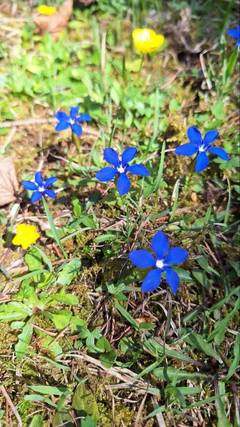
Deep blue to violet-blue with darker spotting inside; trumpet-shaped paired in axilsFoliage Description
Medium green, willow-like with prominent parallel veins; opposite pairsGrowing Conditions
Sun Requirements
Requires 3-6 hours of direct sunlight daily
• Full Sun: 6+ hours of direct sunlight
• Partial Shade: 3-6 hours of direct sunlight
• Full Shade: Less than 3 hours of direct sunlight
Care & Maintenance
Care Guide
Partial shade in moist humus-rich well-drained soil suits this species better than the full-sun conditions most alpine gentians require—G. asclepiadea tolerates more shade than its mountain-meadow relatives because of woodland-edge populations in its native range. Hardy to zone 5. Drought and hot dry conditions cause crown decline rapidly, so consistent summer moisture is essential in all but the coolest summer climates. Establishment runs slow: divisions may take 2–3 years to reach flowering size, so patience and undisturbed positioning reward the gardener. Once established, clumps persist for decades without division; disturbance of established plants causes significant setback, so transplanting mature specimens is avoided where possible.Pruning
Dead stems are cut back in late fall or early spring. No other pruning is needed through the year. Established clumps resent root disturbance, so division is undertaken only when necessary and with the understanding that divided plants may take 2–3 seasons to recover flowering vigor.Pruning Schedule
Prune: March & November
fallearly spring
Container Growing
Suitable for container growing
Minimum container size: 3 gallons