Gahnia, Genus, clarkei, Species,
- Genus & species
tall saw-sedge
Overview
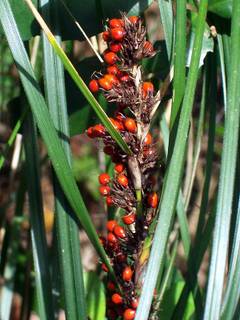
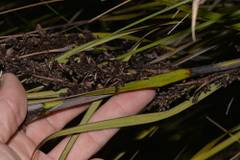
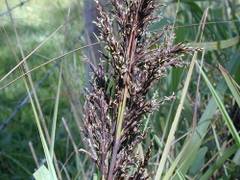
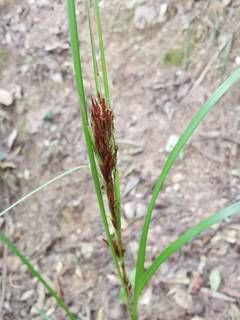
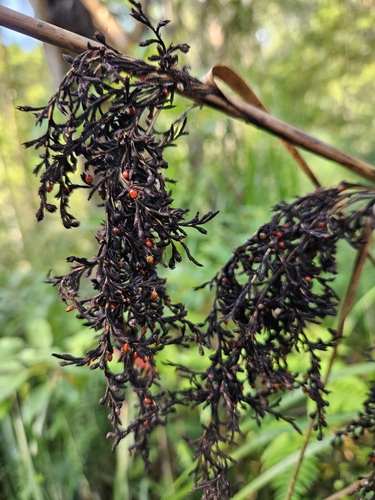
Gahnia clarkei is a large evergreen tussock-forming sedge that builds dense clumps of long, arching leaves, with flowering stems reaching 6-10 feet (2-3 m) tall. The leaves are narrow, 3-6 feet (1-2 m) long, dark green, and folded, with finely toothed cutting margins sharp enough to slice skin. From spring into summer tall culms carry drooping, branched flower heads that mature from green to dark brown and near-black, holding hard reddish-brown to black nuts about 0.2 inch (4-5 mm) long. G. clarkei grows along creek lines, swamp margins, and moist gullies in eastern Australia, in damp sandy or peaty soils. It serves as a larval food plant for several native butterflies. The sharp leaf margins make the clumps difficult to handle, and the large size suits only spacious plantings. Growth is slow to establish from seed but forms a long-lived clump.
Native Range
Gahnia clarkei is native to eastern Australia, occurring in Queensland, New South Wales, Victoria, and Tasmania. It grows along creeks, swamp margins, and moist gullies in damp soils.Suggested Uses
G. clarkei is grown in rain gardens, pond and creek margins, and damp native plantings, and for bank stabilisation in wet sites, spaced 3-5 feet (0.9-1.5 m) apart. It also supports habitat and larval food for native butterflies in wildlife gardens.How to Identify
Appearance
Size & Dimensions
Height6' - 10'
Width/Spread3' - 6'
Bloom Information
Detailed Descriptions
Flower Description
green maturing to dark brown and near-blackFoliage Description
dark greenGrowing Conditions
Sun Requirements
Requires 4-8 hours of direct sunlight daily
• Full Sun: 6+ hours of direct sunlight
• Partial Shade: 3-6 hours of direct sunlight
• Full Shade: Less than 3 hours of direct sunlight
Care & Maintenance
Care Guide
G. clarkei grows in full sun to part shade in moist to wet soils, including sandy and peaty types, and tolerates seasonally waterlogged ground. It grows actively with even moisture, and growth slows in extended dry periods. It withstands frost in USDA zones 8-10. Plants are slow to establish from seed but form long-lived clumps once settled. The sharp leaf margins are a hazard along paths and seating areas.Pruning
Old foliage and spent flowering culms can be cut back to the base in late winter to refresh the clump. G. clarkei reshoots strongly from the base after cutting. The cutting leaf margins make this a careful task.Pruning Schedule
Prune: July–August
winter
Container Growing
Suitable for container growing
Minimum container size: 10 gallons