Gahnia, Genus, aspera, Species,
- Genus & species
red-berried saw-sedge
Overview
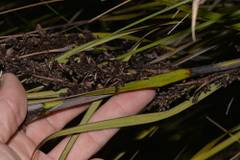
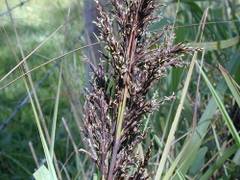
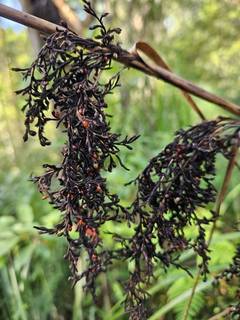
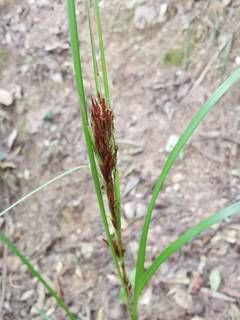
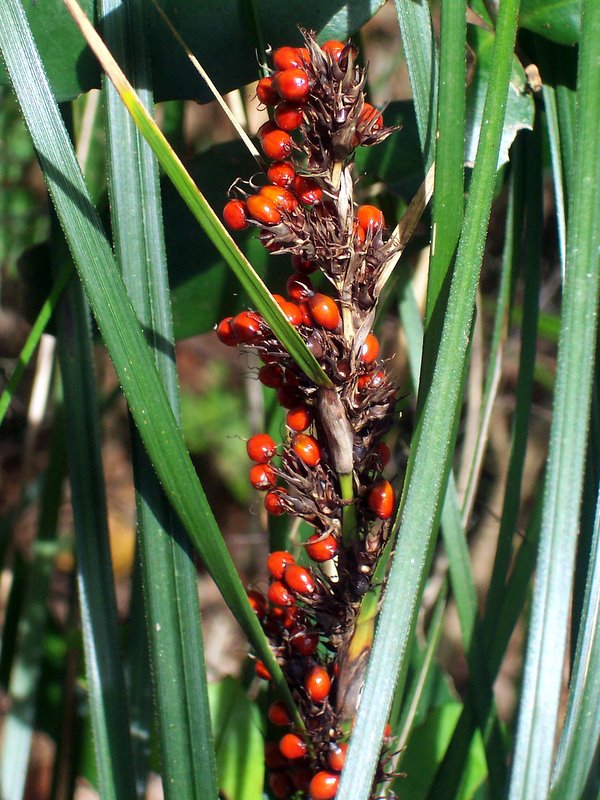
Gahnia aspera is a tufted, evergreen sedge of eastern Australia, forming a dense clump of long, narrow leaves with sharply toothed, cutting edges that give the saw-sedges their name. The leaf clump stands about 20-40 inches (50-100 cm) high, while slender flowering stems rise to 3-6.5 feet (1-2 m). The flowers are small and grouped in open, branched heads of dark brown to almost black spikelets, held well above the foliage in spring and summer. These are followed by hard, shiny nuts, each set in a red to orange base, the source of the red-berried common name. It grows in the understorey of open forest and woodland, often in moist, sheltered gullies on a range of soils. The arching leaves form a fountain-like clump, but their saw-toothed margins can cut bare skin. It is a larval food plant for several native butterflies and the seeds are taken by birds. Old clumps build up dead leaf material at the base over time.
Native Range
Native to eastern Australia, from Queensland through New South Wales to Victoria. It grows in the understorey of open forest and woodland, often in moist gullies and on sheltered slopes.Suggested Uses
Gahnia aspera is used in native, woodland, and habitat gardens, in moist understorey plantings, and for erosion control on shaded banks. As a larval food plant it supports several native butterflies, and its seeds feed birds. Its sharp leaves make it suited to background or screening positions rather than beside paths.How to Identify
Appearance
Size & Dimensions
Height1'6" - 6'6"
Width/Spread1'8" - 3'4"
Bloom Information
The small brown to blackish flowers are carried in open, branched heads on tall stems through spring and summer. Sedge flowers lack petals and are wind-pollinated, so they are inconspicuous. Hard nuts set in red bases follow over summer and autumn.
Detailed Descriptions
Flower Description
Dark brown to blackish spikeletsFoliage Description
GreenGrowing Conditions
Sun Requirements
Requires 3-8 hours of direct sunlight daily
• Full Sun: 6+ hours of direct sunlight
• Partial Shade: 3-6 hours of direct sunlight
• Full Shade: Less than 3 hours of direct sunlight
Care & Maintenance
Care Guide
Gahnia aspera grows in part shade to full sun in moist, free-draining soils and tolerates clay, loam, and sand. It suits a sheltered understorey position with steady moisture but copes with short dry spells once established. The leaf margins are sharp enough to cut, so it is placed away from paths and seating. It is slow to establish from seed, which germinates erratically, and is more often grown from divisions of existing clumps. Little feeding or watering is needed once settled. Old foliage can be cut back to refresh the clump.Pruning
Tired clumps can be cut back hard in late winter to remove built-up dead leaves and prompt fresh growth. The sharp leaf edges cut skin, so thick gloves are useful when working with the plant. Spent flowering stems can be removed once the nuts have dropped.Container Growing
Suitable for container growing
Minimum container size: 5 gallons