Gahnia, Genus, spp., Multiple species,
- Genus
- Multiple species
Saw-sedges
Australia, New Zealand, Southeast Asia, and the Pacific
Overview
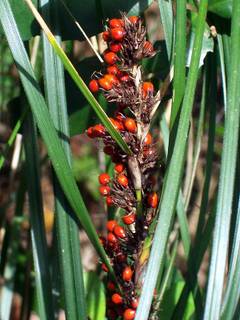
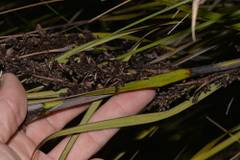
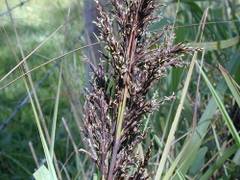
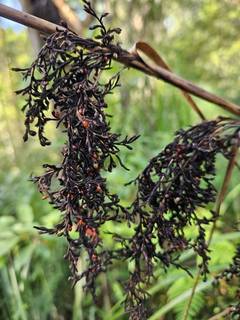
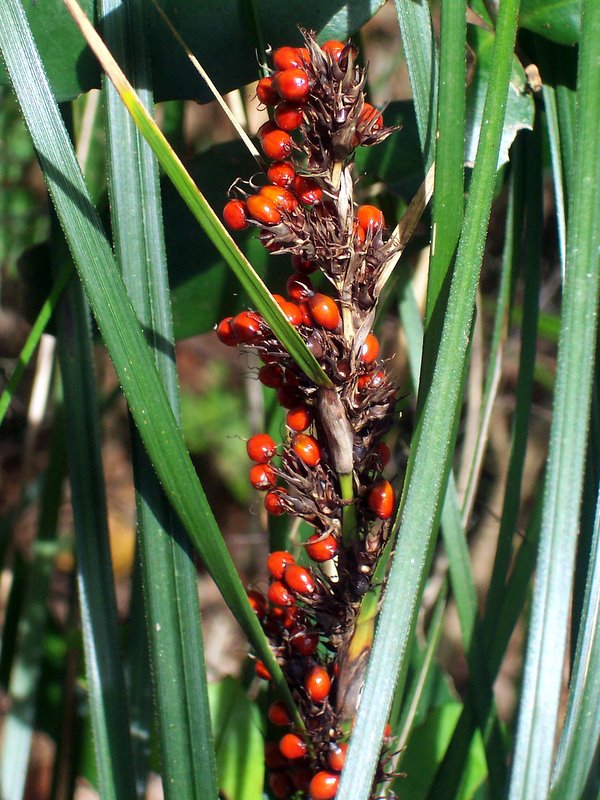
Gahnia is a genus of about 40 species of large, tussock-forming sedges in the family Cyperaceae, distributed across Australia, New Zealand, Southeast Asia, and the Pacific islands. Plants form dense clumps of arching, grass-like leaves and range from 0.5 m (1.6 ft) to 3 m (10 ft) tall including the flowering culms, spreading 0.5-2 m (1.6-6.5 ft) wide. The leaf margins and keel carry minute backward-pointing teeth that readily cut skin, the source of the name saw-sedge. Flowering culms rise above the foliage and bear branched panicles of small, dark red-brown to blackish spikelets. These mature into hard, glossy nuts in shades of red, orange, or brown that are held conspicuously and eaten by birds. The foliage is evergreen and ranges from deep green to grey-green. Gahnia species are larval host plants for several skipper butterflies. They occupy wetlands, heathland, and open forest understorey, tolerating seasonally wet ground and low-fertility soils. The cutting leaf margins make the plants hazardous to handle and limit their placement beside paths and seating.
Native Range
Gahnia is native to Australia, New Zealand, Southeast Asia, and islands of the western Pacific, where it grows in wetlands, coastal heath, and forest understorey.Suggested Uses
Used in wetland and bog gardens, rain gardens, and bushland restoration, and as a structural clumping plant in large native borders. The cutting foliage makes background positions, away from paths and seating, more practical than high-traffic spots. Plants are spaced 1-2 m (3-6.5 ft) apart in mass plantings.How to Identify
Appearance
Size & Dimensions
Height1'8" - 9'10"
Width/Spread1'8" - 6'7"
Bloom Information
Flowering culms appear mainly in spring and summer, though the small dark spikelets are wind-pollinated and not showy. The hard nuts that follow ripen over several months and persist into autumn. Flowering time shifts with species and local climate.
Detailed Descriptions
Flower Description
dark red-brown to blackFoliage Description
deep green to grey-greenGrowing Conditions
Sun Requirements
Requires 4-8 hours of direct sunlight daily
• Full Sun: 6+ hours of direct sunlight
• Partial Shade: 3-6 hours of direct sunlight
• Full Shade: Less than 3 hours of direct sunlight
Care & Maintenance
Care Guide
Most species grow in full sun to part shade and tolerate seasonally waterlogged ground as well as drier sites once established. They adapt to sandy, peaty, and clay soils of low fertility at an acidic to neutral pH. Established clumps need little maintenance beyond removal of spent culms and old leaves. Frost tolerance is moderate, with many species hardy to about -7 C (20 F). Division of mature clumps is difficult because of the dense, fibrous root mass and the cutting foliage.Pruning
Old foliage and spent flowering culms are cut back to near ground level in late winter to refresh the clump. The sharp leaf margins call for protective handling during this work. Plants resprout from the base in spring.Pruning Schedule
Prune: August
winter
Container Growing
Suitable for container growing
Minimum container size: 7 gallons