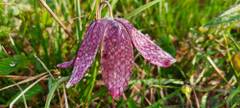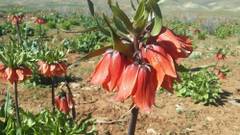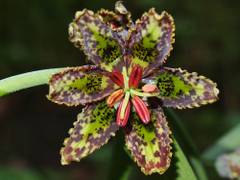
Fritillaria, Genus, pudica, Species,
- Genus & species
yellow fritillary
Overview
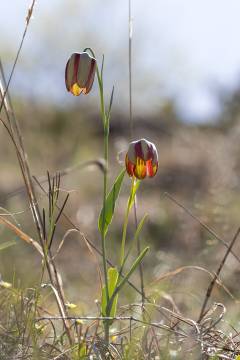
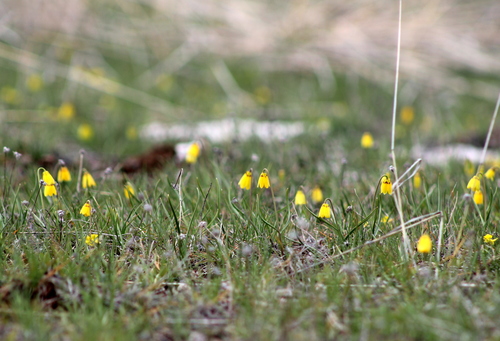
Fritillaria pudica is a small bulbous perennial of western North America, reaching 3-12 inches (7-30 cm) tall from a deep-seated bulb. One to three nodding, bell-shaped flowers open in early spring, each 0.5-1 inch (1.3-2.5 cm) long, bright yellow and aging to brick-orange or red as they mature. The narrow, grey-green leaves number two to eight, are linear to lance-shaped, and measure 1.5-8 inches (4-20 cm) long, clustered near the lower stem. After flowering and seed set in late spring, the plant dies back to its bulb and stays dormant through the dry summer. It grows from sagebrush steppe and grassland into open pine woodland, on well-drained soils that dry out in summer. F. pudica forms small rice-grain bulblets around the parent bulb, spreading slowly into loose colonies. In cultivation it needs sharp drainage and a dry summer rest; bulbs rot in soils that stay wet during dormancy, which limits its use in irrigated borders. It is slow from seed, taking four to six years to reach flowering size.
Native Range
Native to western North America, from British Columbia south through the intermountain west to California, Nevada, Utah, and Colorado. It occupies sagebrush steppe, grassland, and open coniferous woodland, typically on slopes that dry through summer.Suggested Uses
Grown in rock gardens, gravel gardens, troughs, and bulb frames where summer drainage is sharp. It naturalizes in lean, well-drained grassland and on sunny banks. Container culture allows the dry summer rest to be controlled in wetter climates.How to Identify
Appearance
Size & Dimensions
Height3" - 1'
Width/Spread2" - 4"
Colors
Bloom Information
Flowering occurs in early spring, from March to May depending on elevation and snowmelt. Each stem carries one to three pendant flowers that open yellow and darken to orange-red over several days. Bloom lasts roughly two to three weeks before the plant sets capsules and enters summer dormancy.
Detailed Descriptions
Flower Description
yellow aging to orange-redFoliage Description
grey-greenGrowing Conditions
Sun Requirements
Requires 4-8 hours of direct sunlight daily
• Full Sun: 6+ hours of direct sunlight
• Partial Shade: 3-6 hours of direct sunlight
• Full Shade: Less than 3 hours of direct sunlight
Care & Maintenance
Care Guide
Plant bulbs 3-4 inches (8-10 cm) deep in autumn in gritty, free-draining soil in full sun to light shade. Water through autumn, winter, and spring growth, then withhold water once foliage yellows so the bulb can rest dry through summer. Soils that stay wet during dormancy cause bulb rot, so a raised bed, rock garden, or bulb frame suits the species better than an irrigated border. A low-nitrogen feed as growth emerges in late winter supports bulb size. In regions with wet summers, lifting and storing bulbs dry, or growing them in pots moved under cover, prevents losses. Clumps flower more freely when left undivided for several years and decline if dug frequently.Pruning
No pruning is required. Allow the foliage to yellow and wither after flowering, as the leaves replenish the bulb for the following season. Spent flower stems can be removed once seed is not wanted, though seed left to ripen will self-sow where conditions suit.Container Growing
Suitable for container growing
Minimum container size: 1 gallons