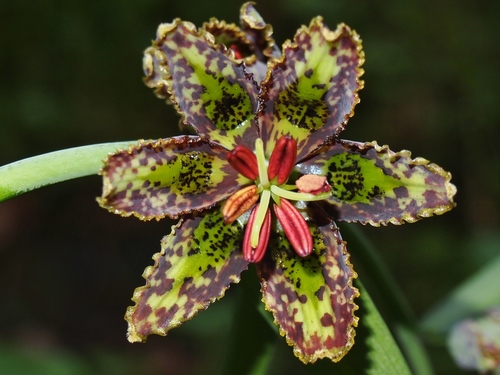
Fritillaria, Genus, affinis, Species,
- Genus & species
chocolate lily
Western North America from British Columbia to Baja California
Overview
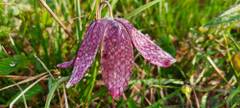
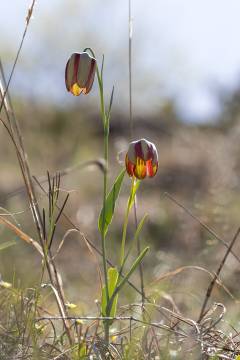
A bulb-forming perennial reaching 8-32 inches (20-80 cm) tall and 4-6 inches (10-15 cm) wide, growing from a small whitish bulb 0.5-1 inch (1.5-2.5 cm) wide that produces numerous rice-like bulbils annually. Stems erect, slender, with 2-4 whorls of 3-6 lanceolate leaves 2-6 inches (5-15 cm) long, mid-green and glabrous. Flowers nodding, bell-shaped, 0.75-1.25 inches (2-3 cm) across, with six tepals heavily mottled in chocolate-brown and yellow-green. Each stem typically carries 1-5 flowers in a loose terminal raceme. Plants flower March through May depending on elevation; foliage and stems senesce by mid-June as the bulb enters summer dormancy. Seedlings reach flowering size in 5-8 years from autumn-sown seed; rice-like bulbils accelerate vegetative spread but do not flower for 4-6 years. Bulbs are vulnerable to rodent predation in some Pacific Northwest gardens.
Native Range
Native to western North America from southern British Columbia south through Washington, Oregon, and California to northern Baja California, with disjunct populations east to Idaho. Found in oak woodlands, grassy slopes, coastal bluffs, and open coniferous forest from sea level to 6,500 feet (2,000 m).Suggested Uses
Planted in dryland woodland gardens, oak-savanna restorations, and unirrigated rock gardens within zones 5-9 at 4-6 inch (10-15 cm) spacing. Pairs with Brodiaea, Calochortus, and native bunchgrasses in dry-summer geophyte plantings. Container culture is sustained 3-5 years in tall pots of at least 3 gallons (11 L) with mineral substrate and complete summer dryness.How to Identify
Appearance
Size & Dimensions
Height8" - 2'8"
Width/Spread4" - 6"
Colors
Bloom Information
March through May depending on elevation, with peak flowering in April at low elevations and into late May at higher sites. Each flower lasts 5-8 days; total bloom per stand 3-5 weeks. Cool springs extend bloom by 2-3 weeks; warm springs compress flowering into a 2-week window.
Detailed Descriptions
Flower Description
Chocolate-brown and yellow-green mottledFoliage Description
Mid-greenGrowing Conditions
Sun Requirements
Requires 3-7 hours of direct sunlight daily
• Full Sun: 6+ hours of direct sunlight
• Partial Shade: 3-6 hours of direct sunlight
• Full Shade: Less than 3 hours of direct sunlight
Care & Maintenance
Care Guide
Bulbs are planted 3-4 inches (7.5-10 cm) deep in autumn into well-drained loam in part shade to full sun. Plants require moisture during growth (October-May) and dry summer dormancy; summer irrigation triggers bulb rot and is the primary cause of stand decline in cultivation. Voles and pocket gophers consume bulbs in some Pacific Northwest sites. Slugs damage emerging shoots in February and March. Stands persist 8-15 years on dry-summer sites; rice-like bulbils form a self-replenishing population that gradually thickens patches over 5-10 years.Pruning
Withering foliage is left in place after seed dispersal and pulls free from the bulb in June. Spent stems can be cut at the base if self-seeding is not desired; without intervention, capsules split open in May-June and shed seed within 1-2 feet (30-60 cm) of the parent. Cutting during active growth weakens the bulb because the few stem leaves carry all photosynthetic activity for the season.Pruning Schedule
Prune: June
late spring
Container Growing
Suitable for container growing
Minimum container size: 3 gallons