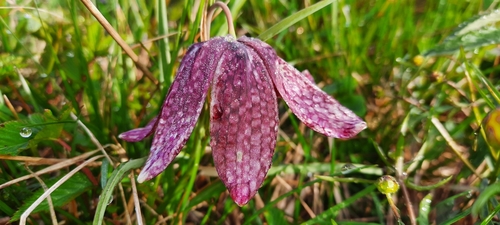
Fritillaria, Genus, spp., Multiple species,
- Genus
- Multiple species
fritillaries
Overview
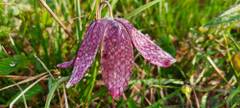
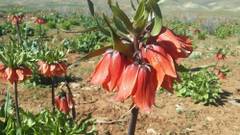
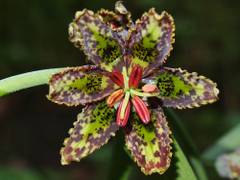
Fritillaria is a genus of roughly 130 species of bulbous perennials in the lily family (Liliaceae), spread across the temperate Northern Hemisphere from Europe and the Mediterranean through Asia to western North America. Plants rise from scaly bulbs to heights of 10-150 cm (4-60 in), depending on the species. Unbranched stems carry linear to lance-shaped leaves and one to many nodding, bell-shaped flowers in spring. Flower colour spans the genus widely, from the checkered purple and white of F. meleagris to the orange, red, and yellow whorls of the tall F. imperialis, with other species in green, brown, and near-black. Some species, including F. imperialis, carry a strong musky scent in bulb and flower. The bulbs and other parts contain steroidal alkaloids that are poisonous if eaten. After flowering, plants set capsule fruits and die back to the bulb for a dry summer dormancy. The fleshy bulbs rot easily in heavy or wet soil and many species are slow to settle and flower.
Native Range
Fritillaria is native to temperate regions of the Northern Hemisphere, with centres of diversity in the Mediterranean, Southwest and Central Asia, and western North America, where species grow in meadows, woodland, scrub, and rocky alpine slopes.Suggested Uses
Grown in rock gardens, raised beds, woodland edges, and mixed borders, and forced in pots for spring display. Smaller species suit alpine troughs and naturalized grass, while F. imperialis is used as a tall accent in borders. Bulbs are planted 8-20 cm (3-8 in) apart depending on species size.How to Identify
Appearance
Size & Dimensions
Height4" - 5'
Width/Spread3" - 1'
Bloom Information
Most species flower in early to mid-spring, with bloom lasting 2-3 weeks on a given plant. Alpine and woodland species open as the snow clears, while F. imperialis flowers a little later on tall stems. Flowering is followed by upright seed capsules and summer dormancy.
Detailed Descriptions
Flower Description
purple, white, green, orange, red, yellow, or brown depending on speciesFoliage Description
green to grey-greenGrowing Conditions
Sun Requirements
Requires 4-8 hours of direct sunlight daily
• Full Sun: 6+ hours of direct sunlight
• Partial Shade: 3-6 hours of direct sunlight
• Full Shade: Less than 3 hours of direct sunlight
Water & Climate
Water Needs
Care & Maintenance
Care Guide
Most species grow in full sun to part shade on gritty, sharp-draining soil and need a dry rest once the foliage yellows in summer. They are planted as dormant bulbs in autumn, set two to four times their own depth, at a pH from slightly acidic to alkaline. Hardiness varies across the genus, with many species hardy in USDA zones 3-8 and Mediterranean species tender below about -10 C (14 F). The fleshy, scaly bulbs lack a protective tunic and rot quickly in wet ground or if left out of the soil. Bulb-feeding pests and the scarlet lily beetle damage some species, and many take two to three years to settle and flower freely.Pruning
Spent flower stems can be removed after bloom, while the leaves are left to yellow and feed the bulb. Foliage is cleared once it has died back fully in summer. Crowded clumps are lifted and divided during dormancy.Pruning Schedule
Prune: June
summer
Container Growing
Suitable for container growing
Minimum container size: 1 gallons