Image 1 of 3
1 / 3
Plant Reference
Overview
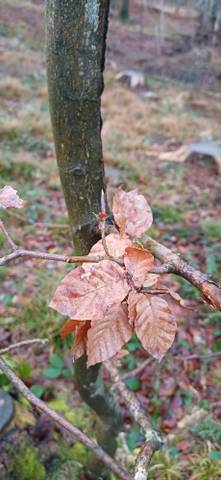
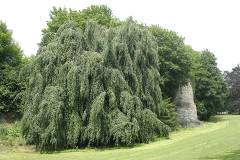
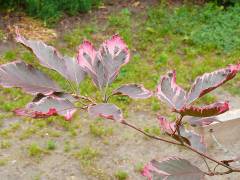
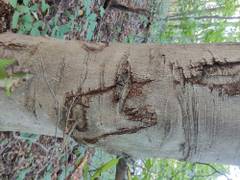
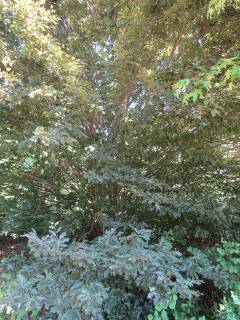
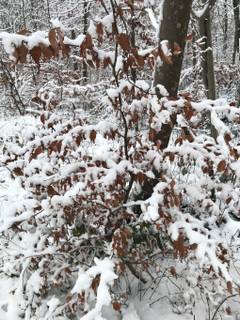
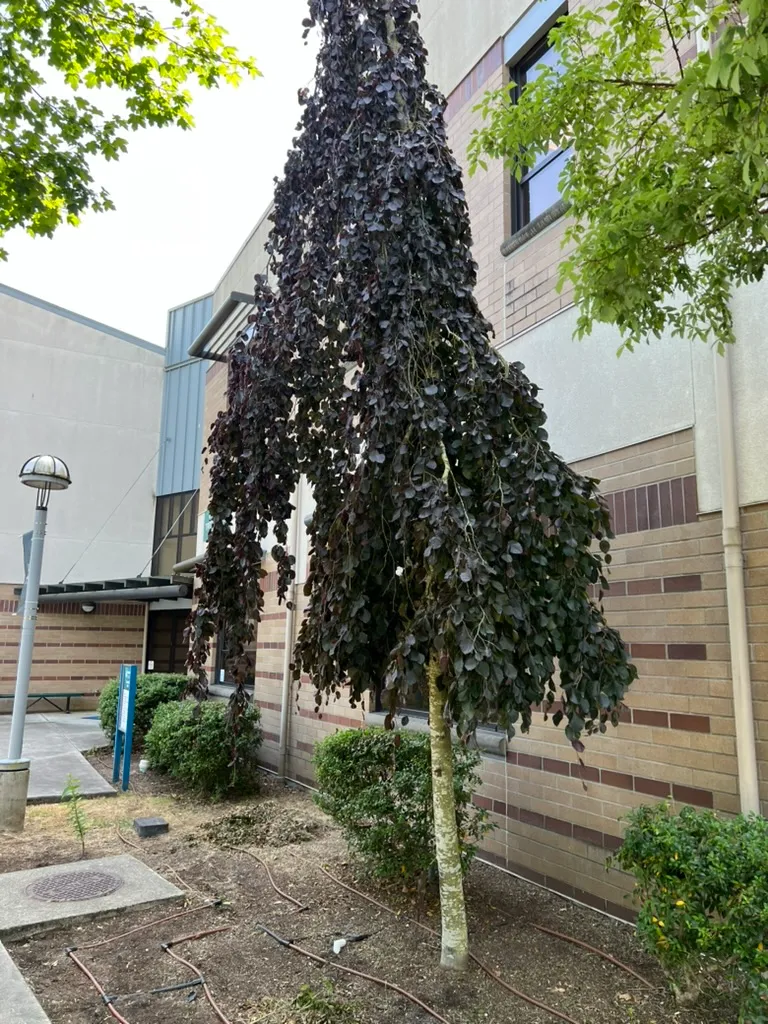
Fagus sylvatica var. atropurpurea 'Pendula' is the weeping copper beech (weeping purple beech), growing 300–540 inches (750–1,350 cm) tall with a canopy spread of 480–720 inches (1,200–1,800 cm) — the width often exceeds the height. Combines two traits: the cascading pendulous branches of 'Pendula' (weeping beech) and the deep purple to copper-purple foliage of f. purpurea (copper/purple beech). The pendulous branches descend from the trunk to the ground, forming a curtain of purple foliage that encloses a cave-like interior space. Deep purple to copper-purple glossy ovate leaves 2–4 inches (5–10 cm) with wavy margins — the purple color is deepest in spring, fading toward green-bronze in late summer; copper to bronze in fall. Smooth silver-gray bark (retained throughout the tree's life). Marcescent: dead leaves often persist on the branches through winter, particularly on younger specimens and interior branches. The enormous mature spread at up to 720 inches (1,800 cm / 60 feet) requires a space allocation larger than most residential lots. Specimens 150+ years old exist in parks and estates. Shallow fibrous root system — dense shade and surface roots prevent understory planting beneath the canopy. Inconspicuous flowers; triangular beechnuts in spiny husks. Beech bark disease (fungus-insect complex) is an increasing concern. Non-toxic. Full sun to partial shade. Consistent moisture — intolerant of waterlogged or compacted soil. Zones 4–8. Growth rate is slow to moderate.
Native Range
The species F. sylvatica is native to central and western Europe. The weeping copper beech is a cultivar combining the weeping form ('Pendula') with the purple-leaved form (f. purpurea).Suggested Uses
Grown as a specimen in parks, estates, and large properties in zones 4–8. Requires space for 480–720 inch (1,200–1,800 cm) canopy. The purple foliage and the weeping branch curtain create an enclosed interior space. Non-toxic. Long-lived (150+ years).How to Identify
Appearance
Size & Dimensions
Height25' - 45'
Width/Spread40' - 60'
Bloom Information
Inconspicuous flowers in spring. Triangular beechnuts in spiny husks in fall. The purple foliage on cascading branches and the smooth gray bark — not the flowers — are the year-round features.
Detailed Descriptions
Foliage Description
Deep purple to copper-purple, glossy, ovate, wavy margins, 2-4 inches (5-10 cm); color deepens in spring, fades toward green-bronze in late summerGrowing Conditions
Sun Requirements
Requires 4-8 hours of direct sunlight daily
• Full Sun: 6+ hours of direct sunlight
• Partial Shade: 3-6 hours of direct sunlight
• Full Shade: Less than 3 hours of direct sunlight
Care & Maintenance
Care Guide
Full sun to partial shade — full sun for deepest purple color. Consistent moisture — intolerant of waterlogged or compacted soil. Enormous mature spread (up to 720 inches / 1,800 cm). Shallow root system. Beech bark disease (increasing concern). Non-toxic. Zones 4–8.Pruning
Minimal pruning — the weeping form develops naturally. Remove dead or damaged branches. Clearance-prune lowest branches if ground access beneath the canopy is needed. Do not top or reduce — the weeping form does not recover from heavy pruning.Pruning Schedule
Prune: August–September
summerfall