Eriogonum, Genus, parvifolium, Species,
- Genus & species
Seacliff wild buckwheat
Coastal California and northern Baja California
Overview
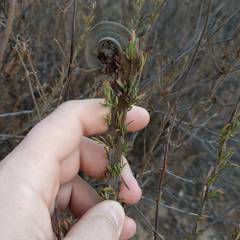
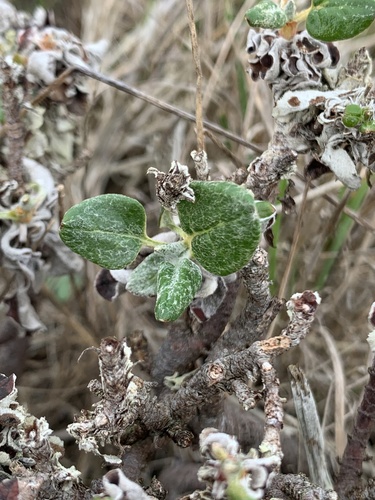
Eriogonum parvifolium is an evergreen subshrub in the buckwheat family, reaching 8-36 inches (20-90 cm) tall and 24-48 inches (60-120 cm) wide. It forms a low, spreading mound of woody stems clothed in small leaves 0.2-0.8 inch (5-20 mm) long, dark green above and white-woolly beneath, with edges that often roll under. From spring into late fall it produces dense, rounded flower clusters held on short stalks above the foliage; individual blooms open white to pale pink and age to rusty red, creating a two-toned look across the cluster. The plant is endemic to the immediate coast of central and southern California, where it grows on bluffs, dunes, and sandy flats within reach of ocean spray. It serves as the larval host for the endangered Smith's blue butterfly, whose caterpillars feed on the flower heads. Growth is slow to moderate, and plants are comparatively short-lived, often declining after 5-8 years in cultivation. E. parvifolium tolerates salt, wind, and nutrient-poor sand but fails in heavy, wet soils, where root rot sets in quickly. It needs sharp drainage and minimal summer water once established, and its coastal origin limits cold hardiness to roughly USDA zones 8-10.
Native Range
Endemic to the central and southern California coast, from Monterey County south to San Diego County and into northern Baja California, Mexico. It grows on coastal bluffs, stabilized dunes, and sandy scrub within the zone of salt spray.Suggested Uses
Used in coastal and dune restoration, bluff-top gardens, and water-wise plantings where salt spray and sandy soil are constant. It suits rock gardens and the front of dry borders, spaced 24-36 inches (60-90 cm) apart. As the host plant of Smith's blue butterfly, it features in pollinator and habitat gardens within its native range.How to Identify
Appearance
Size & Dimensions
Height8" - 3'
Width/Spread2' - 4'
Bloom Information
Flowering extends from spring through late autumn, with peak bloom from June to September. Individual clusters open creamy white to pale pink and darken to rusty red as they age, so a single plant often carries both colors at once. Dried flower heads persist on the stems into winter.
Detailed Descriptions
Flower Description
white to pink, aging rust-redFoliage Description
dark green above, white-woolly beneathGrowing Conditions
Sun Requirements
Requires 6-12 hours of direct sunlight daily
• Full Sun: 6+ hours of direct sunlight
• Partial Shade: 3-6 hours of direct sunlight
• Full Shade: Less than 3 hours of direct sunlight
Care & Maintenance
Care Guide
Grow in full sun and fast-draining sandy or rocky soil. E. parvifolium withstands salt spray, wind, and drought once its roots are established, typically needing no supplemental water after the first year in coastal gardens. Summer irrigation in heavy or poorly drained soil promotes root and crown rot, the most common cause of plant loss. It accepts a wide pH range but grows poorly in rich, amended ground. No fertilizer is required, and feeding tends to produce weak, floppy growth. Plants are relatively short-lived and may need replacing every several years.Pruning
Pruning is limited to light shaping after the main flush of bloom, which keeps the mound compact and removes spent flower heads. Old leafless wood regenerates slowly or not at all once cut, so new growth comes only from green stems. The dried flower heads can remain through winter for seed.Pruning Schedule
Prune: October–November
fall
Container Growing
Suitable for container growing
Minimum container size: 3 gallons