Eriogonum, Genus, heracleoides, Species,
- Genus & species
parsnip-flowered buckwheat
Overview
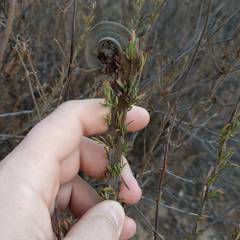
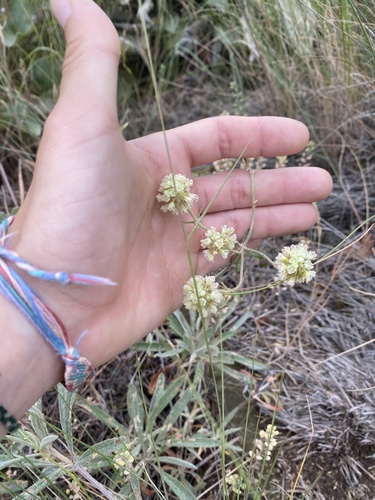
Eriogonum heracleoides is a low, mat-forming perennial subshrub reaching 4-16 inches (10-40 cm) tall and spreading 12-24 inches (30-60 cm) wide. The woody base produces tufts of basal leaves and erect flowering stems bearing a whorl of small leaves at midheight. Basal leaves are oblanceolate to spatulate, 0.4-1.6 inches (1-4 cm) long, green on the upper surface and densely white-woolly beneath. Inflorescences are compound umbels held 6-16 inches (15-40 cm) above the foliage, bearing 5-12 rays each terminating in a head of small flowers. Individual flowers are creamy-white to pale yellow, occasionally aging pinkish, 0.1-0.2 inches (3-5 mm) across, and bloom from late May through July. Achenes are 3-angled, 0.1 inch (3 mm) long. Plants persist 8-15 years on well-drained gravelly sites; lifespan is shorter in heavy or irrigated soils where crown rot develops. Foliage turns reddish-bronze in autumn and remains on the plant through winter. New growth emerges in late April. The species hybridizes with E. umbellatum where ranges overlap, producing intermediate plants with rays of varying length.
Native Range
Native to western North America from southern British Columbia south to northern California and east to western Montana, Wyoming, and northern Colorado. Occurs on dry rocky slopes, ridges, sagebrush steppe, and open ponderosa pine woodlands at 1,000-10,000 feet (300-3,050 m) elevation.Suggested Uses
Used in rock gardens, gravel gardens, and dryland meadow plantings at 18-24 inch (45-60 cm) spacing. Suited to xeriscape and pollinator restoration plantings; flowers attract native solitary bees and butterflies. Performs poorly in containers smaller than 5 gallons (19 L) and in conventional irrigated beds.How to Identify
Appearance
Size & Dimensions
Height4" - 1'4"
Width/Spread1' - 2'
Bloom Information
Flowers open from late May through July across most of the range; peak bloom occurs in June at mid-elevations and in July at higher elevations. Individual umbels remain in bloom 3-4 weeks; total floral display lasts 5-7 weeks per plant. Flowers fade from cream-yellow to pinkish-brown as they age and persist on the plant through August. Bloom is reduced in unusually dry springs.
Detailed Descriptions
Flower Description
creamy-white to pale yellow, aging pinkish-brownFoliage Description
green with white-woolly undersides; reddish-bronze in fall and winterGrowing Conditions
Sun Requirements
Requires 6-12 hours of direct sunlight daily
• Full Sun: 6+ hours of direct sunlight
• Partial Shade: 3-6 hours of direct sunlight
• Full Shade: Less than 3 hours of direct sunlight
Care & Maintenance
Care Guide
Water deeply weekly during the first growing season; established plants require no supplemental irrigation in regions receiving at least 10 inches (25 cm) of annual precipitation. Plants in irrigated borders or heavy soils develop crown rot and decline within 2-3 years. Aphids may colonize flower stems in June; populations typically remain below 20 individuals per stem. Plants self-sow modestly in well-drained gravelly conditions, producing 5-10 seedlings per parent annually. Fertilizer is not required; rich soils produce floppy growth and reduced bloom. Replace plants when crowns die out, typically after 8-15 years.Pruning
Spent flowering stems are cut to the basal foliage in late summer after seed dispersal. The reddish-bronze persistent foliage remains intact through winter; dead leaves break off as new growth emerges in April. Cuts into the woody crown can kill the plant, so pruning is typically limited to the leafy zone above the woody base.Pruning Schedule
Prune: August–September
summerfall
Container Growing
Suitable for container growing
Minimum container size: 5 gallons