Elaeagnus, Genus, angustifolia, Species,
- Genus & species
Russian olive
Western and central Asia from southern Russia and Turkey east through Iran, Afghanistan, and Central Asia to northwestern China; listed as invasive throughout the American Intermountain West and the Pacific Northwest
Overview
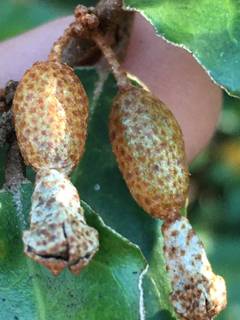
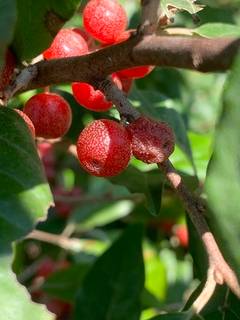
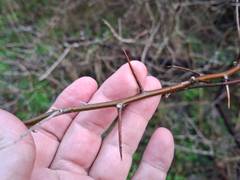
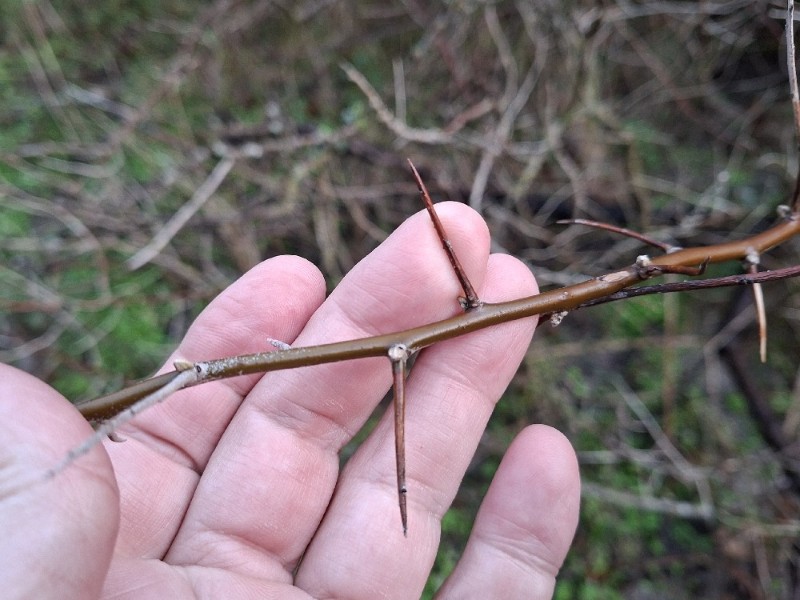
Elaeagnus angustifolia is a large deciduous shrub or small tree in the family Elaeagnaceae reaching 15–20 feet (4.5–6 m) tall and 12–18 feet (3.5–5.5 m) wide with a broad, irregular, often thorny form. Leaves are narrow and lance-shaped, 1.5–3.5 inches (4–9 cm) long, and are covered on both surfaces in dense stellate (star-shaped) scale hairs that give the entire shrub a silver-gray color and cause it to shimmer when the foliage moves in wind. The same silvery scales cover the twigs and young fruits. Thorns 0.5–1 inch (13–25 mm) long develop on most branches. Tiny tubular pale yellow to cream flowers 0.3 inch (8 mm) long open in small axillary clusters in June and July and carry a strong sweet honey-like scent that is detectable 50–100 feet (15–30 m) from the shrub on warm calm days. Silver-scaled olive-like drupes 0.4–0.6 inch (10–15 mm) long ripen from August through October and are consumed by birds, which disperse the seeds over long distances. The species fixes atmospheric nitrogen through root nodules in symbiosis with Frankia actinomycetes, which allows it to establish on low-fertility soils where most other woody species cannot. E. angustifolia is listed as a Class B noxious weed in Washington state, is listed as invasive in Oregon, and is listed as invasive throughout the Intermountain West including Idaho, Montana, Wyoming, Colorado, Utah, and Nevada, where it has colonized riparian corridors over tens of thousands of acres and displaced native cottonwood-willow communities along western rivers and streams. Limitation: planting is prohibited under Washington Class B noxious weed regulations and is restricted or discouraged under state invasive-species programs across the Pacific Northwest and Intermountain West, and any established shrubs resprout vigorously from cut stumps when removed without herbicide treatment.
Native Range
Native to western and central Asia from southern Russia and Turkey east through Iran, Afghanistan, and Central Asia to northwestern China, growing on dry stream banks, floodplains, and open steppe. Introduced to North America as an ornamental and windbreak tree in the late 19th and early 20th centuries, and now naturalized and listed as invasive across western states.Suggested Uses
This species is included in the database for identification and management purposes only. The silver-gray foliage, honey-scented summer flowers, and silver-scaled olive-like fruits make the shrub recognizable in the field, and identification supports invasive-species management in riparian corridors and rangelands across the American West. Planting is prohibited under Washington Class B noxious weed regulations and is restricted or discouraged under state invasive-species programs in Oregon, Idaho, Montana, Wyoming, Colorado, Utah, and Nevada, where bird-dispersed seeds establish in riparian corridors and displace native vegetation. Native alternatives for silver foliage in western gardens include Shepherdia argentea (silver buffaloberry), and native thorny shrubs including Ceanothus velutinus supply similar nitrogen-fixing function.How to Identify
Appearance
Size & Dimensions
Height15' - 20'
Width/Spread12' - 18'
Bloom Information
Tiny tubular pale yellow to cream flowers 0.3 inch (8 mm) long open in small axillary clusters from June through July, lasting about 4 weeks. The flowers are individually inconspicuous against the silver foliage but carry a strong sweet honey-like scent detectable 50–100 feet (15–30 m) from the shrub on warm calm days. Silver-scaled olive-like drupes 0.4–0.6 inch (10–15 mm) long develop through summer and ripen from August through October, after which birds consume the fruit and disperse the seeds into riparian corridors and open disturbed ground.
Detailed Descriptions
Flower Description
pale yellow to cream; tiny tubular flowers 0.3 inch (8 mm) long in small axillary clusters, individually inconspicuous but intensely sweet-fragrantFoliage Description
silver-gray throughout from dense stellate (star-shaped) scale hairs covering both leaf surfaces; narrow lance-shaped, 1.5-3.5 inches (4-9 cm) longGrowing Conditions
Sun Requirements
Requires 6-12 hours of direct sunlight daily
• Full Sun: 6+ hours of direct sunlight
• Partial Shade: 3-6 hours of direct sunlight
• Full Shade: Less than 3 hours of direct sunlight
Care & Maintenance
Care Guide
This entry describes management rather than cultivation because the species is listed as an invasive or noxious weed across most of the American West. E. angustifolia is prohibited from sale and planting under Washington Class B noxious weed regulations, is listed as invasive in Oregon, and is listed as invasive throughout the Intermountain West including Idaho, Montana, Wyoming, Colorado, Utah, and Nevada. For removal of existing plants, young seedlings can be pulled or grubbed out when the soil is moist; larger established plants should be cut and the cut stump treated within minutes with concentrated glyphosate or triclopyr because E. angustifolia resprouts vigorously from cut stumps and from roots if the stump is not treated. Removal is carried out before fruit ripening in August to prevent bird-dispersed seed escape, and multiple-year follow-up treatment is usually required because root fragments and missed seedlings establish new shoots. In riparian areas, removal is coordinated with county noxious weed control programs.Pruning
Pruning guidance for cultivation does not apply because the species is not recommended for planting under state invasive-species programs across the Pacific Northwest and Intermountain West. For management of existing plants, cutting without cut-stump herbicide treatment produces vigorous resprouting from the base and roots within a single growing season. Cut stumps should be treated with concentrated glyphosate or triclopyr within minutes of cutting, and the site monitored for resprouts and seedlings for several years.Pruning Schedule
Prune: February–March
early spring