Image 1 of 16
1 / 16
Plant Reference
Elaeagnus, Genus, pungens, Species,
- Genus & species
silverberry
China and Japan; mountain scrub and woodland margins in the native range; naturalized and classified as invasive in several southeastern United States states
Overview
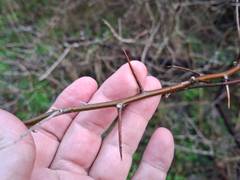
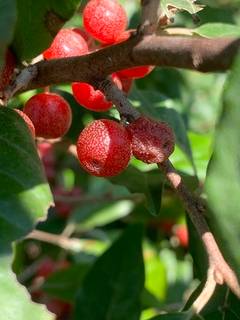
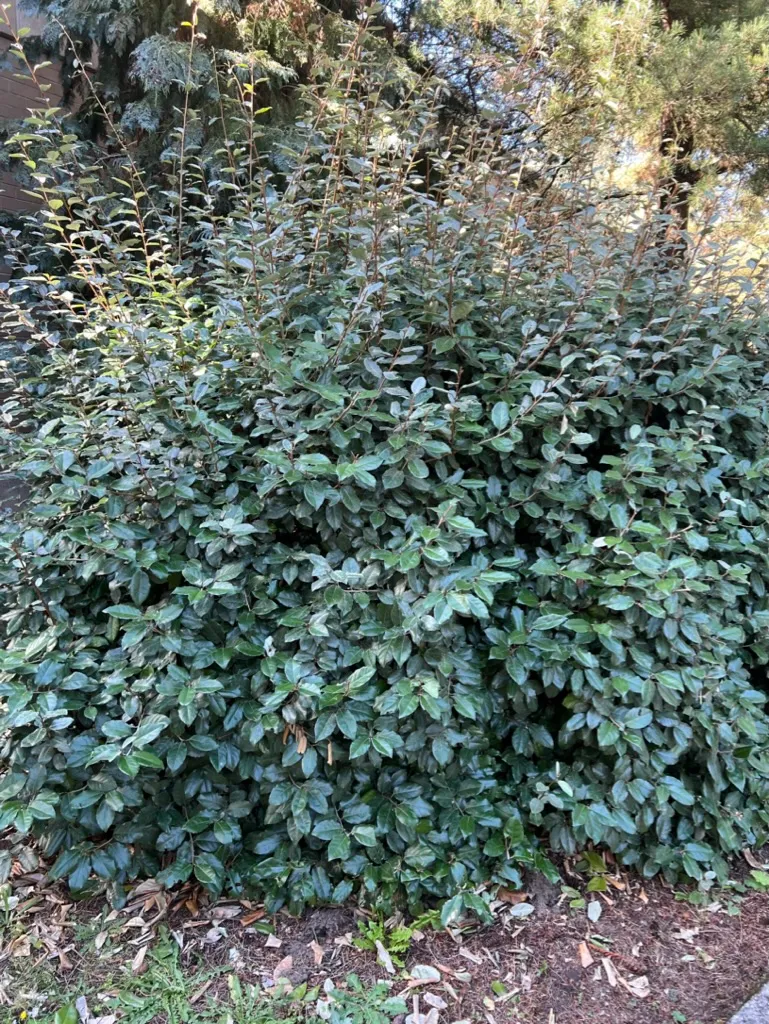
Elaeagnus pungens is a large spreading broadleaf evergreen shrub in the family Elaeagnaceae growing 8–12 feet (2.4–3.7 m) tall and 8–12 feet (2.4–3.7 m) wide from a multi-stemmed base that produces arching spreading branches with scattered axillary thorns. The specific epithet pungens is Latin for sharply pointed and refers to these axillary thorns that are carried at the leaf bases along the stems — thick leather gloves and long sleeves are warranted during any pruning operation or close handling of the plant because of the thorn hazard. The species is one of a small group of non-leguminous plants that form nitrogen-fixing actinorhizal symbiotic associations with Frankia bacteria in root nodules, and this nitrogen-fixing biology supports the species' tolerance of poor and nutrient-depleted soils where most other large shrubs decline — Frankia is the actinobacterial partner in these associations and is the same genus that forms the well-known nitrogen-fixing symbiosis in alder (Alnus) and bayberry (Morella) species. Leaves are dark green with a slightly dull sheen on the upper surface and densely silvery-scaled on the underside from a covering of tiny peltate silver scales, oval, 2–4 inches (5–10 cm) long, and carried along the stems with wavy margins — the two-toned green-above and silver-beneath foliage is visible when wind lifts the leaves and is the main field character of the genus Elaeagnus. White to creamy-white tiny tubular flowers 0.4 inch (10 mm) long open in axillary clusters of 1–3 along the stems in October and November across a 4–5 week bloom period, and the flowers are inconspicuous in appearance but carry a strong sweet gardenia-like fragrance that scents the surrounding fall garden air. Reddish-brown oval fruit 0.5 inch (1.3 cm) long develops through winter and ripens in spring. Limitation: the species is naturalized and classified as invasive in several southeastern United States states where bird-dispersed fruit colonizes native forest margins and open scrub habitat and displaces native vegetation — regional invasive species lists should be consulted before planting in jurisdictions where the species is restricted. Drought-tolerant once the root system is established, and tolerant of salt spray, wind exposure, and poor soils. The fruit is edible but bland and is not cultivated as a significant food crop. Deer-resistant. Non-toxic. Native to China and Japan.
Native Range
Native to China and Japan, growing in mountain scrub and woodland margins at low to middle elevations. The species was introduced to western horticulture in the 19th century as an ornamental evergreen with fall fragrance, tolerance of poor soils, and nitrogen-fixing biology, and the species has subsequently naturalized in several southeastern United States states where the wide tolerance of soils, climate, and light conditions supports aggressive spread into native forest margins and scrub habitat.Suggested Uses
Used as an evergreen privacy screen, windbreak, coastal hedge (tolerates salt spray and wind exposure), security hedge (the axillary thorns deter foot traffic through the planting), and nitrogen-fixing nurse plant in low-fertility restoration settings at 8–12 foot (2.4–3.7 m) spacing between plants in USDA zones 7 through 9. The large mature size, the year-round two-toned evergreen foliage, the fall fragrance, and the Frankia-supported nitrogen-fixing biology combine for a low-maintenance screening shrub in exposed poor-soil positions where other large evergreens fail. Jurisdictions where the species is classified as invasive (several southeastern United States states) are unsuitable because of the bird-dispersed seed spread into native vegetation, and native-plant gardens should consider regional non-invasive alternatives such as the native Morella cerifera (wax myrtle) which shares the evergreen habit and the nitrogen-fixing biology without the invasive concern in the southeastern US.How to Identify
Appearance
Size & Dimensions
Height8' - 12'
Width/Spread8' - 12'
Bloom Information
White to creamy-white tiny tubular flowers 0.4 inch (10 mm) long open in axillary clusters of 1–3 along the stems in October and November across a 4–5 week bloom period. The flowers are inconspicuous in appearance but carry a strong sweet gardenia-like fragrance that scents the surrounding fall garden air — the fall bloom timing fills a fragrance gap that most other fragrant flowering shrubs do not cover in the autumn months. Honeybees work the flowers during warm fall days. Reddish-brown oval fruit 0.5 inch (1.3 cm) long develops through winter and ripens in spring.
Detailed Descriptions
Flower Description
white to creamy-white tiny tubular flowers 0.4 inch (10 mm) long carried in axillary clusters of 1-3 along the stems; inconspicuous in appearance but strongly fragrant with a sweet gardenia-like scent that carries through the fall garden; October through November bloom window; followed by reddish-brown oval fruit 0.5 inch (1.3 cm) long in springFoliage Description
dark green with a slightly dull sheen on the upper surface and densely silvery-scaled on the underside from a covering of tiny peltate silver scales; oval leaves 2-4 inches (5-10 cm) long with wavy margins; the two-toned green-above and silver-beneath foliage is visible when wind lifts the leaves and is the main field character of the genus ElaeagnusGrowing Conditions
Sun Requirements
Requires 4-8 hours of direct sunlight daily
• Full Sun: 6+ hours of direct sunlight
• Partial Shade: 3-6 hours of direct sunlight
• Full Shade: Less than 3 hours of direct sunlight
Care & Maintenance
Care Guide
Site in full sun to partial shade with 4–8 hours of direct sun per day in well-drained soil with a pH of 5.5–7.5. The species adapts to loam, sand, and clay soils and is drought-tolerant once the root system is established, and the nitrogen-fixing actinorhizal symbiosis with Frankia bacteria in the root nodules supports growth in poor and nutrient-depleted soils. The species tolerates salt spray, wind exposure, and exposed coastal positions. The species is classified as invasive in several southeastern United States states where bird-dispersed fruit colonizes native forest margins and open scrub habitat — regional invasive species lists should be consulted before planting in jurisdictions where the species is restricted. Thick leather gloves and long sleeves are warranted during any pruning operation because of the axillary thorns carried at the leaf bases. The fruit is edible but bland. Non-toxic and deer-resistant. Hardy in USDA zones 7–9.Pruning
Pruning is done in early spring (March) or in fall (December) to control the size of the mature shrub and remove unwanted growth, and the species tolerates hard renovation pruning back to the woody framework with reliable regrowth from the base within 1–2 growing seasons. Root suckers are removed as they appear because the species can spread by suckering in addition to by seed. Thick leather gloves and long sleeves are warranted during any pruning operation because of the axillary thorns carried at the leaf bases along the stems.Pruning Schedule
Prune: March & December
early springfall