Elaeagnus, Genus, spp., Multiple species,
- Genus
- Multiple species
oleasters
Temperate and subtropical Asia, Europe, and North America
Overview
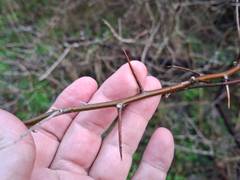
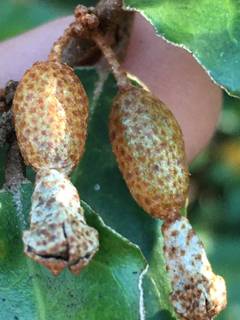
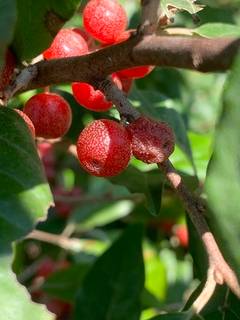
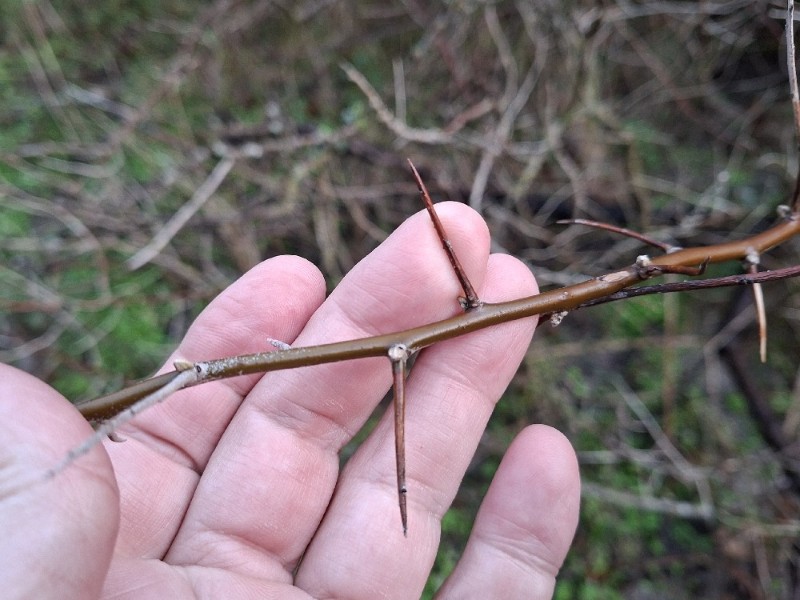
Elaeagnus is a genus of about 50 to 70 species of shrubs and small trees in the family Elaeagnaceae, called oleasters or silverberries. The genus is native to temperate and subtropical Asia, Europe, and North America. Both deciduous and evergreen species occur, reaching 3 to 23 ft (1 to 7 m) tall, and many carry spines on older wood. Leaves, shoots, and fruit are coated in tiny silvery or coppery scales that give the foliage a metallic sheen, strongest on the leaf undersides. The small tubular flowers lack true petals; a four-lobed calyx, cream to pale yellow inside and silvery outside, opens in clusters and casts a strong, sweet scent. Fleshy drupes follow, red, orange, or silvery, and are edible in several species, drawing birds that spread the seed. Like alders, oleasters fix nitrogen through root nodules and grow on poor, dry, or saline ground. This vigor carries a cost: E. angustifolia, Russian olive, and E. umbellata, autumn olive, are listed as invasive across much of the United States, where bird-sown seedlings colonize riverbanks and old fields. Evergreen kinds such as E. × ebbingei are grown as fast, wind-firm hedges in milder regions.
Native Range
The genus is native to temperate and subtropical Asia, with additional species in southern Europe and North America. The greatest diversity lies in eastern Asia.Suggested Uses
Used as windbreaks, screens, and clipped or informal hedges, and on poor or coastal soils where other shrubs struggle. Variegated evergreen forms brighten shaded shrub borders. Fruit of E. umbellata and E. multiflora is harvested for jams in some regions, though these species reseed aggressively.How to Identify
Appearance
Size & Dimensions
Height3' - 23'
Width/Spread3' - 15'
Bloom Information
Most species flower from late spring into early summer, while autumn olive and some evergreen kinds bloom in autumn. The flowers are small and easy to miss by eye but carry a powerful fragrance on the air. Fruit ripens weeks to months later depending on species.
Detailed Descriptions
Flower Description
cream to pale yellowFoliage Description
green with silvery scalesGrowing Conditions
Sun Requirements
Requires 4-10 hours of direct sunlight daily
• Full Sun: 6+ hours of direct sunlight
• Partial Shade: 3-6 hours of direct sunlight
• Full Shade: Less than 3 hours of direct sunlight