Syringa, Genus, meyeri, Species, 'Palibin', Cultivar,
- Genus & species
- Cultivar
dwarf Korean lilac
Overview
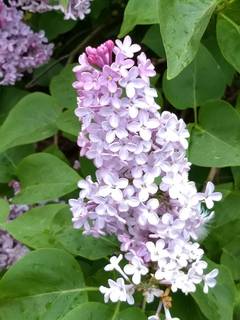
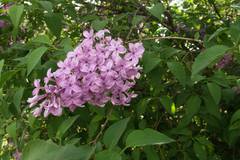
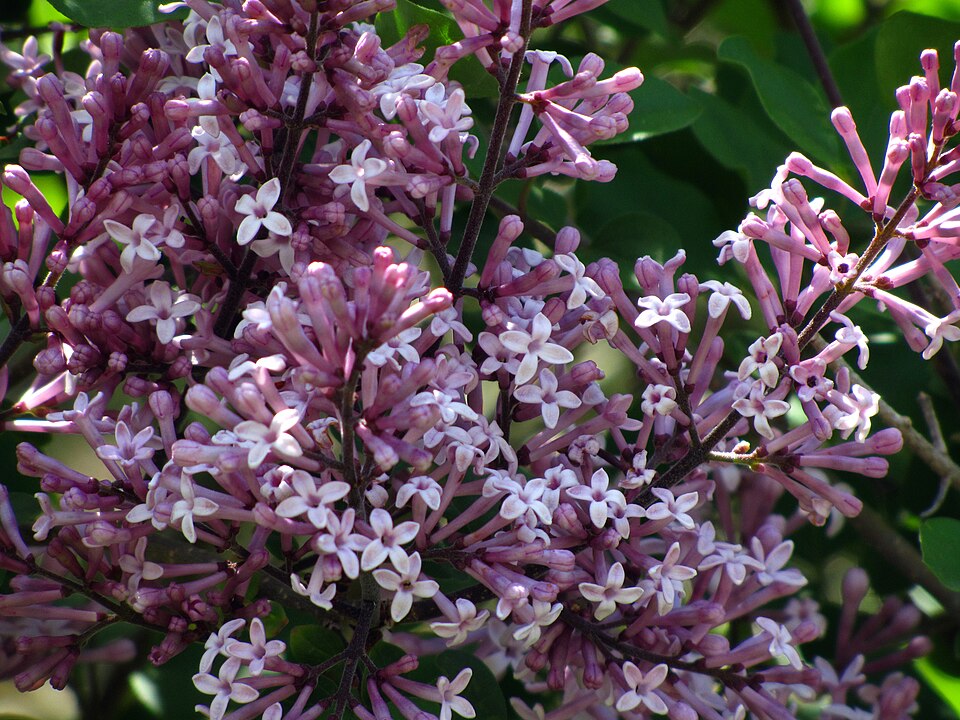
Syringa meyeri 'Palibin' is a deciduous shrub reaching 4-5 feet (1.2-1.5 m) tall and 5-7 feet (1.5-2.1 m) wide at maturity, with a dense, rounded to mounding habit and slightly broader spread than height. Stems are slender and finely branched. Leaves are oval, 1-2 inches (2.5-5 cm) long, dark green and noticeably smaller than S. vulgaris at 2-5 inches (5-12 cm), with a leathery texture. Flowers are pale lavender-pink in tight conical panicles 3-4 inches (7-10 cm) long in May-June, fragrant with a slightly spicy note distinct from the heavier scent of S. vulgaris. Bloom lasts 2-3 weeks; light reblooming may occur in late summer in zones 6-8 on healthy plants. Reaches finished hedge height in 4-6 years from a 2-gallon (7.5 L) container plant. Foliage shows lower powdery mildew incidence than S. vulgaris cultivars but is still affected in humid summers with poor air circulation. Tolerates urban pollution and modest soil compaction.
Native Range
The species S. meyeri is native to northern China, where it was originally described from cultivated material; wild populations are rare and historically limited to disturbed habitat in Hebei province. The cultivar 'Palibin' has no native range; it was introduced to the Western nursery trade in 1920 from Beijing.Suggested Uses
Used in mixed shrub borders, low informal hedges, foundation plantings, and container plantings at 5-6 foot (1.5-1.8 m) on-center spacing for solid hedges and 6-8 foot (1.8-2.4 m) for spaced specimen plantings. Grown in containers of at least 15 gallons (57 L) with annual root pruning; container plants are typically replaced after 4-5 seasons. Tolerates urban pollution and serves as a smaller-scale lilac where S. vulgaris at 12-15 feet (3.6-4.5 m) is too large.How to Identify
Appearance
Size & Dimensions
Height4' - 5'
Width/Spread5' - 7'
Bloom Information
May through June in zones 4-7; April through May in zone 8. Individual panicles last 2-3 weeks. Cool spring weather extends bloom; hot, dry weather shortens it. A second, lighter flush sometimes appears in late summer on plants growing in cool, moist climates.
Detailed Descriptions
Foliage Description
Dark greenGrowing Conditions
Sun Requirements
Requires 6-10 hours of direct sunlight daily
• Full Sun: 6+ hours of direct sunlight
• Partial Shade: 3-6 hours of direct sunlight
• Full Shade: Less than 3 hours of direct sunlight
Care & Maintenance
Care Guide
Water deeply once weekly during the first growing season; reduce to every 10-14 days during dry periods once established. Mature plants tolerate 3-4 weeks without rain but bloom and foliage quality decline during prolonged drought. Powdery mildew develops in humid conditions with poor air circulation; cosmetic only and does not affect plant health. Apply a balanced 10-10-10 fertilizer in early spring at 1 cup per mature plant; over-fertilization with high nitrogen reduces flower production. Maintain a 2-3 inch (5-7 cm) layer of bark mulch over the root zone, kept 2 inches (5 cm) clear of stems. Suckering is uncommon compared to S. vulgaris, which simplifies maintenance.Pruning
Remove spent flower panicles within 2-3 weeks after bloom and before mid-July; flower buds for the following year form during summer on current-season wood. Thin out 2-3 of the oldest stems at the base every 3-5 years to maintain vigor. Severe renovation cuts back to 12-18 inches (30-45 cm) above ground recover in 2-3 years on healthy plants but skip 1-2 bloom cycles. Pruning after mid-July reduces the following year's flowering.Pruning Schedule
Prune: June–July
late springsummer
Container Growing
Suitable for container growing
Minimum container size: 15 gallons