Image 1 of 8
1 / 8
Plant Reference
Syringa, Genus, pubescens, Species, ssp., Subspecies, patula, Subspecies, 'Miss Kim', Cultivar,
- Genus & species
- Subspecies
- Cultivar
miss kim lilac
The subspecies {Syringa pubescens} ssp. patula is native to the Korean peninsula and adjacent northeastern China; the cultivar 'Miss Kim' was developed at the University of New Hampshire from seed collected in Korea by Elwin Meader and released to the nursery trade in 1954
Overview
Syringa pubescens ssp. patula 'Miss Kim' is a compact mounding deciduous shrub in the family Oleaceae, reaching 4-6 feet (1.2-1.8 m) tall and wide — substantially smaller than the 8-15 foot (2.4-4.5 m) mature size of common lilac (Syringa vulgaris). The cultivar was developed at the University of New Hampshire by horticulturist Elwin Meader from seed collected on Pouk Han Mountain in Korea and was released to the nursery trade in 1954, making it one of the older Korean-origin lilac selections in continuous commerce. Leaves are simple, ovate, opposite, 2-4 inches (5-10 cm) long, dark green, and finely pubescent (hairy) on both surfaces — the pubescence is the source of both the species name and a secondary diagnostic trait separating the subspecies from common lilac, which carries smooth glabrous leaves. Lavender-blue tubular flowers 0.3 inch (8 mm) long open from purple buds in dense conical panicles 3-5 inches (7-13 cm) long during May and June — 1 to 2 weeks later than common lilac, which extends the lilac bloom season in mixed plantings when both are grown together. The fragrance is the traditional lilac scent with a spicy undertone not found in common lilac, and strong enough to be noticeable from several feet away during peak bloom. Fall foliage turns purple to burgundy-red in October — a trait not found in most other cultivated lilacs, which typically produce no fall color, and this reliable fall coloring is a genuine advantage of the cultivar alongside the compact mature size. The cultivar blooms on old wood, and dormant-season pruning removes the flower buds formed during the previous growing season — renewal pruning is therefore done immediately after flowering in June and July rather than during the late-winter window used for many other shrubs. Powdery mildew on the foliage is the main disease concern and develops in late summer on crowded plants with poor air circulation, and the disease is cosmetic rather than fatal but reduces the fall color display when severe. Lilac borer attacks stressed plants through wounds and weakened bark and is a secondary concern in gardens with other Syringa species already affected. The cultivar is drought-tolerant once established and tolerates the cold continental winters of zone 3.
Native Range
The subspecies Syringa pubescens ssp. patula is native to the Korean peninsula and adjacent parts of northeastern China, where it grows on rocky slopes and open mountain sites. The cultivar 'Miss Kim' was developed from seed collected on Pouk Han Mountain in Korea by plant explorer Elwin Meader, who worked as a horticulturist at the University of New Hampshire, and it was introduced to the nursery trade in 1954. Miss Kim is now widely grown across cold-climate North America and northern Europe as one of the standard compact lilacs for small landscapes.Suggested Uses
Planted as a foundation shrub, low informal hedge, mixed border component, mass planting, or container specimen in 10 gallon (38 L) or larger pots at 4-6 foot (1.2-1.8 m) spacing in zones 3-8. The compact mature size makes the cultivar suitable for small residential landscapes where common lilac would outgrow the available space, and the later bloom timing extends the lilac season by 1-2 weeks after common lilac has finished. Combined with Weigela, Spiraea cultivars, and dwarf conifers in mixed foundation plantings. Fall purple foliage adds a secondary season of color that most other lilacs cannot match. Not suited to crowded plantings with poor air circulation where powdery mildew pressure becomes heavy, deep shade where both bloom and disease resistance deteriorate, landscapes where deer browsing cannot be excluded, or sites where the summer pruning window is impractical and dormant-season pruning is the default schedule (the old-wood flowering habit would be disrupted).How to Identify
Appearance
Size & Dimensions
Height4' - 6'
Width/Spread4' - 6'
Bloom Information
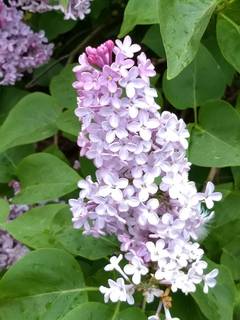
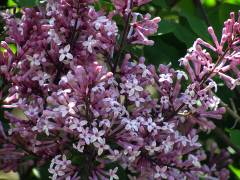
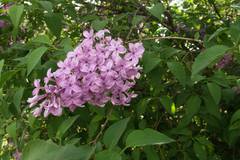
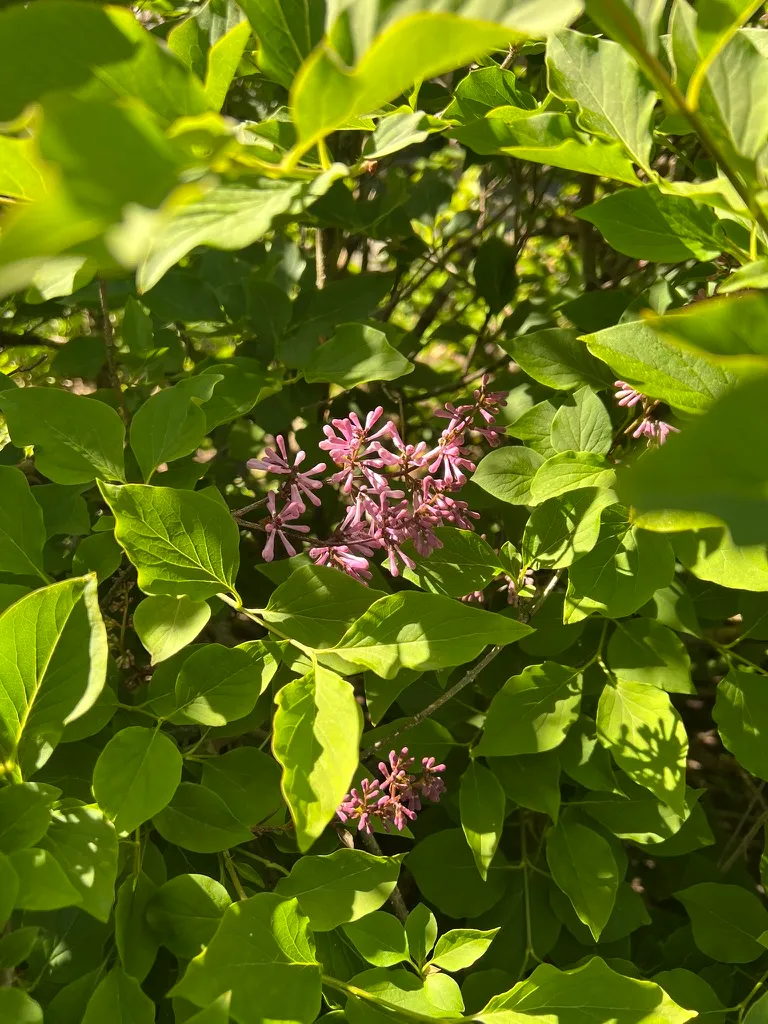
Lavender-blue tubular flowers 0.3 inch (8 mm) long open from purple buds in dense conical panicles 3-5 inches (7-13 cm) long during May and June in zones 3-8, averaging 3 weeks of bloom. Bloom begins 1-2 weeks later than common lilac in the same garden, which extends the lilac season in mixed plantings. Flowers carry a strong traditional lilac fragrance with a spicy undertone and are visited by bees, butterflies, and hummingbirds. Deadheading spent flower panicles immediately after bloom directs plant energy into the following year's flower bud formation and improves bloom quantity.
Detailed Descriptions
Flower Description
lavender-blue tubular flowers 0.3 inch (8 mm) long opening from purple buds in dense conical panicles 3-5 inches (7-13 cm) long; strongly fragrant with the traditional lilac scent carrying a spicy undertone not found in common lilacFoliage Description
dark green simple ovate opposite finely pubescent (hairy) leaves 2-4 inches (5-10 cm) long; turns purple to burgundy-red in fall, an uncommon trait for the genus Syringa because most common lilac cultivars produce no fall color at allGrowing Conditions
Sun Requirements
Requires 4-12 hours of direct sunlight daily
• Full Sun: 6+ hours of direct sunlight
• Partial Shade: 3-6 hours of direct sunlight
• Full Shade: Less than 3 hours of direct sunlight
Care & Maintenance
Care Guide
Plant in well-drained soil with a pH of 6.0-7.5 in full sun to partial shade (4-12 hours); full sun produces denser bloom and stronger fall color. Tolerated soil types include loam and clay. The cultivar is drought-tolerant once established and tolerates alkaline soils. Powdery mildew on the foliage in late summer is the main disease concern and develops on crowded plants with poor air circulation, so spacing at 4-6 feet (1.2-1.8 m) minimum between plants and avoiding crowded shrub plantings reduces disease pressure; the disease is cosmetic rather than fatal but reduces the fall color display when severe. Lilac borer attacks stressed plants through bark wounds and weakened canes, and is a secondary concern in gardens where other Syringa species are already affected. The cultivar blooms on old wood and all renewal pruning is done immediately after flowering in June and July; late-winter and early-spring pruning removes the flower buds formed during the previous growing season. Deer browse foliage and new growth when accessible. Winter hardiness extends to zone 3 without damage, which suits the cultivar to cold-climate landscapes across the northern tier states and Canada.Pruning
Pruning is done immediately after flowering in June and July because the cultivar blooms on old wood and the flower buds for the following year form on the current season's new growth through summer and fall. Spent flower panicles are deadheaded to the first pair of leaves below the panicle, which directs plant energy toward the following year's bloom. Approximately one-third of the oldest stems are removed at ground level each year to renew the shrub from the base and maintain vigorous flowering on younger wood. Shearing is not practiced because the mounding natural habit is the ornamental structure and shearing destroys both the natural form and much of the flowering wood. Root suckers are removed at the soil line if a single-stemmed form is wanted, though the natural multi-stemmed habit is the standard presentation.Pruning Schedule
Prune: June–July
summer
Container Growing
Suitable for container growing
Minimum container size: 10 gallons