Rosa, Genus, 'Double Delight', Cultivar,
- Genus
- Cultivar
Double Delight Rose
Overview
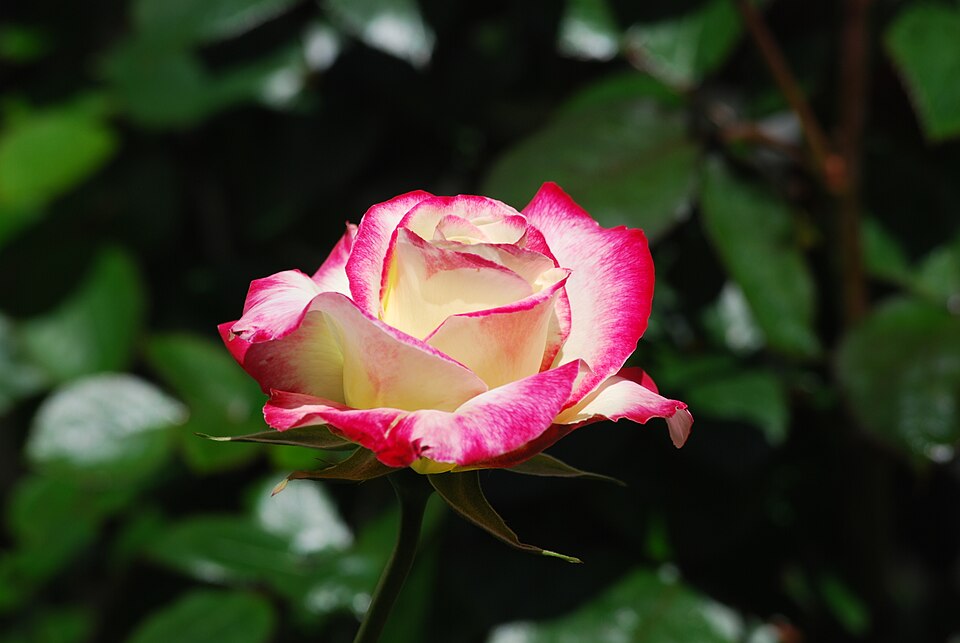
Rosa 'Double Delight' is a hybrid tea rose introduced in 1977 by Swim and Ellis. It forms a bushy, upright shrub 36-48 inches (90-120 cm) tall and 24-36 inches (60-90 cm) wide. The high-centered flowers are 5-5.5 inches (13-14 cm) across with about 30 petals, opening creamy white at the center with strawberry-red edges. The red edging widens and deepens as the bloom receives more sun, so the color varies plant to plant and day to day. The blooms carry a strong spicy fragrance and appear mostly one to a stem. Foliage is medium green and semi-glossy on upright canes. Flowering repeats from early summer to autumn. The cultivar is prone to powdery mildew and blackspot in humid or crowded settings and gives pollinating insects limited access to pollen. It is grown in rose beds, mixed borders, and as a cut flower in USDA zones 6-9.
Native Range
This cultivar is a garden hybrid of complex parentage with no wild range; it was raised in the United States. The genus Rosa is distributed across the temperate and subtropical Northern Hemisphere.Suggested Uses
Used in rose beds, mixed borders, and as a cut flower, where the long stems and strong scent hold up in arrangements. It also grows in large containers of at least 12 gallons (45 L). Its disease susceptibility makes airflow around the plant important.How to Identify
Appearance
Size & Dimensions
Height3' - 4'
Width/Spread2' - 3'
Bloom Information
Detailed Descriptions
Flower Description
Creamy white with strawberry-red edgesFoliage Description
Medium green, semi-glossyGrowing Conditions
Sun Requirements
Requires 6-8 hours of direct sunlight daily
• Full Sun: 6+ hours of direct sunlight
• Partial Shade: 3-6 hours of direct sunlight
• Full Shade: Less than 3 hours of direct sunlight
Care & Maintenance
Care Guide
Full sun with six or more hours of direct light and fertile, well-drained loam suit this rose. Soil pH from 6.0 to 7.0 is appropriate. Roughly 1-2 inches (2.5-5 cm) of water per week sustains it during dry spells, with base watering rather than overhead to limit leaf disease. A spring mulch of compost and a balanced rose feed after the first flush support repeat flowering. Open spacing and good airflow reduce the powdery mildew and blackspot this cultivar is prone to. Aphids are the most common pest in warm conditions.Pruning
Pruning hard in late winter or early spring, cutting stems back to about 12-18 inches (30-45 cm) above outward-facing buds, produces strong flowering canes. Dead, thin, and crossing wood is removed to open the center. Cutting spent blooms back to a strong leaf speeds the next flush.Container Growing
Suitable for container growing
Minimum container size: 12 gallons