Overview
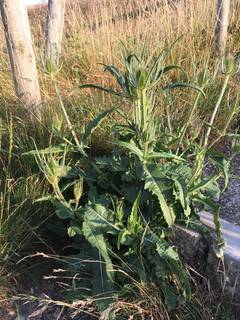
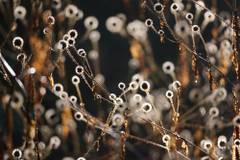
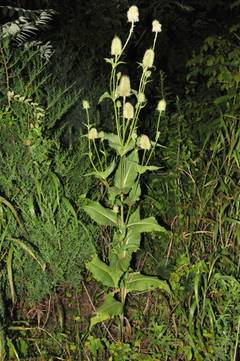
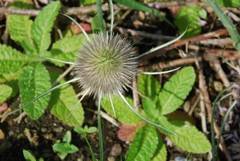
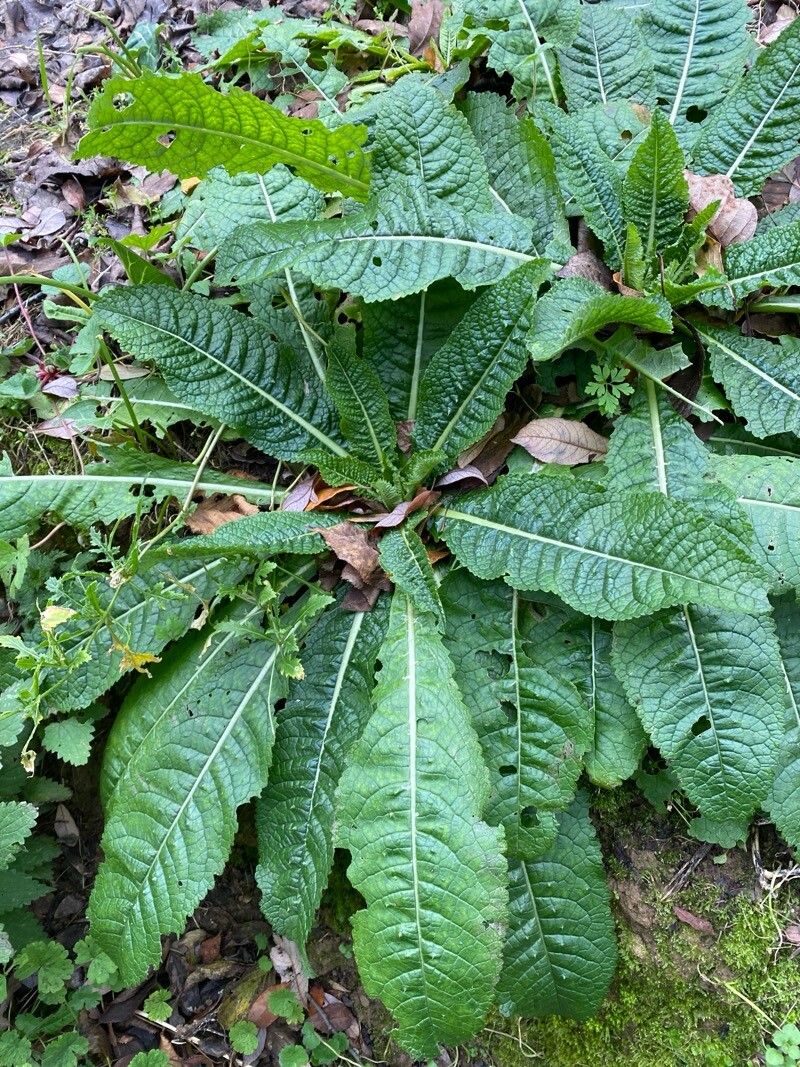
Dipsacus sativus is a tall biennial in the honeysuckle family, growing as a flat rosette of leaves in its first year and bolting to a stiff, prickly flowering stem 3-7 feet (0.9-2.1 m) tall in its second. The stems and the midribs of the opposite, lance-shaped leaves are armed with stout prickles, and pairs of leaves fuse around the stem to form small water-holding cups. In mid to late summer it produces egg-shaped flower heads 2-4 inches (5-10 cm) long covered in stiff, sharp bracts, with a band of small pale purple to white flowers opening in rings around each head. After flowering the heads dry to rigid, spiny cones that persist into winter. Native to Europe and the Mediterranean, it was grown historically for those dried heads, whose straight, hooked spines were used to raise the nap on woolen cloth in a process called fulling. It has escaped cultivation and naturalized along roadsides, fields, and disturbed ground in North America, where it can crowd out other plants. The plant dies after setting its abundant seed. It tolerates poor soil, drought, and sun but spreads aggressively where seed is left to ripen.
Native Range
Dipsacus sativus is native to Europe and the Mediterranean region. It was introduced to North America for the textile trade and has naturalized across much of the United States and southern Canada along roadsides, in fields, and on disturbed, sunny ground.Suggested Uses
Dipsacus sativus has been grown for its dried spiny heads, used historically to raise the nap on cloth and now in dried-flower crafts. Its prickly seed heads draw seed-eating birds such as finches. Its weedy self-sowing limits its use to controlled plantings where the seed can be removed.How to Identify
Appearance
Size & Dimensions
Height3' - 7'
Width/Spread1'6" - 3'
Bloom Information
Small pale purple to white flowers open in mid to late summer, about July to August, in rings around the spiny heads. Bloom progresses as bands of flowers open from the middle of each head outward over several weeks. The heads then dry into persistent spiny cones.
Detailed Descriptions
Flower Description
Pale purple to whiteFoliage Description
GreenGrowing Conditions
Sun Requirements
Requires 6-12 hours of direct sunlight daily
• Full Sun: 6+ hours of direct sunlight
• Partial Shade: 3-6 hours of direct sunlight
• Full Shade: Less than 3 hours of direct sunlight
Water & Climate
Water Needs
Drought Tolerance
Drought tolerant when established
Care & Maintenance
Care Guide
Dipsacus sativus grows in full sun in most well-drained soils with a pH from about 6.0 to 7.5, tolerating poor, dry, and disturbed ground. It forms a leaf rosette the first year and flowers, sets seed, and dies in the second. Seed is sown in autumn or spring where the plants are to grow. It needs little water once established and no fertilizer. Each plant produces abundant seed and self-sows freely, so it can spread into surrounding ground and is treated as a weed in many regions. The dried heads can be cut before seed drops to limit spread.Pruning
Dipsacus sativus needs no pruning. Cutting the flower heads before the seed ripens limits its spread, and the dried, spiny heads can be harvested at that stage. Second-year plants die after seeding and can then be cleared.Toxicity
Non-toxicPlanting Guide
Planting Methods & Timing
Planting Method
direct sow
Direct Sow Timing
Autumn or spring where plants are to grow
Plant Spacing
18 inches