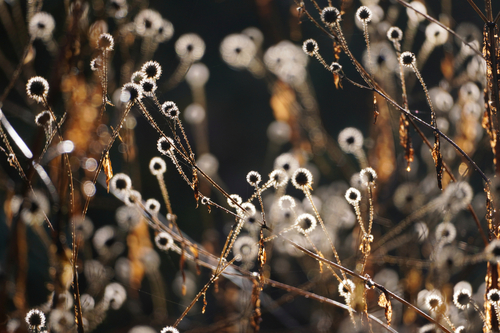
Dipsacus, Genus, spp., Multiple species,
- Genus
- Multiple species
teasels
Europe, western and central Asia, North Africa
Overview
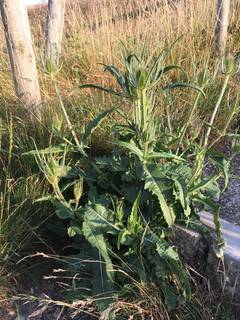
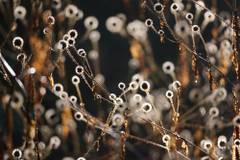
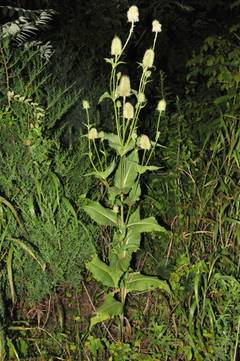
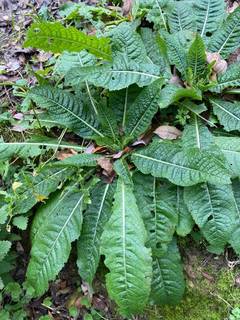
Dipsacus is a genus of about 15-20 species of tall biennial and short-lived perennial herbs in the honeysuckle family (Caprifoliaceae), native to Europe, Asia, and North Africa. In the first year plants form a flat rosette of large leaves; in the second they send up a stiff, prickly flowering stem 3-8 ft (0.9-2.4 m) tall. The stem leaves are opposite and joined at the base, forming cups that hold rainwater around the stem. Each branch tip carries an egg-shaped flowering head 1.5-4 in (4-10 cm) long, covered in stiff spines and ringed by small lilac, pink, or white flowers that open in a band moving up and down the head. After flowering the heads dry to stiff brown cones that persist through winter and hold seed taken by finches. The genus grows in damp meadows, ditches, roadsides, and disturbed ground. D. fullonum self-seeds heavily and has become an invasive weed across North America and Australia. The dried spiny heads of D. sativus were once used to raise the nap on woollen cloth.
Native Range
The genus is native to Europe, western and central Asia, and North Africa, with the centre of diversity around the Mediterranean and western Asia. Species grow in damp grassland, ditches, streamsides, and disturbed roadside ground.Suggested Uses
Grown in wildlife and naturalistic plantings for summer flowers and winter seed heads that draw finches, and in damp or difficult clay sites. The dried spiny heads are cut for everlasting arrangements, and D. sativus has a history of use in wool finishing.How to Identify
Appearance
Size & Dimensions
Height3' - 8'
Width/Spread1'6" - 3'
Bloom Information
Flowering occurs in mid- to late summer of the second year, when the small lilac flowers open in a ring around each spiny head and progress upward and downward over a few weeks. Bees and butterflies visit heavily during bloom. The flower heads then dry and stand through autumn and winter.
Detailed Descriptions
Flower Description
lilac, pink, or whiteFoliage Description
greenGrowing Conditions
Sun Requirements
Requires 4-10 hours of direct sunlight daily
• Full Sun: 6+ hours of direct sunlight
• Partial Shade: 3-6 hours of direct sunlight
• Full Shade: Less than 3 hours of direct sunlight
Care & Maintenance
Care Guide
Plants grow in full sun to part shade and in moist, heavy soils, including clay and ground too wet for many border plants. They tolerate poor and disturbed soils and need little care once the rosette is established. The main limit is prolific self-seeding, with a single plant casting hundreds of seeds. Drought during the first-year rosette stage reduces the size of the second-year stem. As biennials, plants die after setting seed, so a stand persists only through self-sown seedlings. No feeding is needed on average soils.Pruning
Seed heads are cut off after flowering on plants where self-seeding is not wanted, since each head holds abundant seed. Dead second-year stems are removed at the base in autumn or left standing through winter for seed-eating birds.Pruning Schedule
Prune: October
fall