Dipsacus, Genus, fullonum, Species,
- Genus & species
common teasel
Europe, western Asia, northern Africa; naturalized across much of the United States and southern Canada
Overview
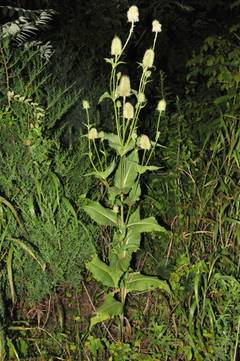
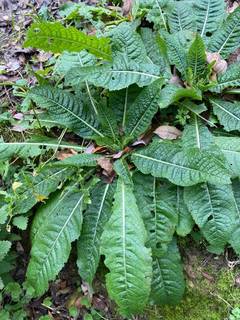
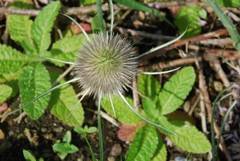
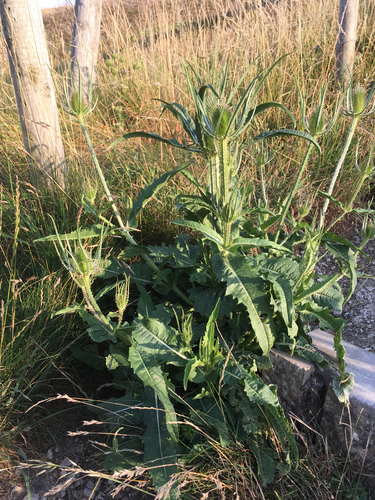
Dipsacus fullonum (synonym Dipsacus sylvestris) is a tall coarse biennial weed in the honeysuckle family (Caprifoliaceae) reaching 36–84 inches (90–210 cm) tall in the second year and 18–36 inches (45–90 cm) wide. First-year plants form a large flat basal rosette of oblong crenate-margined leaves up to 12 inches (30 cm) long, the leaf surfaces covered in small prickles. Second-year stems are erect, stiff, angular, and armed with sharp downward-pointing prickles along the ridges — a character that prevents climbing insects from reaching the flower heads and distinguishes the genus from unrelated coarse biennials. Opposite stem leaves are lance-shaped, 4–12 inches (10–30 cm) long, fused at the base around the stem (connate-perfoliate) to form a cup that collects rainwater around the stem — a morphological trait that distinguishes this species from nearly all other tall biennial composites and suggests a secondary function of drowning climbing insects before they reach the flower heads. Flower heads are egg-shaped, 2–4 inches (5–10 cm) long, composed of hundreds of small lavender to purple tubular florets. Flowering begins in a band around the middle of the head and progresses both upward and downward simultaneously, producing two expanding rings of open flowers advancing away from the center band over 7–10 days per head. Below each head runs a ring of stiff curved spine-tipped bracts. Each flower head produces 600–2,000 seeds; a single plant produces 2,000–6,000 seeds over its two-year life cycle. Seeds fall near the parent plant, and the persistent dried heads float, enabling dispersal along waterways. Listed as a noxious weed in several U.S. states. Dense stands form along roadsides, riparian corridors, and in disturbed meadows. Not known to be toxic to pets or humans.
Native Range
Dipsacus fullonum is native to Europe, western Asia, and northern Africa, occurring in meadows, roadsides, waste areas, and riparian margins from sea level to approximately 4,500 feet (1,400 m) elevation. The species was introduced to North America as a garden curiosity and for the textile trade — dried flower heads were used to raise the nap on woolen cloth during the finishing process. The species is naturalized across much of the United States, particularly in the Pacific Northwest, Midwest, and Northeast, and in southern Canada.Suggested Uses
Used in weed identification training for recognition of connate-perfoliate leaf morphology and the bidirectional flowering pattern in Caprifoliaceae. The flowering heads are used in botanical illustration and identification exercises for teaching inflorescence development timing. Dried seed heads are used in floral arrangements and dried-flower craft — the persistent stiff heads hold shape through drying. Historically, dried heads of the cultivated variety Dipsacus fullonum var. sativus — which has stouter spines — were used industrially in the textile trade to raise the nap on woolen fabrics during cloth finishing, particularly in 18th- and 19th-century British and New England textile mills. Seeds are consumed by goldfinches and house finches during winter.How to Identify
Appearance
Size & Dimensions
Height3' - 7'
Width/Spread1'6" - 3'
Bloom Information
Egg-shaped flower heads 2–4 inches (5–10 cm) long composed of hundreds of small lavender to purple tubular florets appear from June through August in the second growing season. The bidirectional flowering pattern — a band of open flowers beginning at the middle of the head and expanding both upward and downward over 7–10 days per head — produces the two-ring appearance visible at close range on newly flowering plants. In the Pacific Northwest, peak bloom occurs in July. Seeds mature 4–6 weeks after flowering. Pollinated by bumblebees and other long-tongued bees.
Detailed Descriptions
Flower Description
Lavender to purple; egg-shaped flower heads 2-4 inches long with hundreds of small tubular florets; bidirectional flowering band from middle of head expanding upward and downward over 7-10 daysFoliage Description
Dark green; basal rosette leaves oblong crenate prickly to 12 inches long; stem leaves opposite lance-shaped 4-12 inches long fused at base (connate-perfoliate) forming water-collecting cups around stemGrowing Conditions
Sun Requirements
Requires 6-10 hours of direct sunlight daily
• Full Sun: 6+ hours of direct sunlight
• Partial Shade: 3-6 hours of direct sunlight
• Full Shade: Less than 3 hours of direct sunlight