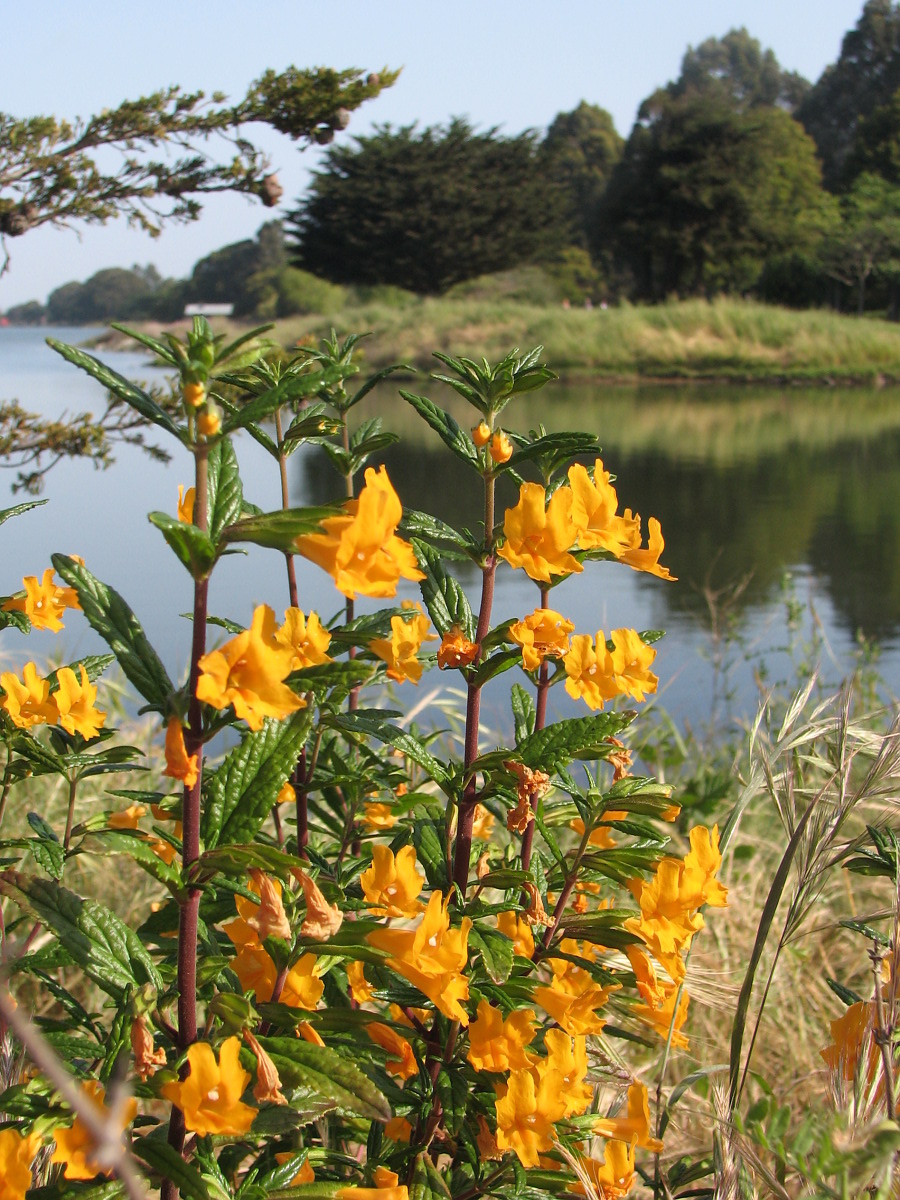
Image 1 of 9
1 / 9
© [https://www.flickr.com/people/15845498@N00 Se�n A. O'Hara] from Berkeley, CA, USA, some rights reserved (CC-BY) · Wikimedia Commons
Diplacus, Genus, ×, Hybrid, australis, Species,
- Genus & species
- Hybrid
san diego monkeyflower
Coastal southern California and northern Baja California
Overview
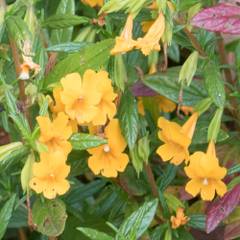
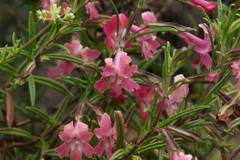
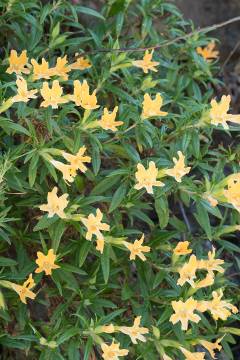
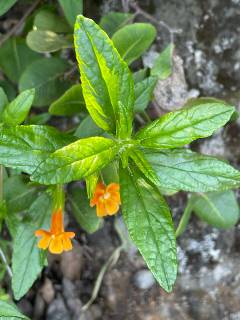
Diplacus × australis is an evergreen subshrub reaching 2–4 feet (60–120 cm) tall and 2–3 feet (60–90 cm) wide. It is a natural hybrid between Diplacus puniceus and Diplacus longiflorus, occurring where the two parent species overlap in coastal southern California. Stems are woody at the base and herbaceous toward the tips, carrying narrow lance-shaped leaves 1–3 inches (2.5–7.5 cm) long. Leaf surfaces are sticky from glandular resin, dark green above, with margins rolled under. Flowers are tubular, 1.5–2 inches (4–5 cm) long, with five flaring lobes, ranging from orange through salmon to brick-red depending on which parent traits dominate in a given plant. Bloom runs from late winter into summer, peaking in spring. The plant tolerates drought once established but is short-lived, typically persisting 3–5 years before declining. It grows on dry slopes, road cuts, and chaparral edges below 2,500 feet (760 m). Foliage can scorch in reflected heat, and the resinous leaves collect dust in roadside settings. Plants resprout from the woody base after light cutting but do not tolerate prolonged saturated soil, which causes root rot.
Native Range
Diplacus × australis occurs in the coastal foothills and chaparral of San Diego County, California, and adjacent northern Baja California, Mexico. It is found where the ranges of its two parent species meet, below 2,500 feet (760 m).Suggested Uses
Used on dry slopes, in native and habitat gardens, and in chaparral restoration plantings across its native range. It is planted to draw hummingbirds and spaced 24–36 inches (60–90 cm) apart in mixed dry borders. The resinous foliage and tubular flowers also appear in low-water container plantings.How to Identify
Appearance
Size & Dimensions
Height2' - 4'
Width/Spread2' - 3'
Bloom Information
Flowering runs from late winter through summer in its native range, peaking in spring from March to May. Individual flowers last several days, and a plant carries blooms in flushes rather than all at once. Hummingbirds visit the tubular flowers and are the main pollinators. Flowering thins during the driest part of summer, when plants may shed leaves.
Detailed Descriptions
Flower Description
orange to redFoliage Description
dark greenGrowing Conditions
Sun Requirements
Requires 6-10 hours of direct sunlight daily
• Full Sun: 6+ hours of direct sunlight
• Partial Shade: 3-6 hours of direct sunlight
• Full Shade: Less than 3 hours of direct sunlight
Care & Maintenance
Care Guide
Full sun to light afternoon shade suits Diplacus × australis, grown in fast-draining sandy or rocky soil. Deep but infrequent water during the first year establishes the root system; established plants need only occasional summer water and are drought-adapted. Soil that stays wet promotes root rot, so heavy clay needs amendment or a raised planting position. The plant grows across a soil pH of 6.0–7.5. Stems are frost-tender and may die back below about 25°F (−4°C). Plants are short-lived, becoming woody and sparse after a few years.Pruning
A cutback by one-third after the main spring bloom limits woodiness and triggers a flush of new growth. Tip-pinching young plants produces denser branching. Cuts into bare old wood resprout slowly.Pruning Schedule
Prune: May–June
late springsummer
Container Growing
Suitable for container growing
Minimum container size: 3 gallons