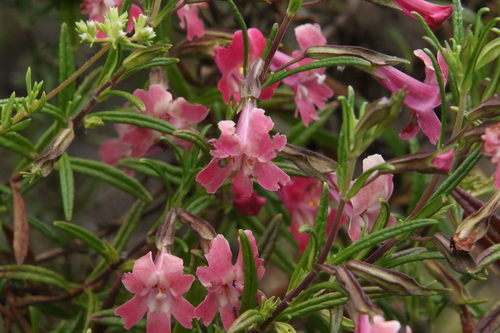
Diplacus, Genus, spp., Multiple species,
- Genus
- Multiple species
bush monkeyflowers
Overview
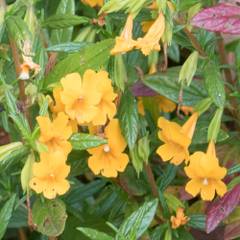
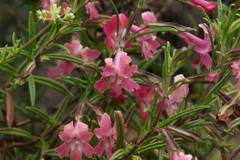
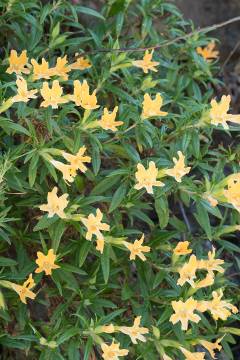
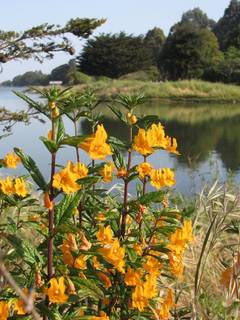
Diplacus is a genus of about 46 species of perennials and small subshrubs in the lopseed family Phrymaceae, segregated from the broader genus Mimulus and native almost entirely to western North America. The genus is centred in California and the adjacent western states, growing on dry slopes, rock outcrops, and chaparral. Plants form bushy, often sticky-stemmed subshrubs 1-4 ft (30-120 cm) tall, or smaller annual-like perennials, with narrow, opposite, gland-dotted leaves that are tacky to the touch. The tubular, two-lipped flowers flare into five lobes and come in orange, yellow, red, pink, cream, and white, measuring 1-2 in (2.5-5 cm) long. D. aurantiacus, the sticky monkeyflower, is the species seen most often, flowering heavily through spring and early summer. The flowers are visited mainly by hummingbirds and bees. The genus is adapted to summer-dry, Mediterranean-climate conditions, tolerating drought and poor, rocky soils, and goes semi-dormant or drops leaves in the driest part of summer. Most species are frost-tender to half-hardy.
Native Range
The genus is native to western North America, with the greatest concentration of species in California and neighbouring Oregon, Nevada, Arizona, and Baja California. A few species reach further north and into the Rocky Mountains.Suggested Uses
Diplacus is grown in rock gardens, dry banks, gravel and Mediterranean-climate plantings, and containers, and in native and hummingbird gardens in western North America. Plants are spaced 12-24 in (30-60 cm) apart. The bright tubular flowers combine with other drought-tolerant shrubs and perennials.How to Identify
Appearance
Size & Dimensions
Height1' - 4'
Width/Spread1' - 3'
Bloom Information
Diplacus flowers mainly in spring and early summer, roughly March to June, with D. aurantiacus blooming over several weeks. In cultivation with some summer water, flowering can continue longer. The plants slow and may shed leaves during summer drought.
Detailed Descriptions
Flower Description
orange, yellow, red, pink, cream, or whiteFoliage Description
greenGrowing Conditions
Sun Requirements
Requires 6-8 hours of direct sunlight daily
• Full Sun: 6+ hours of direct sunlight
• Partial Shade: 3-6 hours of direct sunlight
• Full Shade: Less than 3 hours of direct sunlight
Care & Maintenance
Care Guide
Grow Diplacus in full sun to light shade in sharply drained, gritty or sandy soil with a pH of 6.0-7.5. The genus is adapted to dry summers and needs free drainage, rotting easily in heavy, wet, or overwatered soil. Water young plants to establish them, then keep them on the dry side, since established plants tolerate drought but rot in summer wet. Light pruning after the main flush keeps the subshrubs compact and can prompt a second bloom. Most species are frost-tender to half-hardy and are grown as container or rock-garden plants where winters are cold. Lean soil and minimal feeding suit the genus, since rich conditions produce soft, floppy growth.Pruning
Light pruning or shearing of Diplacus after the main flush keeps plants bushy and may bring a second flowering. Old, woody, leggy stems can be cut back hard in autumn or late winter to renew the plant. Pinching young shoots encourages branching.Pruning Schedule
Prune: February & July
summerearly spring
Container Growing
Suitable for container growing
Minimum container size: 2 gallons