Dillwynia, Genus, phylicoides, Species,
- Genus & species
small-leaf parrot-pea
Overview
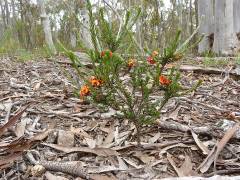
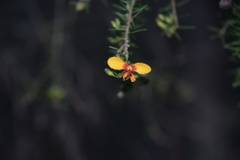
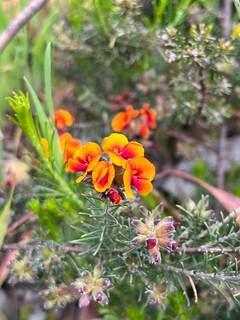
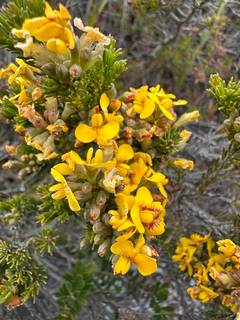
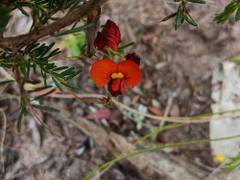
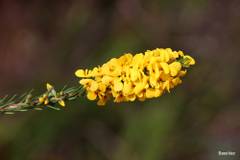
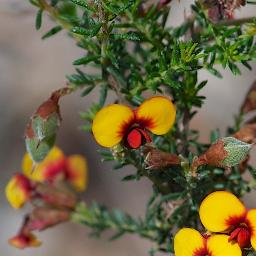
Dillwynia phylicoides is an evergreen shrub reaching 1.6-6.6 feet (0.5-2 m) tall and 1.6-5 feet (0.5-1.5 m) wide, with an upright to spreading habit and wiry stems. The leaves are small, narrow, and crowded, 0.1-0.4 inch (3-10 mm) long, with a rough surface and a blunt or pointed tip. Pea-shaped flowers 0.3-0.5 inch (8-12 mm) across appear in clusters at the stem tips in late winter and spring, yellow to orange with red markings in the center. Flat seed pods follow, each holding one or two seeds. It grows in dry sclerophyll forest, woodland, and heath on sandy and gravelly soils. As a legume it fixes nitrogen through root nodules. The plant is short-lived in heavy, poorly drained soils.
Native Range
Native to eastern Australia in Queensland and New South Wales. It grows in dry sclerophyll forest, woodland, and heath on sandy, gravelly, and clay-loam soils, often on ridges and slopes.Suggested Uses
Planted in native gardens, on embankments, and in dry mixed borders at 2.5-5 feet (0.75-1.5 m) spacing. The spring pea flowers suit informal and wildlife plantings. It is not suited to heavy or poorly drained soils.How to Identify
Appearance
Size & Dimensions
Height1'7" - 6'7"
Width/Spread1'7" - 5'
Bloom Information
Detailed Descriptions
Flower Description
yellow to orange with red markingsFoliage Description
greenGrowing Conditions
Sun Requirements
Requires 5-10 hours of direct sunlight daily
• Full Sun: 6+ hours of direct sunlight
• Partial Shade: 3-6 hours of direct sunlight
• Full Shade: Less than 3 hours of direct sunlight
Care & Maintenance
Care Guide
It grows in full sun to light shade in well-drained sandy, gravelly, or loamy soils with a pH of 5.0-6.5. Water through the first season to establish; mature plants tolerate dry periods and short drought. It tolerates frost to about 25°F (-4°C). Root rot develops in soils that stay wet, which shortens the plant's life. As a legume it needs little added fertilizer.Pruning
Tip-prune lightly after flowering to keep a compact shape. The plant tolerates light pruning but reshoots slowly from bare old wood. Heavy pruning into leafless stems can kill the plant.Pruning Schedule
Prune: November–December
late springsummer
Container Growing
Suitable for container growing
Minimum container size: 3 gallons