Dillwynia, Genus, cinerascens, Species,
- Genus & species
grey parrot pea
Overview
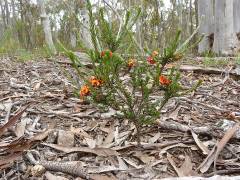
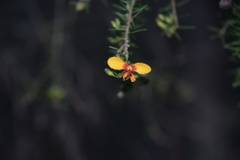
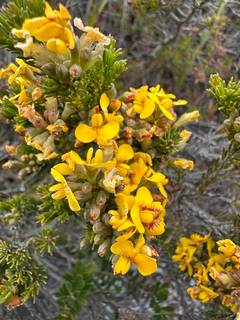
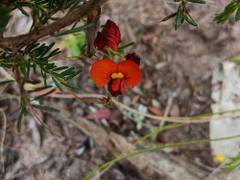
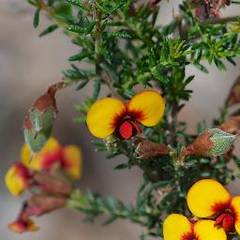
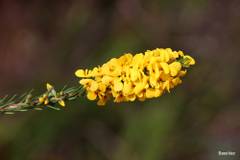
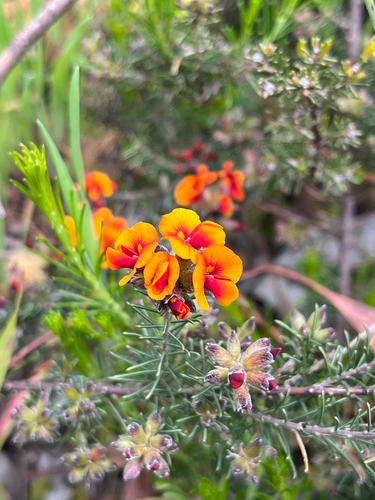
Dillwynia cinerascens is an evergreen shrub in the pea family, growing 0.5-2 m (1.6-6.5 ft) tall and 0.5-1.5 m (1.6-5 ft) wide, native to dry forest and heath in south-eastern Australia. The slender, sometimes arching stems carry crowded terete leaves 4-10 mm (0.2-0.4 in) long that are greyish-green and softly hairy, the source of both the common and species names. From late winter into spring the branch tips bear short clusters of pea flowers, each with a broad yellow to orange upper petal marked red toward the centre and a reddish keel. Small swollen pods follow and split to release hard seed. The species grows on sandy, gravelly, or clay-loam soils of low fertility in open, well-drained sites and tolerates frost and seasonal dryness once established. Like related parrot peas it is sensitive to root disturbance and to soils that stay wet, which can cause sudden collapse, and it tends to be short-lived, often persisting only 5-10 years before becoming woody and sparse. It grows quickly from seed and reshoots after fire in the wild.
Native Range
Native to south-eastern Australia, occurring in Victoria, Tasmania, New South Wales, and south-eastern South Australia, where it grows in dry sclerophyll forest, woodland, and heath on light, low-nutrient soils.Suggested Uses
Used in native and habitat gardens, low informal borders, and revegetation of dry sites. Suits embankments and rockeries with sharp drainage. Spaced 0.6-1 m (2-3 ft) apart in groups or drifts.How to Identify
Appearance
Size & Dimensions
Height1'8" - 6'7"
Width/Spread1'8" - 4'11"
Bloom Information
Flowers from late winter into spring, roughly August to November, with clusters of yellow-and-red pea flowers along the upper stems that can colour much of the bush. The display lasts several weeks. Small pods ripen through late spring and early summer.
Detailed Descriptions
Flower Description
yellow to orange with red centreFoliage Description
greyish-greenGrowing Conditions
Sun Requirements
Requires 6-9 hours of direct sunlight daily
• Full Sun: 6+ hours of direct sunlight
• Partial Shade: 3-6 hours of direct sunlight
• Full Shade: Less than 3 hours of direct sunlight
Care & Maintenance
Care Guide
Grow in full sun to light shade on light, sharply drained sandy or gravelly soil of low fertility. Water sparingly to establish, then rely on rainfall, as the roots rot where soil stays wet. Use little or no phosphorus, which damages peas adapted to lean ground. A light trim after flowering keeps the bush leafy and slows the woody decline of older plants. Root disturbance and transplanting of advanced stock often cause loss, so plant small and leave undisturbed. The species withstands frost and dry spells but is naturally short-lived.Pruning
Tip prune lightly straight after flowering to keep growth compact and remove spent blooms. Cutting into old bare wood reshoots unreliably, so renovation pruning is seldom successful. Replace open, woody plants rather than cutting them hard.Pruning Schedule
Prune: November–December
spring
Container Growing
Suitable for container growing
Minimum container size: 5 gallons