Dillwynia, Genus, glaberrima, Species,
- Genus & species
smooth parrot-pea
Overview
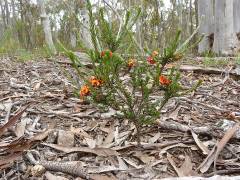
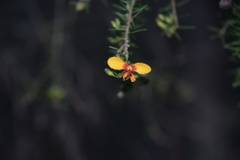
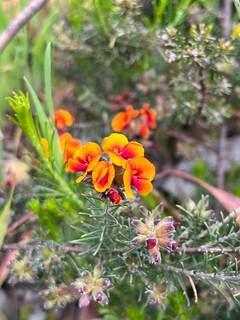
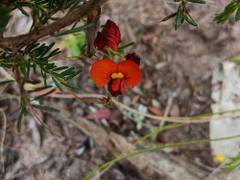
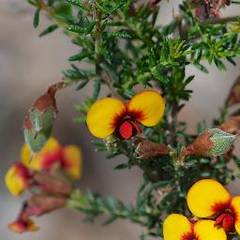
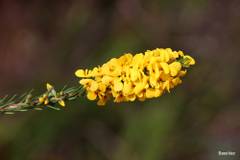
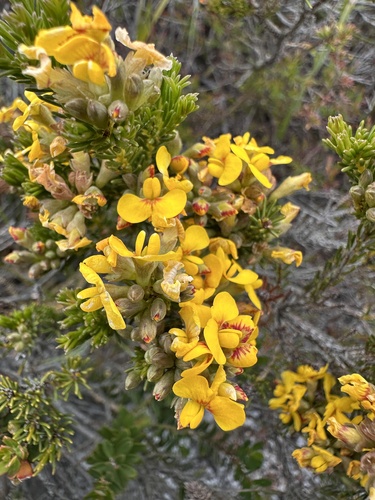
Dillwynia glaberrima is an evergreen shrub in the pea family reaching 2-5 feet (60-150 cm) tall, occasionally taller in sheltered sites. Habit ranges from low and spreading to erect and open depending on exposure. Stems are slender and smooth, lacking the hairs found on several related Dillwynia species. Leaves are scattered along the stems, narrow and almost terete (cylindrical), 0.2-0.6 inch (5-15 mm) long and about 0.04 inch (1 mm) wide, ending in a short soft point. Pea-shaped flowers form in clusters near the branch tips, each 0.3-0.4 inch (8-10 mm) wide, with a yellow to orange standard petal marked with red and a red keel. Flowering occurs mainly in late winter and spring. Flowers are followed by short swollen pods 0.2-0.3 inch (5-8 mm) long, each holding one or two seeds. Growth rate is moderate, with plants reaching flowering size within 2-3 years from seed. Lifespan is short for a shrub, often 5-10 years, after which plants become woody and sparse at the base.
Native Range
Native to southeastern Australia, occurring across New South Wales, Victoria, Tasmania, and South Australia. Grows in heathland, dry sclerophyll forest, and woodland, typically in sandy or gravelly soils that are low in nutrients and seasonally moist.Suggested Uses
Used in native and habitat gardens, low shrubberies, and informal borders at 3-5 foot (0.9-1.5 m) spacing. Suited to sandy coastal and heathland-style plantings. The short lifespan and open base limit its use as a long-term structural shrub.How to Identify
Appearance
Size & Dimensions
Height2' - 5'
Width/Spread2' - 4'
Bloom Information
Flowers mainly from August to November, spanning late winter through spring in its native range. Peak flowering lasts about 4-6 weeks. In cultivation, bloom timing shifts to the spring months of the local hemisphere. Cool, wet seasons can delay onset by several weeks.
Detailed Descriptions
Flower Description
yellow-orange with red markingsFoliage Description
greenGrowing Conditions
Sun Requirements
Requires 6-10 hours of direct sunlight daily
• Full Sun: 6+ hours of direct sunlight
• Partial Shade: 3-6 hours of direct sunlight
• Full Shade: Less than 3 hours of direct sunlight
Care & Maintenance
Care Guide
Grows in free-draining sandy or gravelly soil in full sun to light shade; growth is poor in heavy clay or waterlogged ground. Water through the first two growing seasons to establish the root system. Established plants tolerate extended dry periods and need little supplemental water. As a member of Fabaceae it fixes nitrogen and seldom needs fertiliser; phosphorus-rich fertilisers can damage the roots. Root-rot fungi such as Phytophthora cause dieback in poorly drained soils. Plants are short-lived, declining after 5-10 years.Pruning
Tip-prune lightly after flowering to promote branching and a denser habit. Plants tolerate removal of up to one-third of the current season's growth. Hard pruning into bare old wood often fails to reshoot. No routine pruning is required for plant health.Pruning Schedule
Prune: November–December
late springsummer
Container Growing
Suitable for container growing
Minimum container size: 5 gallons