Dianthus, Genus, chinensis, Species,
- Genus & species
China pink
Northern and central China, Mongolia, Korea, and southeastern Russia
Overview
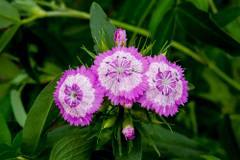
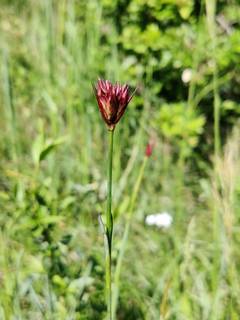
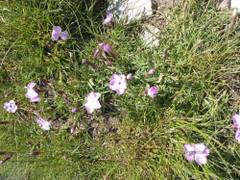
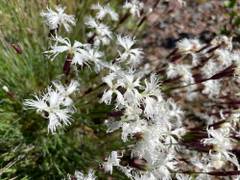
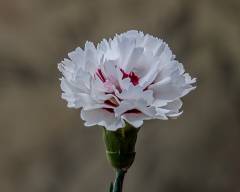
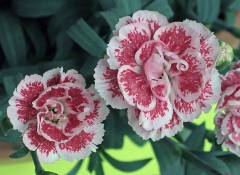
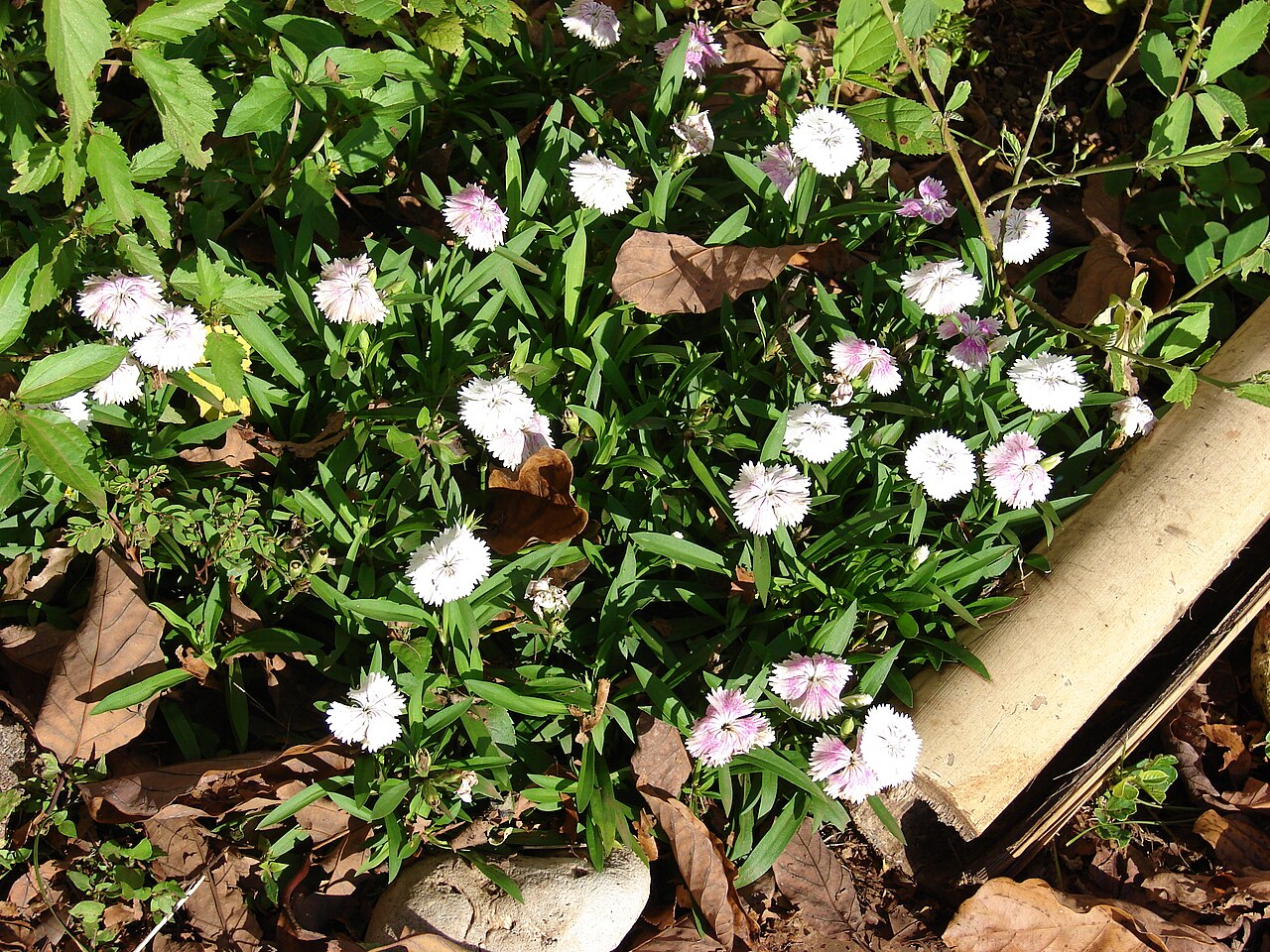
Dianthus chinensis is a short-lived perennial or biennial forming loose mounds 6-18 inches (15-45 cm) tall and 6-12 inches (15-30 cm) wide, most often grown as a bedding annual and replaced each year. Stems are slender, jointed at swollen nodes, and branch near the top. Leaves are opposite, linear to lance-shaped, 1-3 inches (2.5-7.5 cm) long and under 0.25 inch (6 mm) wide, grey-green to blue-green, and clasp the stem in pairs. Flowers are 1-1.5 inches (2.5-4 cm) across with 5 broad petals that are jaggedly toothed across the outer third, carried singly or in loose clusters of 2-5 at the stem tips. Colours run through pink, rose, red, white, and bicolours with a contrasting dark eye zone; seed strains are sold in mixed and single colours. Scent is faint to absent, in contrast to D. plumarius and D. caryophyllus, which carry a clove fragrance. Flowering runs from late spring until frost where plants are deadheaded, though bloom slows markedly during periods above 90F (32C) and plants can decline in humid summers. Crowns rot in wet winter soil, and most plants weaken after 2-3 seasons even in USDA zones 6-9 where they are winter hardy.
Native Range
Dianthus chinensis is native to northern and central China, Mongolia, Korea, and southeastern Russia, growing on dry grassy slopes, sandy riverbanks, and open woodland edges. It has been cultivated in Chinese gardens for more than 1,000 years and reached Europe in the early 18th century. It has naturalized in scattered locations in North America and Europe from garden escapes.Suggested Uses
Used in bedding schemes, border fronts, rock gardens, and edging at 8-10 inch (20-25 cm) spacing, and in containers and window boxes of 1 gallon (4 L) or larger. Flowers are visited by butterflies and bees, and the stems are cut for small posies where their 6-18 inch (15-45 cm) length suits low arrangements. Deer and rabbits generally leave the foliage alone.How to Identify
Appearance
Size & Dimensions
Height6" - 1'6"
Width/Spread6" - 1'
Bloom Information
Flowering starts in late May or early June from spring sowings and continues to the first hard frost where spent blooms are removed. The heaviest flush lasts 4-6 weeks in early summer, followed by lighter repeat bloom into September. Flowering pauses during sustained heat above 90F (32C) and resumes as night temperatures fall in late summer. Each flower lasts 5-7 days.
Detailed Descriptions
Flower Description
Pink, rose, red, white, and bicolours with a dark eyeFoliage Description
Grey-green to blue-greenGrowing Conditions
Sun Requirements
Requires 6-10 hours of direct sunlight daily
• Full Sun: 6+ hours of direct sunlight
• Partial Shade: 3-6 hours of direct sunlight
• Full Shade: Less than 3 hours of direct sunlight
Care & Maintenance
Care Guide
Flowering is heaviest in full sun with 6-8 hours of direct light; in less than 4 hours the stems stretch and flop. Soil should be free-draining and neutral to slightly alkaline at a pH of 6.5-7.5, since acidic or waterlogged ground shortens plant life to a single season. Watering when the top 1 inch (2.5 cm) of soil dries is sufficient, with overhead watering avoided late in the day because wet foliage overnight encourages crown rot and leaf spot. A light balanced feed at planting and again after the first flush is enough; heavy nitrogen produces soft growth prone to collapse. Seed is sown indoors 6-8 weeks before the last frost or direct-sown after it, with seedlings thinned to 8-10 inches (20-25 cm) apart. In humid regions, crown rot and rust are the common causes of loss, and spacing that allows air movement between plants reduces both.Pruning
Removing spent flowers at the stem joint below the bloom keeps new buds forming and extends the display by 6-10 weeks. Shearing the whole plant back by one-third to one-half after the first heavy flush fades, usually in mid-July, triggers a fresh flush within 3-4 weeks. In zones 6-9 the basal foliage is left standing over winter and dead stems are cut back in early spring as new growth appears. Cutting into bare woody stem bases produces no regrowth.Pruning Schedule
Prune: March & July
summerearly spring
Container Growing
Suitable for container growing
Minimum container size: 1 gallons
Toxicity Warning
Toxic to petsPlanting Guide
Planting Methods & Timing
Planting Method
both
Indoor Start
7 weeks before last frost
Direct Sow Timing
After the last spring frost once soil reaches 60F (16C)
Days to Maturity
90–100 days
Plant Spacing
9 inches