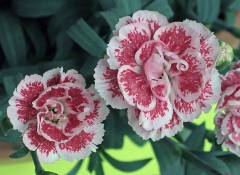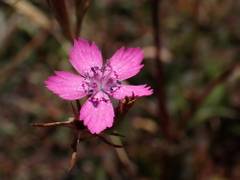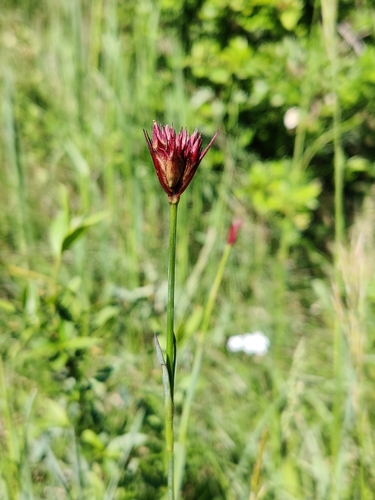
Dianthus, Genus, carthusianorum, Species,
- Genus & species
carthusian pink
Central and southern Europe (France to Balkans; dry meadows, calcareous soils)
Overview
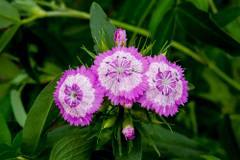
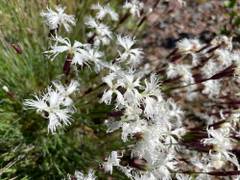
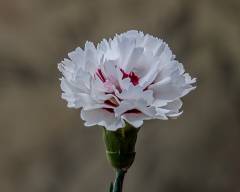
Dianthus carthusianorum is a clumping, semi-evergreen perennial reaching 12–24 inches (30–60 cm) tall with a spread of 8–12 inches (20–30 cm). The European wild species carries tight clusters of small, deep magenta-pink to crimson flowers 0.5–0.75 inch (1–2 cm) across, held in dense terminal heads atop slender, wiry, upright stems in June through August. Each flower head contains 6–15 individual flowers surrounded by brown, papery bracts. The foliage forms a low, grass-like tuft of narrow, dark green, linear leaves 2–4 inches (5–10 cm) long and only 0.08–0.12 inch (2–3 mm) wide. Growth rate is moderate. The species is short-lived at 3–5 years but self-seeds readily in open, well-drained soils—a meadow-successful behavior that builds naturalized colonies over 5–8 years from an initial planting. The wiry stems and small flower heads give the species a more wildflower-like, meadow character than the mounding cushion dianthus cultivars such as 'Firewitch' or 'Bath's Pink,' both of which carry larger solitary flowers on shorter stems. The species tolerates poor, lean, rocky, and calcareous soils that would starve most garden perennials. The flowers lack the clove fragrance common in garden dianthus cultivars. Named for the Carthusian monastic order, which grew the plant in European monastery gardens during the medieval period.
Native Range
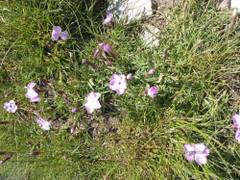
Dianthus carthusianorum is native to central and southern Europe, from France east to the Balkans and Ukraine and south to the Mediterranean, growing in dry meadows, rocky grasslands, and open woodland on calcareous (limestone-derived) soils. The species is named for the Carthusian monks (Ordo Cartusiensis) who cultivated it in monastic gardens, particularly at the Grande Chartreuse monastery in the French Alps.Suggested Uses
Planted in meadow gardens, gravel gardens, rock gardens, and dry borders at 8–12 inch (20–30 cm) spacing. The upright, wiry habit and clustered flowers blend naturally with ornamental grasses such as Stipa tenuissima and Festuca glauca and with wildflowers such as Echinacea and Achillea in meadow-style plantings. Functions on green roofs, in crevice gardens, and in dry stone wall plantings where the tolerance for poor, mineral-dominated soils matters. The self-seeding habit produces naturalized colonies of 50–200 plants from an initial 10–15 plant installation over 5–8 years in open, well-drained sites. Rich, moist soils and formal bedding layouts are poor fits for the species—excess fertility causes floppy growth, and the wiry, meadow-character habit reads as weedy in formal settings.How to Identify
Appearance
Size & Dimensions
Height1' - 2'
Width/Spread8" - 1'
Bloom Information
Tight terminal clusters of 6–15 small, deep magenta-pink to crimson flowers 0.5–0.75 inch (1–2 cm) across open in dense heads from June through August. Bloom duration is 6–8 weeks at color peak. Deadheading spent heads extends bloom by 2–3 weeks into September.
Detailed Descriptions
Flower Description
Deep magenta-pink to crimson, tight clustersFoliage Description
Dark green, narrow linear, grass-likeGrowing Conditions
Sun Requirements
Requires 6-12 hours of direct sunlight daily
• Full Sun: 6+ hours of direct sunlight
• Partial Shade: 3-6 hours of direct sunlight
• Full Shade: Less than 3 hours of direct sunlight
Care & Maintenance
Care Guide
Plant in full sun in well-drained, lean, neutral to alkaline soil (pH 6.5–8.0). The species grows in poor, rocky, calcareous soils including pure chalk—excess fertility produces weak, floppy stems that lodge under flower weight. Sharp drainage is critical; the crowns rot in wet winter soils, particularly in clay-heavy sites where water sits around the basal tuft. Drought-tolerant once established. Short-lived at 3–5 years per individual plant, but self-seeds readily to maintain the colony. Hardy to zone 3 (−40°F / −40°C). No serious pest or disease problems.Pruning
Spent flower stems are deadheaded to extend bloom and reduce self-seeding pressure where naturalization is not desired. Foliage is cut back to the basal tuft in late fall or early spring. Allowing some seed to set carries the colony forward since individual plants are short-lived.Pruning Schedule
Prune: September
fall
Container Growing
Suitable for container growing
Minimum container size: 1 gallons