Dianthus, Genus, arenarius, Species,
- Genus & species
sand pink
Northern and eastern Europe (Scandinavia, the Baltic states, Poland, Germany, and the western Russian plain); coastal sand dunes, inland sandy heaths, and calcareous grasslands.
Overview
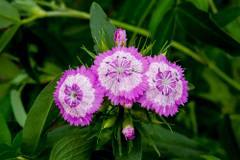
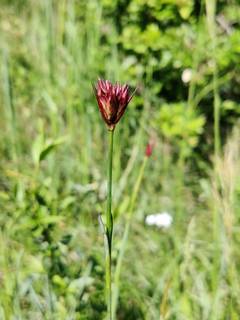
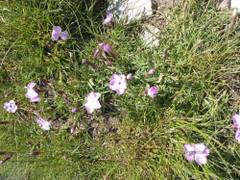
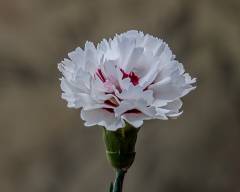
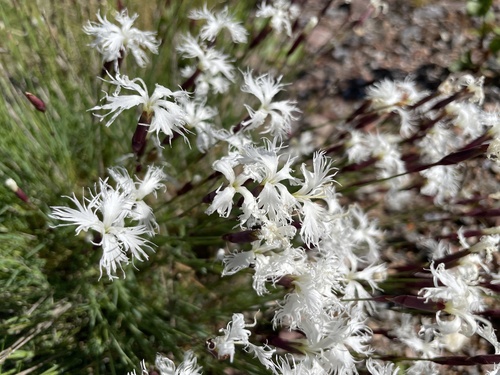
Dianthus arenarius is a mat-forming perennial in the pink family (Caryophyllaceae) reaching 6-12 inches (15-30 cm) tall in flower above a loose cushion of grey-green grassy foliage 8-12 inches (20-30 cm) wide. Basal leaves are narrow-linear, 1-3 inches (2.5-8 cm) long and 1-2 mm wide, with a glaucous blue-green surface from a waxy cuticle that reduces water loss in the species native sandy habitats. Flower stems rise above the foliage, each bearing 1-3 fragrant white flowers 1-1.5 inches (2.5-4 cm) across. Petals are deeply fringed: the petal margin is cut to approximately half its length into narrow thread-like segments, giving the flower a feathery or lacy appearance that is the species visual signature within the Dianthus genus. A faint greenish-yellow spot marks the petal base. The fragrance is sweet and clove-like, strongest in the evening, when nocturnal pollinators including hawk moths visit the flowers; the long deep corolla tube and pale petal color combined with the evening fragrance peak match the hawk-moth pollination syndrome (a flower architecture and chemistry combination that is shared across several night-blooming plant families). The species is adapted to nutrient-poor, sandy, and calcareous substrates in its native northern European range, where it grows on coastal dunes, inland sand plains, and limestone pavements. Drought tolerance and lean-soil performance follow from this habitat: rich heavy soils produce lax floppy growth and crown rot, while sharp drainage in lean substrates supports the species native cushion habit. Hardy in USDA zones 3-8 (-40°F / -40°C), with individual plants typically persisting 3-5 years before declining; self-sown seedlings carry the planting forward in open sandy ground. Susceptible to crown rot in waterlogged winter soil and to aphid infestation on flower stems during peak bloom.
Native Range
Dianthus arenarius is native to northern and eastern Europe, with a range from Scandinavia (Finland, Sweden, Estonia, Latvia) south through Poland and Germany into the western Russian plain. The species grows on coastal sand dunes, inland sandy heaths, and calcareous grasslands, and is classified as a protected species in several Baltic countries because of habitat loss from coastal development and inland land-use changes. The northern European maritime and continental ranges have shaped the species cold hardiness (to USDA zone 3) and the sand-and-calcareous-soil substrate preference.Suggested Uses
Used in rock gardens, crevice gardens, gravel gardens, and along the edges of raised beds at 8-10 inch (20-25 cm) spacing. The species works well in green roof systems with 3 inches (8 cm) or more of mineral substrate. Coastal exposure tolerance and sandy nutrient-poor soil performance make the species suited to seaside plantings where ordinary garden perennials struggle with salt spray and shallow root zones. The evening clove fragrance suits placement near outdoor seating areas and open windows where the bloom-period scent reaches indoor and outdoor living spaces. Combinations with other low-growing alpine and Mediterranean perennials (Sempervivum, Sedum, Thymus serpyllum, Cerastium tomentosum) produce textural contrast in mineral-based gravel plantings.How to Identify
Appearance
Size & Dimensions
Height6" - 1'
Width/Spread8" - 1'
Bloom Information
Deeply fringed white flowers 1-1.5 inches (2.5-4 cm) across open from June through August on slender stems above the foliage cushion, with peak bloom in late June and July and a total bloom span of 6 weeks. Individual flowers last 5-7 days. Fragrance is sweet and clove-like, strongest in the evening when nocturnal pollinators (particularly hawk moths) work the flowers; daytime bee visits also occur but the flower architecture (long corolla tube, pale color, evening fragrance peak) matches the hawk-moth pollination syndrome more closely than the daytime bee syndrome. Deadheading spent flower stems extends the bloom by 2-3 weeks into late summer.
Detailed Descriptions
Flower Description
White with a faint greenish-yellow base; deeply fringed flowers 1-1.5 inches (2.5-4 cm) across with petals cut to approximately half their length into thread-like segments giving a feathery or lacy appearanceFoliage Description
Glaucous grey-green; narrow-linear basal leaves 1-3 inches (2.5-8 cm) long and 1-2 mm wide forming a low cushion-like moundGrowing Conditions
Sun Requirements
Requires 6-10 hours of direct sunlight daily
• Full Sun: 6+ hours of direct sunlight
• Partial Shade: 3-6 hours of direct sunlight
• Full Shade: Less than 3 hours of direct sunlight
Care & Maintenance
Care Guide
Plant in full sun in sharply drained sandy to gritty soil at pH 6.5-8.0, with spacing of 8-10 inches (20-25 cm) apart. Heavy soils are amended with coarse sand and gravel to a depth of 8 inches (20 cm) before planting. Watering is sparing once established, and supplemental irrigation is needed only during extended drought. Organic mulch is avoided because moisture retention around the crown promotes rot in this species; gravel or stone-chip mulch substitutes give surface coverage without holding moisture against the plant base. Fertilization is not required in average garden soil; on very poor sand, a single light application of balanced fertilizer in early spring covers the year. A top-dressing of small-grade gravel around the crown in autumn reduces winter wet damage in the Pacific Northwest and other cool wet climates where waterlogged soil during dormancy is the primary cause of plant loss.Pruning
Shear spent flower stems back to the foliage mat after bloom completes to maintain a tidy appearance and encourage basal growth from the crown. In early spring, dead or winter-damaged foliage is removed to make room for new growth. Division is possible every 3-4 years but the tap-rooted habit makes transplanting difficult and reduces survival rates compared to other Dianthus species; propagation by seed (which germinates readily) or by stem cuttings taken in summer is more reliable than division.Pruning Schedule
Prune: August
summer
Container Growing
Suitable for container growing
Minimum container size: 2 gallons