Dianthus, Genus, spp., Multiple species,
- Genus
- Multiple species
carnations
Europe, Asia, and North Africa; richest in the Mediterranean
Overview
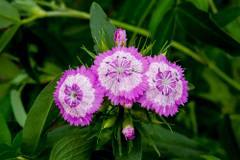
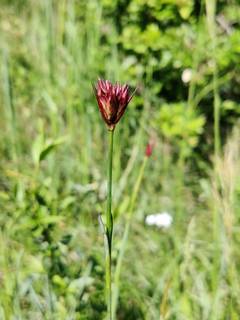
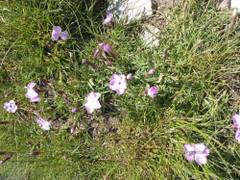
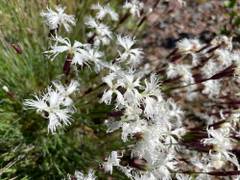
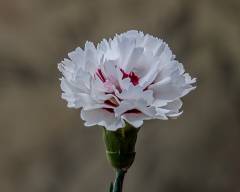
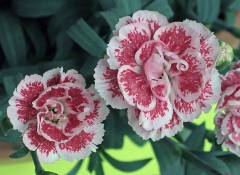
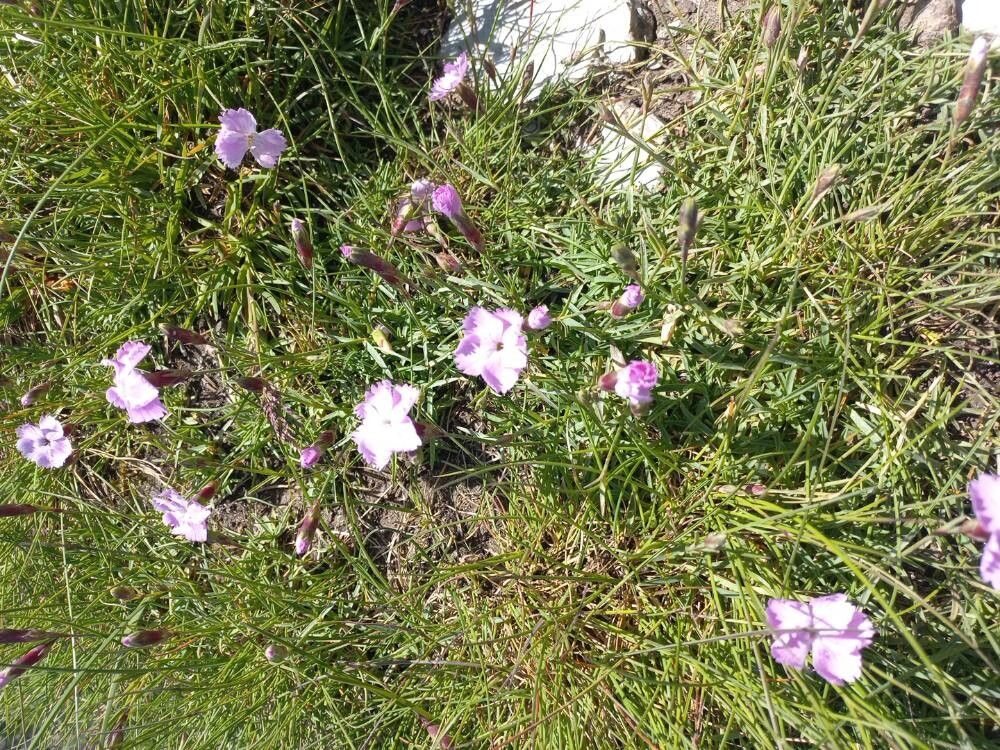
Dianthus is a genus of about 300 species of annual, biennial, and perennial herbs in the pink family, Caryophyllaceae, native mostly to Europe and Asia with a few species in North Africa. Plants form tufts or low cushions of narrow, grass-like blue-green to grey-green leaves on stems with noticeably swollen joints. Flowers are held singly or in clusters on wiry stems 4–32 in (10–80 cm) tall and have five petals that are usually toothed, fringed, or notched at the outer edge. Across the genus the flowers are pink, white, red, purple, and many bicolor patterns, and many carry a strong clove-like scent. The frilled petal edge gives the group the name pinks, from the cut or pinked margin rather than the color. The fruit is a cylindrical capsule that opens at the top to release small dark seeds. Garden types range from tall florist carnations D. caryophyllus to biennial sweet William D. barbatus and low alpine pinks. Many species are short-lived and grow leggy or rot in heavy, wet, or acidic soil. The genus grows in rocky, open, well-drained sites, often on lime-rich ground.
Native Range
Dianthus is centered on Europe and Asia, with the greatest diversity in the Mediterranean region, and a smaller number of species in North Africa and southern Africa. No species is native to North America, the wider Americas, or Australia. The carnation D. caryophyllus and many pinks derive from southern European stock long in cultivation.Suggested Uses
Dianthus species are grown in rock gardens, edging, raised beds, containers, and the front of borders, and carnations and pinks are cut for fragrant arrangements. Low cushion species are used between paving and on walls and gravel. The flowers attract butterflies, moths, and long-tongued bees.How to Identify
Appearance
Size & Dimensions
Height4" - 2'8"
Width/Spread6" - 1'6"
Bloom Information
Most Dianthus species flower from late spring into summer, roughly May to August, and many rebloom if spent flowers are removed. Alpine and cushion pinks bloom mainly in late spring, while carnations and border pinks flower over a longer summer season. Biennial sweet William flowers in its second year. Flower color spans white, pink, red, and purple, often in rings or eyes.
Detailed Descriptions
Flower Description
pink, white, red, purple, or bicolorFoliage Description
blue-green to grey-greenGrowing Conditions
Sun Requirements
Requires 6-10 hours of direct sunlight daily
• Full Sun: 6+ hours of direct sunlight
• Partial Shade: 3-6 hours of direct sunlight
• Full Shade: Less than 3 hours of direct sunlight
Care & Maintenance
Care Guide
Dianthus species grow in full sun and sharply drained, neutral to slightly alkaline soil with a pH around 6.0 to 7.5. They tolerate poor, dry, and rocky ground and rot quickly in heavy, wet, or acidic soil. Established plants are drought tolerant and need little water once rooted. They need little feeding, and rich soil produces soft growth and fewer flowers. Many pinks are short-lived and are renewed every 2 to 3 years from cuttings or by replacing plants. Removing spent flowers prolongs bloom and keeps the cushions compact. Plants are hardy in USDA zones 3 to 9 depending on the species.Pruning
Spent Dianthus flowers are removed through the season to extend bloom and prevent self-seeding. Cushion and mat-forming pinks are sheared lightly after the main flush to keep them dense. Leggy or woody plants are replaced or restarted from cuttings rather than cut hard into old wood.Container Growing
Suitable for container growing
Minimum container size: 1 gallons