Image 1 of 8
1 / 8
Plant Reference
Cupressus, Genus, ×, Hybrid, leylandii, Species,
- Genus & species
- Hybrid
leyland cypress
Garden hybrid — {Cupressus macrocarpa} (Monterey cypress, California) × {Callitropsis nootkatensis} (Nootka cypress, Pacific Northwest); first occurred naturally at Leighton Hall, Wales, 1888
Overview
Cupressus × leylandii is the Leyland cypress, growing 36–60 inches (90–150 cm) per year to 360–840 inches (900–2,100 cm) at maturity. A natural hybrid that first occurred at Leighton Hall, Wales, in 1888. Dense dark green to blue-green scale-like evergreen foliage in a columnar to pyramidal form. Widely planted as a privacy screen due to the fast growth rate. Several significant limitations: (1) seiridium canker (Seiridium cardinale) — a lethal fungal disease with no cure that is spreading through planted populations; infected trees must be removed; (2) bagworms defoliate the foliage; (3) the shallow root system is vulnerable to windthrow in storms and ice loading; (4) the tree does not regenerate from bare wood — pruning cuts that remove all green foliage produce permanent brown patches. Thuja 'Green Giant' is an alternative with similar growth rate (36–60 inches / 90–150 cm per year), greater disease resistance, deeper roots, and better tolerance of pruning. Zones 6–10. Full sun. Tolerant of a range of soils including clay. Non-toxic. Deer-resistant. The fast growth rate means the tree can quickly exceed the intended space — plan for the mature size of 360–840 inches (900–2,100 cm).
Native Range
A hybrid: Cupressus macrocarpa (California) × Callitropsis nootkatensis (Pacific Northwest). First at Leighton Hall, Wales, 1888.Suggested Uses
Grown as a privacy screen or windbreak spaced 60–96 inches (150–240 cm) apart in full sun. Zones 6–10. The fast growth requires planning for the 360–840 inch (900–2,100 cm) mature size. Seiridium canker and shallow roots are significant risks. Non-toxic. Deer-resistant.How to Identify
Appearance
Size & Dimensions
Height30' - 70'
Width/Spread10' - 25'
Colors
Foliage Colors
Fall Foliage Colors
Bloom Information
Inconspicuous flowers. Small round cones. The fast-growing evergreen screening form is the year-round feature.
Detailed Descriptions
Foliage Description
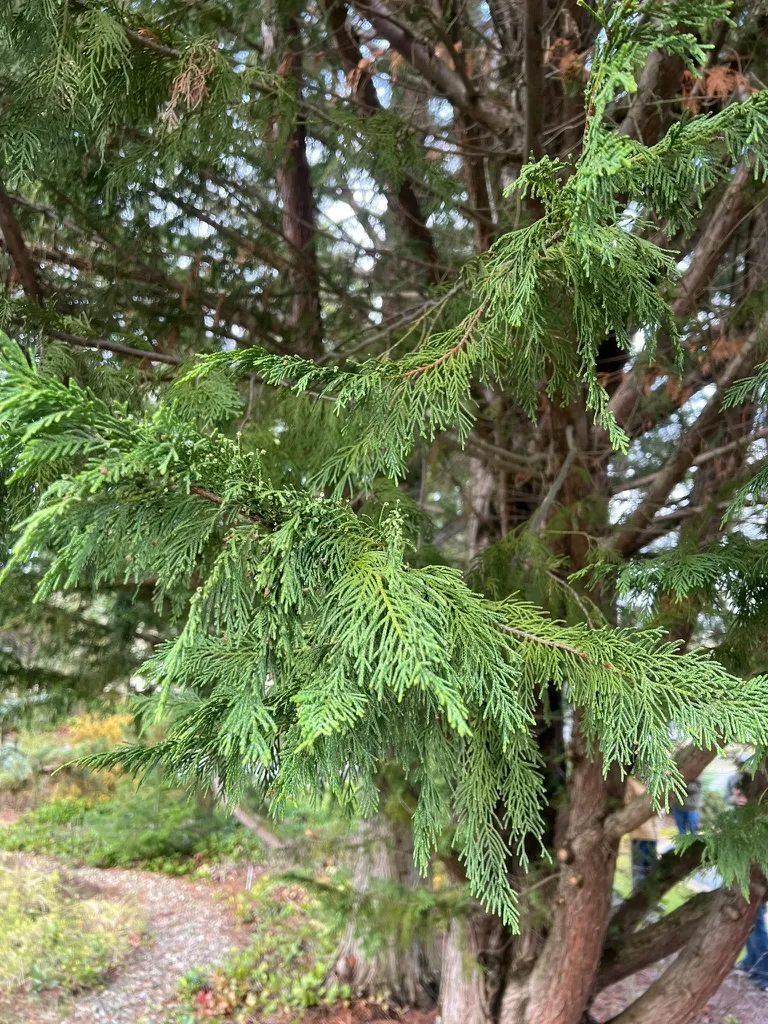
Dark green to blue-green, scale-like, feathery, evergreenGrowing Conditions
Sun Requirements
Requires 6-10 hours of direct sunlight daily
• Full Sun: 6+ hours of direct sunlight
• Partial Shade: 3-6 hours of direct sunlight
• Full Shade: Less than 3 hours of direct sunlight
Care & Maintenance
Care Guide
Full sun. Tolerates clay and a range of soils. Fast-growing — plan for 360–840 inch (900–2,100 cm) mature size. Seiridium canker (lethal, no cure). Bagworms. Shallow roots (windthrow risk). Does not regenerate from bare wood. Non-toxic. Zones 6–10.Pruning
Shear for formal shape in spring or summer. Do not cut back into bare wood — Leyland cypress does not regenerate from bare stems (permanent brown patches result). Remove seiridium-canker-infected branches with sterilized tools.Pruning Schedule
Prune: June–July
summer