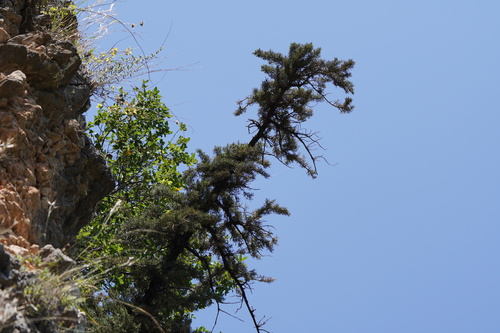
Cupressus, Genus, spp., Multiple species,
- Genus
- Multiple species
cypresses
warm temperate Northern Hemisphere: Mediterranean, Asia, and western North America
Overview
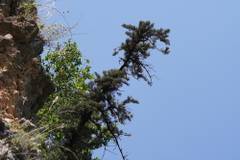
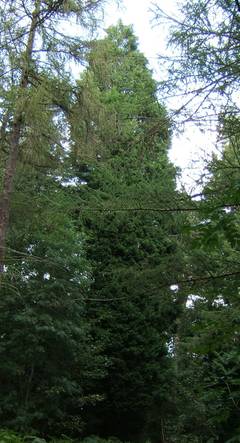
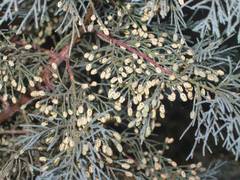
Cupressus is a genus of evergreen coniferous trees in the family Cupressaceae, with roughly 16 to 25 species spread across the warm temperate Northern Hemisphere, from the Mediterranean and North Africa through Asia to western North America. Trees range widely in form and size, from about 30 to 120 feet (9 to 37 m) tall and 10 to 30 feet (3 to 9 m) wide, including the narrow, columnar Italian cypress C. sempervirens and the broad, spreading Monterey cypress C. macrocarpa. The foliage consists of small, scale-like leaves pressed against the shoots in dense sprays, green to blue-green or gray-green, and aromatic when crushed. Reproduction is by cones rather than flowers: small spherical to oblong woody cones, 0.4 to 1.5 inches (1 to 4 cm) across, ripen over about two years and open to shed winged seeds. Several species are widely planted as windbreaks, screens, and specimen trees in Mediterranean and other dry climates. Plants tolerate heat, drought, and poor soils but are damaged by waterlogged ground and, in some species, by the fungal disease cypress canker, which kills branches and whole trees.
Native Range
Cupressus is native to scattered, often dry regions of the Northern Hemisphere, including the Mediterranean basin, the Sahara, the Middle East, the Himalayas, China, and western North America. C. sempervirens comes from the eastern Mediterranean, while C. macrocarpa and C. arizonica are native to California and the southwestern United States.Suggested Uses
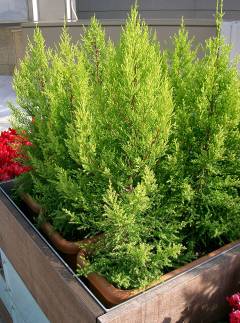
Cupressus is used as a specimen, screen, windbreak, and avenue tree in warm, dry climates, with columnar forms grown for vertical accent and tall hedges. Young Italian cypress is also grown in large containers. The eventual height and spread of most species, and their susceptibility to canker in humid regions, limit where they are planted.How to Identify
Appearance
Size & Dimensions
Height30' - 120'
Width/Spread10' - 30'
Colors
Foliage Colors
Fall Foliage Colors
Bloom Information
Cupressus does not flower. Pollen is shed from small male cones in late winter and spring, and the woody female cones ripen over about two years before opening to release winged seeds. Cones often remain closed on the tree until heat or age triggers their opening.
Detailed Descriptions
Foliage Description
green to blue-green or gray-greenGrowing Conditions
Sun Requirements
Requires 6-12 hours of direct sunlight daily
• Full Sun: 6+ hours of direct sunlight
• Partial Shade: 3-6 hours of direct sunlight
• Full Shade: Less than 3 hours of direct sunlight
Care & Maintenance
Care Guide
Cupressus grows in full sun in well-drained soil and tolerates heat, drought, wind, and poor, rocky, or alkaline ground once established. Young trees need regular water for the first few seasons, after which most species are drought-tolerant. Waterlogged or poorly drained soils cause root rot. Several species are susceptible to cypress canker, a fungal disease that kills branches and can be fatal in warm, humid climates. Trees grow quickly when young and develop deep roots that make large specimens hard to transplant. Most species need little pruning to hold their natural shape.Pruning
Cupressus is pruned lightly in spring or summer to shape young trees or maintain screens and hedges. Cuts are kept within green, leafy growth, as most species do not resprout from bare old wood. Dead or canker-killed branches are removed back to healthy wood to slow the spread of disease.Container Growing
Suitable for container growing
Minimum container size: 7 gallons