Cupressus, Genus, sempervirens, Species,
- Genus & species
Italian cypress
Eastern Mediterranean (Greece, Turkey to Iran)
Overview
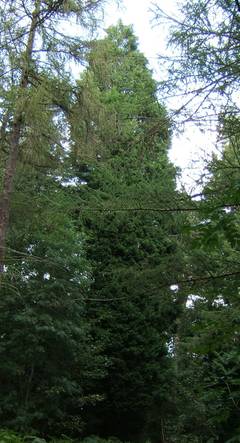
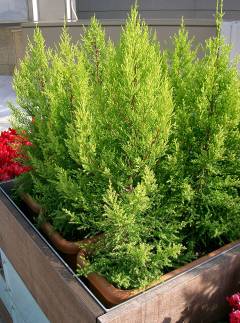
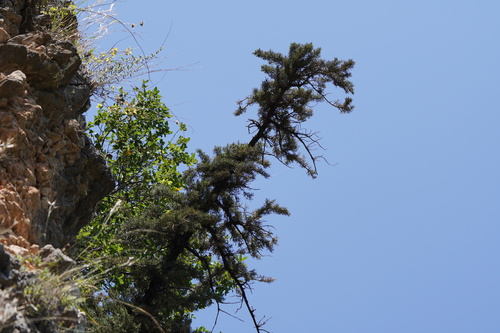
Cupressus sempervirens is a large, extremely narrow, columnar to fastigiate, evergreen conifer reaching 40–70 feet (12–21 m) tall with a spread of only 5–10 feet (1.5–3 m)—a silhouette proportion matched by few trees at this height class. The species occurs in two wild forms: a narrow columnar form (the 'Stricta' group, also called Italian cypress or pencil cypress) and a broader, conical form called var. horizontalis. The columnar selections overwhelmingly dominate commercial propagation and garden planting. The foliage is dark green to dark gray-green, composed of tightly appressed, scale-like leaves on rounded branchlets. The foliage stays dark green year-round without the bronzing shift seen in many other conifers through cold months. Round cones 1–1.5 inches (2.5–4 cm) in diameter ripen from olive-green to gray-brown over two years and persist on branches for several more. Growth rate is moderate to fast at 12–24 inches (30–60 cm) per year. The extremely narrow silhouette—typically 6–10 times taller than wide—is the defining trait of the columnar selections and the visual anchor of Tuscan, Provençal, and Mediterranean landscape traditions. Seiridium canker and root rot in wet soils are the main disease threats; spider mites and bagworms occur in stressed plantings. Ancient specimens in Iran and Mediterranean Europe exceed 2,000 years of age, making the species one of the longer-lived conifers in cultivation.
Native Range
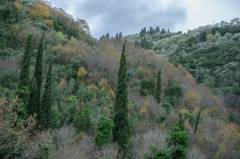
Cupressus sempervirens is native to the eastern Mediterranean region, from Greece and Turkey east to Iran, with possible natural occurrence in parts of North Africa. The species has been extensively planted throughout the Mediterranean basin for more than 3,000 years—cultivated references appear in ancient Egyptian, Greek, and Roman horticultural records—and the columnar form has become the characteristic tree of Tuscan and southern French agricultural landscapes.Suggested Uses
Planted as a vertical accent, formal screen, or architectural element at 4–6 foot (1.2–1.8 m) spacing for continuous screening or 15–20 feet (4.5–6 m) apart as individual accents. The extremely narrow form matches confined vertical sites along driveways, retaining walls, and building facades where broader conifers would crowd the space. Functions in Mediterranean, formal, Italianate, and Provençal garden designs where the species carries cultural association with specific regional traditions. Paired rows on either side of a long drive create the traditional allée effect associated with Tuscan villa approaches. Humid summer climates with regular summer rain (most of the US east of the Rocky Mountains) are a poor fit because Seiridium canker causes progressive branch decline within 5–15 years; wet-soil sites and exposed windy hilltops also cause early failure.How to Identify
Appearance
Size & Dimensions
Height40' - 70'
Width/Spread5' - 10'
Bloom Information
Male strobili release pollen in February–March. Female cones are round, 1–1.5 inches (2.5–4 cm), olive-green ripening to gray-brown over 2 years. Cones persist on branches for several more years after ripening.
Detailed Descriptions
Foliage Description
Dark green to dark gray-green, scale-like, tightly appressedGrowing Conditions
Sun Requirements
Requires 6-12 hours of direct sunlight daily
• Full Sun: 6+ hours of direct sunlight
• Partial Shade: 3-6 hours of direct sunlight
• Full Shade: Less than 3 hours of direct sunlight