Callitropsis, Genus, nootkatensis, Species,
- Genus & species
Alaska cedar
Southeastern Alaska south through coastal British Columbia, Washington and Oregon Cascades and Olympics, to northern California; 3,000-7,500 feet (900-2,300 m)
Overview
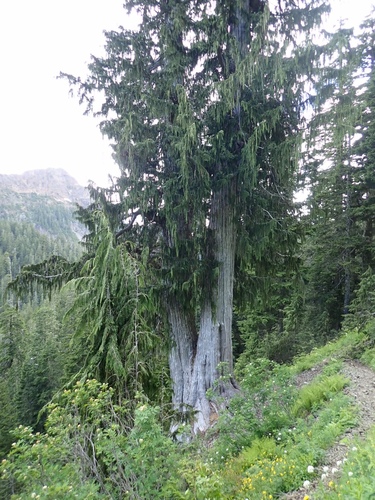
Callitropsis nootkatensis (syn. Chamaecyparis nootkatensis, Xanthocyparis nootkatensis) is a narrowly pyramidal evergreen conifer growing 40-100 feet (12-30 m) tall and 15-25 feet (4.5-7.5 m) wide. Dark blue-green scale-like foliage is arranged in flat sprays that hang vertically from horizontal branches, creating a weeping curtain pattern. Small round cones, 0.4 inch (10 mm), have 4-6 scales each tipped with a pointed boss. The species has been classified in Chamaecyparis, Xanthocyparis, and Callitropsis in successive molecular phylogenetic studies; taxonomic placement remains unsettled. The heartwood is yellow (the source of the common name yellow cedar), aromatic, and highly resistant to decay — used traditionally by First Nations for canoe paddles, carvings, masks, and coastal construction. Named after Nootka Sound on the west coast of Vancouver Island, British Columbia. Populations in Alaska and British Columbia are experiencing dieback (yellow cedar decline) linked to reduced winter snowpack that exposes shallow roots to freeze-thaw damage. Native to cool wet montane forests from southeastern Alaska south through coastal British Columbia, Washington and Oregon Cascades and Olympics, to northern California at 3,000-7,500 feet (900-2,300 m). Requires cool, consistently moist conditions; not drought-tolerant. Non-toxic. Deer-resistant.
Native Range
Native to southeastern Alaska south through coastal British Columbia, Washington and Oregon Cascades and Olympics, to northern California, in cool wet montane forests at 3,000-7,500 feet (900-2,300 m) elevation.Suggested Uses
Grown as a native coniferous specimen in Pacific Northwest landscapes, spaced 15-25 feet (4.5-7.5 m) apart. The weeping foliage sprays and narrowly pyramidal form suit large-scale plantings in cool, moist climates. Cultivars include 'Green Arrow' (extremely narrow columnar) and 'Pendula' (weeping). Not adapted to hot or dry climates. Non-toxic. Hardy in zones 4-8.How to Identify
Appearance
Size & Dimensions
Height40' - 100'
Width/Spread15' - 25'
Reproduction
Small round cones 0.4 inch (10 mm) with 4-6 scales. Wind-pollinated. The weeping blue-green foliage sprays are the year-round structural feature.
Detailed Descriptions
Foliage Description
dark blue-green, scale-like, in flat drooping sprays; foliage emits a sharp resinous scent when crushedGrowing Conditions
Sun Requirements
Requires 4-10 hours of direct sunlight daily
• Full Sun: 6+ hours of direct sunlight
• Partial Shade: 3-6 hours of direct sunlight
• Full Shade: Less than 3 hours of direct sunlight
Care & Maintenance
Care Guide
Site in full sun to partial shade (4-10 hours) in moist, well-drained soil with a pH of 5.5-7.0. Requires cool, consistently moist conditions — not drought-tolerant. Populations in parts of the native range are experiencing yellow cedar decline from freeze-thaw root damage linked to reduced snowpack. Growth rate is slow. Non-toxic. Deer-resistant. Hardy in zones 4-8.Pruning
No pruning is needed — the weeping pyramidal form develops naturally. The central leader should not be removed. Remove dead or damaged branches in early spring (February-March) if needed.Pruning Schedule
Prune: February–March
early spring