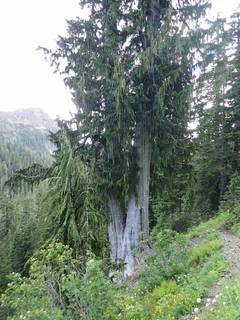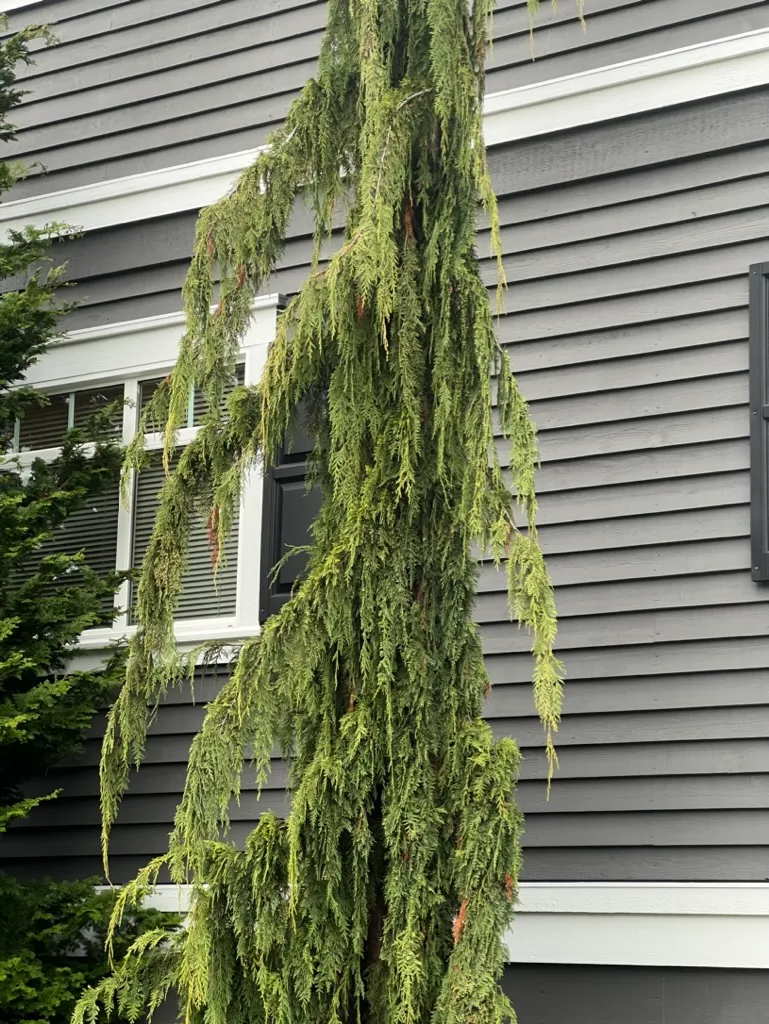
Image 1 of 2
1 / 2
Plant Reference
Callitropsis, Genus, nootkatensis, Species, 'Pendula', Cultivar,
- Genus & species
- Cultivar
weeping Alaska yellow cedar
Species native to PNW — Alaska south through British Columbia, Washington, and Oregon; coastal and subalpine forests; cultivar of garden origin
Overview
Callitropsis nootkatensis 'Pendula' is weeping Alaska yellow cedar (weeping Nootka cypress), an upright narrowly columnar weeping coniferous tree growing 25-45 feet (7.5-14 m) tall and 4-8 feet (1.2-2.4 m) wide. Blue-green to gray-green scale-like foliage in flattened sprays; branches hang straight down parallel to the trunk in dense curtains. Nodding leader tip. Pungent raw-potato smell when crushed (not the sweet cedar scent of Thuja plicata). Small cones 0.4-0.6 inch (1-1.5 cm). In Cupressaceae. Nootkatensis = Nootka Sound, BC. Taxonomically turbulent (also classified as Chamaecyparis and Xanthocyparis). Extremely narrow — 4-8 feet (1.2-2.4 m) wide at 25-45 feet (7.5-14 m) tall — suitable for tight spaces. Not drought-tolerant — consistent moisture required. This is the primary cultural limitation. Cold-hardy (zone 4). Non-toxic. Deer-resistant. Zones 4-8. Part sun to full sun. Growth rate is slow to moderate.
Native Range
Species native to PNW — Alaska south through British Columbia, Washington, and Oregon. Found in coastal and subalpine forests. Cultivar of garden origin.Suggested Uses
Grown as a narrow vertical accent, in tight spaces, and as a specimen on moist sites, spaced 4-8 feet (1.2-2.4 m). Extremely narrow. Weeping. Needs moisture. Non-toxic. Zones 4-8.How to Identify
Appearance
Size & Dimensions
Height25' - 45'
Width/Spread4' - 8'
Bloom Information
Not applicable — conifer. Wind-pollinated. Small round to ovoid cones 0.4-0.6 inch (1-1.5 cm), brownish-purple when ripe, ripening August-September in year 2.
Detailed Descriptions
Foliage Description
Blue-green to gray-green, scale-like, in flattened sprays; pungent raw-potato smell when crushed (not the sweet cedar fragrance of Thuja plicata); the branches hang straight down parallel to the trunk in dense curtains; the leader tip nods; extremely narrow columnar silhouette (4-8 feet / 1.2-2.4 m wide at 25-45 feet / 7.5-14 m tall)Growing Conditions
Sun Requirements
Requires 3-10 hours of direct sunlight daily
• Full Sun: 6+ hours of direct sunlight
• Partial Shade: 3-6 hours of direct sunlight
• Full Shade: Less than 3 hours of direct sunlight
Care & Maintenance
Care Guide
Part sun to full sun (3-10 hours). Moist soil pH 5.0-7.5. Not drought-tolerant — consistent moisture required. Very narrow (4-8 feet / 1.2-2.4 m) — suits tight spaces. Cold-hardy (zone 4). Minimal pruning. Non-toxic. Deer-resistant. Zones 4-8.Pruning
Minimal pruning needed — the natural weeping columnar form is self-maintaining. Remove dead branches in late spring (April). Do not top or shear.Pruning Schedule
Prune: April
late spring