Corylopsis, Genus, glabrescens, Species,
- Genus & species
fragrant winter hazel
Japan (mountain forests on Honshu, Shikoku, and Kyushu islands; 1,500 to 5,000 feet / 450 to 1,500 m elevation)
Overview
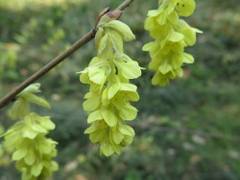
Corylopsis glabrescens is a large spreading multi-stemmed deciduous shrub in the witch-hazel family (Hamamelidaceae) reaching 8–15 feet (2.4–4.5 m) tall with a spread of 8–15 feet (2.4–4.5 m). The plant carries pendulous racemes 1–1.5 inches (2.5–4 cm) long of 10–20 small fragrant pale yellow flowers in March–April before the leaves emerge. Flowers carry a delicate sweet fragrance detectable at close range. This species is the largest-growing and most cold-hardy of the Corylopsis taxa in common cultivation. Leaves are broadly ovate 2–4 inches (5–10 cm) long, blue-green above with a glaucous undersurface, emerging after flowering with a pinkish-bronze tint before maturing to blue-green. Fall color is variable, typically yellow. The shrub develops a wide layered horizontal branching pattern with age, and the spreading canopy carries summer ornamental value alongside the early spring bloom. Growth rate is slow to moderate at 6–10 inches (15–25 cm) per year. Hardy to zone 5, which is more cold-tolerant than the closely-related C. sinensis. The open spreading habit requires space; the canopy will reach 10–12 feet across within 15 years in good conditions.
Native Range
Corylopsis glabrescens is native to Japan, where it occurs in mountain forests on Honshu, Shikoku, and Kyushu islands from 1,500 to 5,000 feet (450–1,500 m).Suggested Uses
Grown as a specimen in woodland gardens, shaded borders, and understory plantings at 8–12 foot (2.4–3.6 m) spacing. Early-spring flowering on bare branches extends the ornamental season before most other shrubs begin to flower, and the bloom period overlaps with early bulbs and hellebores for a combined March–April display. Woodland-edge positions and Asian-inspired garden styles align with the natural habitat and growth habit. Blue-green summer foliage carries ornamental interest through the growing season and into fall when the leaves turn yellow. Pairing with early bulbs (Narcissus, Crocus), Helleborus species, and other March–April bloomers builds a coordinated early-spring composition. Planting positions on the west or north side of open spaces shelter the early flowers from the rapid-thaw frost damage that occurs on east-facing exposures. Small tight planting sites, hot dry positions, and formal hedging roles are not suitable given the large mature spread and the shrub's woodland-native habit.How to Identify
Appearance
Size & Dimensions
Height8' - 15'
Width/Spread8' - 15'
Bloom Information
Pendulous racemes 1–1.5 inches (2.5–4 cm) long of 10–20 small fragrant pale yellow flowers open in March–April before the leaves emerge. Bloom duration is 2–3 weeks. Fragrance is delicate and sweet and detectable at close range. The March–April timing places the flowers at risk of late-frost damage in colder zones, and frost damage during peak bloom eliminates the flower display for the remaining bloom window.
Detailed Descriptions
Flower Description
Pale yellow; pendulous racemes 1-1.5 inches long of 10-20 small fragrant flowersFoliage Description
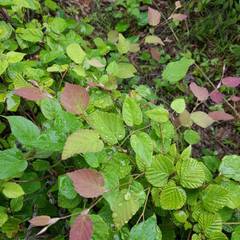
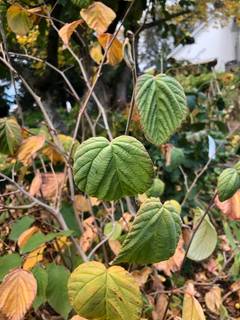
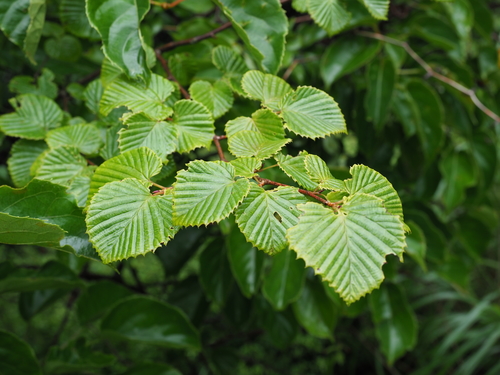
Blue-green above with glaucous undersurface; broadly ovate 2-4 inches long; emerging pinkish-bronze before maturingGrowing Conditions
Sun Requirements
Requires 3-8 hours of direct sunlight daily
• Full Sun: 6+ hours of direct sunlight
• Partial Shade: 3-6 hours of direct sunlight
• Full Shade: Less than 3 hours of direct sunlight
Care & Maintenance
Care Guide
Grows in partial shade to full sun in moist well-drained acidic soil at pH 5.0–6.5 enriched with organic matter, tolerating loam. Hardy to zone 5. Partial shade and a position with late-morning sun exposure protect the early flowers from late-frost damage. Positions exposed to direct early-morning sun after an overnight frost allow rapid thawing that ruptures frost-damaged flower tissue, so east-facing planting positions at the edge of an open space lose more bloom displays to frost than west- or north-facing sheltered positions. Consistent moisture supports establishment. The slow growth rate requires 5–8 years to reach near-mature size; patience through the establishment phase is required. No serious pest or disease problems.Pruning
Minimal pruning is required. Dead, crossing, or damaged branches are removed after flowering in late spring (May). The natural layered spreading form develops without structural intervention. Flowering occurs on old wood; pruning in fall or winter removes developing flower buds and eliminates the following spring's display.Pruning Schedule
Prune: May
late spring