Image 1 of 12
1 / 12
Plant Reference
Coreopsis, Genus, verticillata, Species, 'Moonbeam', Cultivar,
- Genus & species
- Cultivar
moonbeam coreopsis, tickseed
Parent species {Coreopsis verticillata} is native to the eastern United States — Maryland south to Florida and west to Arkansas — in open woodlands, meadows, and roadsides on well-drained sandy and rocky soils; cultivar 'Moonbeam' is of garden origin and was named Perennial Plant of the Year in 1992 by the Perennial Plant Association
Overview
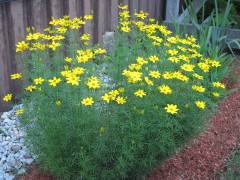
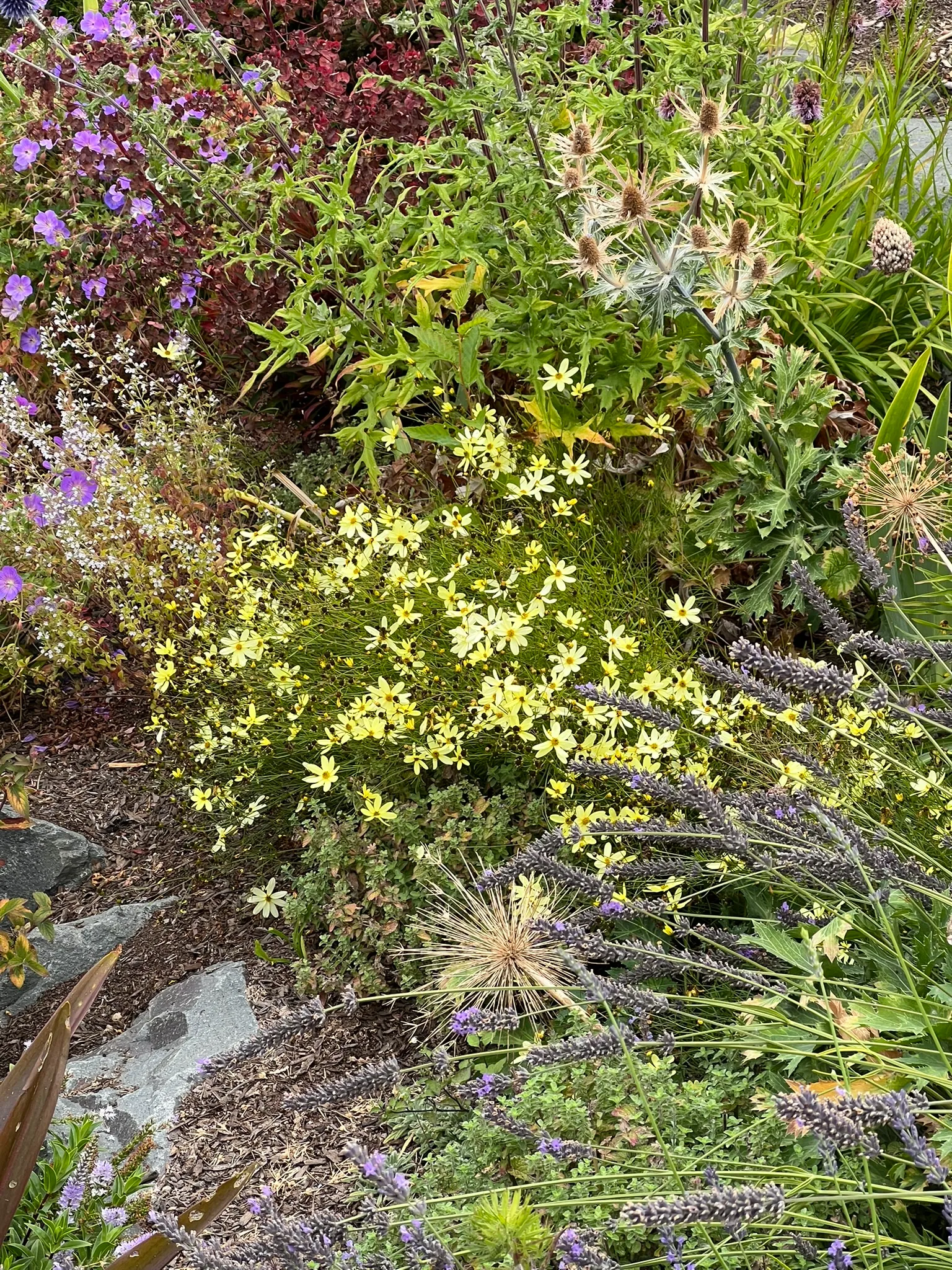
Coreopsis verticillata 'Moonbeam' is Moonbeam coreopsis (thread-leaf tickseed), a compact clumping deciduous perennial in the daisy family Asteraceae growing 18-24 inches (45-60 cm) tall and 18-24 inches (45-60 cm) wide. The cultivar was named Perennial Plant of the Year in 1992 by the Perennial Plant Association and has served as a foundation sunny-border perennial in temperate North American gardens since its introduction. Pale soft yellow daisy-like flowers (the lightest yellow tone in the genus Coreopsis, which otherwise tends toward golden-yellow and orange-yellow) 1-2 inches (2.5-5 cm) across with 8 ray florets are carried on slender upright stems above the feathery foliage from early summer through early fall (June through September) across a 14-week extended bloom period — the continuous 14-week bloom extends well beyond the 4-6 week bloom typical of most herbaceous perennials. The species epithet verticillata is from Latin verticillatus meaning whorled and records the arrangement of the extremely thread-like (filiform) linear leaf segments around the stem — the filiform foliage creates a soft feathery texture that is a species-level diagnostic separating C. verticillata from the broader-leaved Coreopsis species. The cultivar is sterile and does not produce viable seed, a character that separates 'Moonbeam' from some other C. verticillata cultivars and from the species type that can self-seed aggressively in garden conditions. The parent species is native to the eastern United States (Maryland to Florida, west to Arkansas), and the cultivar carries the native-species hardiness range across USDA zones 3-9. Limitation: the cultivar can thin at the center of the clump after 3-4 years of growth and calls for division in early spring every 3-4 years to maintain flowering vigor — the division requirement is the primary maintenance commitment beyond the optional mid-season shearing. A mid-season shearing by one-third of the plant height after the first flush of flowers in July encourages a second fall-bloom flush and maintains a compact rounded silhouette. Drought-tolerant once established. Deer-resistant. Non-toxic. Bees and butterflies work the flowers across the 14-week bloom period.
Native Range
Parent species Coreopsis verticillata is native to the eastern United States — Maryland south to Florida and west to Arkansas — in open woodlands, meadows, and roadsides on well-drained sandy and rocky soils. The cultivar 'Moonbeam' is of garden origin and was named Perennial Plant of the Year in 1992 by the Perennial Plant Association. The species epithet verticillata is from Latin verticillatus meaning whorled and records the arrangement of the thread-like leaf segments around the stem.Suggested Uses
Used as a continuous-blooming sunny border perennial in mixed herbaceous borders, in cottage gardens and meadow-style plantings, in mass plantings for a 14-week pale yellow ground-plane display, in rock gardens and xeric positions where the drought tolerance supports reliable flowering without supplemental irrigation, in wildflower and native-plant gardens reflecting the eastern US native range of the parent species, and in containers of at least 3 gallons (11 L) at 18-24 inch (45-60 cm) spacing between plants in USDA zones 3 through 9. The 14-week continuous bloom from June through September, the pale soft yellow flower color that blends with a wider range of companion colors than the more saturated golden-yellow Coreopsis cultivars, the soft feathery thread-like foliage texture, the sterile non-self-seeding character, the drought tolerance once established, and the deer resistance combine to make 'Moonbeam' a foundation continuous-blooming sunny perennial for full-sun border and meadow design. Wet heavy clay soils are unsuitable because of the root-rot sensitivity. Shade positions reduce the bloom density and shift the habit toward open and leggy growth.How to Identify
Appearance
Size & Dimensions
Height1'6" - 2'
Width/Spread1'6" - 2'
Bloom Information
Early summer through early fall (June through September) across a 14-week extended continuous bloom period. Pale soft yellow daisy-like flowers 1-2 inches (2.5-5 cm) with 8 ray florets around a small central disk on slender upright stems above the feathery foliage. The cultivar is sterile and does not produce viable seed — the sterility eliminates the self-seeding that can occur with the species type and some other cultivars. A mid-season shearing by one-third of the plant height after the first flush of flowers in July encourages a second fall-bloom flush. Bees and butterflies work the flowers across the bloom period.
Detailed Descriptions
Flower Description
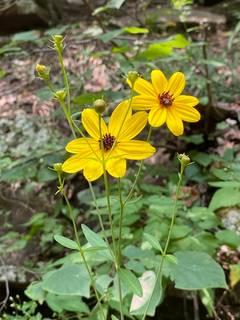
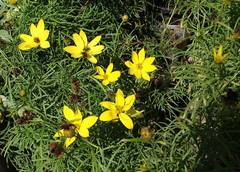
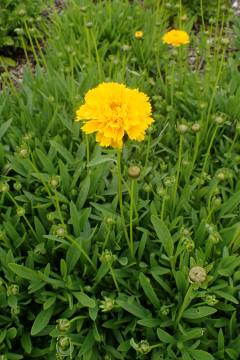
pale soft yellow daisy-like flowers (the lightest yellow tone in the genus Coreopsis, which otherwise tends toward golden-yellow and orange-yellow) 1-2 inches (2.5-5 cm) across with 8 ray florets around a small central disk, carried on slender upright stems above the feathery foliage from early summer through early fall (June through September) across a 14-week extended bloom period — the 14-week continuous bloom extends well beyond the 4-6 week bloom typical of most herbaceous perennials; the cultivar is sterile and does not self-seed, a character that separates 'Moonbeam' from some other Coreopsis verticillata cultivars and from the species type that can self-seed aggressivelyFoliage Description
medium green, with leaves divided into extremely thread-like (filiform) linear segments 1-2 inches (2.5-5 cm) long that create a soft feathery foliage texture unlike the broader-leaved species in the genus — the filiform leaf segments are the source of the common name thread-leaf tickseed, and the species epithet verticillata (Latin for whorled) records the arrangement of the linear leaf segments around the stem; deciduous — foliage dies back to the ground in late fall and regrows from the basal crown in springGrowing Conditions
Sun Requirements
Requires 6-8 hours of direct sunlight daily
• Full Sun: 6+ hours of direct sunlight
• Partial Shade: 3-6 hours of direct sunlight
• Full Shade: Less than 3 hours of direct sunlight
Care & Maintenance
Care Guide
Site in full sun with 6-8 hours of direct sun per day in well-drained loam, sand, or rocky soil with a pH of 5.5-7.0. Water during the first growing season to establish the root system; established plants are drought-tolerant. The species performs poorly in wet heavy clay soils and the well-drained substrate requirement is a strict cultural limitation — waterlogged soils produce root rot and rapid decline. A mid-season shearing by one-third of the plant height after the first flush of flowers in July encourages a second fall-bloom flush and maintains a compact rounded silhouette. The cultivar can thin at the center of the clump after 3-4 years and calls for division in early spring every 3-4 years to maintain flowering vigor. The species has no significant pest or disease concerns in cultivation beyond the wet-soil sensitivity. Non-toxic. Deer-resistant. Hardy in USDA zones 3-9.Pruning
A mid-season shearing by one-third of the plant height after the first flush of flowers in July encourages a second fall-bloom flush and maintains a compact rounded silhouette — the shearing is done with hand shears or powered hedge trimmers set to the desired height. The entire plant is cut back to 4-6 inches (10-15 cm) above the ground in fall (October) after the bloom season finishes and the foliage begins to die back. Division of the clump in early spring every 3-4 years maintains flowering vigor and prevents the center-thinning that develops on older undivided clumps.Pruning Schedule
Prune: July & October
summerfall
Container Growing
Suitable for container growing
Minimum container size: 3 gallons