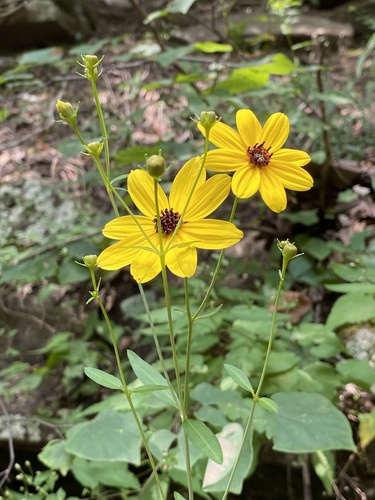
Coreopsis, Genus, tripteris, Species,
- Genus & species
tall coreopsis
Eastern North America (Ontario to Florida, west to Wisconsin/Kansas/Texas)
Overview
Coreopsis tripteris is a tall, upright, clump-forming, herbaceous perennial reaching 4–8 feet (1.2–2.4 m) tall with a spread of 2–3 feet (0.6–0.9 m). The plant produces loose, open clusters of daisy-like flowers 1.5–2 inches (4–5 cm) across with yellow ray florets and dark brownish-purple disc centers from August through October. The flowers have an anise-like scent when crushed. Leaves are alternate, trifoliate (three narrow leaflets per leaf)—the species name 'tripteris' references this three-part leaf structure—4–6 inches (10–15 cm) long, medium green. The stems are sturdy, dark, and self-supporting in most conditions, though plants in shade or rich soil may lean. Growth rate is vigorous. Native to eastern North American prairies and open woodlands. The late-season bloom fills the gap between summer perennials and fall asters. Unlike the shorter, red-flowered cultivated hybrids, this species is a tall, yellow, prairie wildflower. May self-sow in favorable conditions.
Native Range
Coreopsis tripteris is native to eastern North America, from Ontario to Florida and west to Wisconsin, Kansas, and Texas. It occurs in prairies, open woodlands, meadows, and along roadsides from lowland to 3,000 feet (900 m).Suggested Uses
Planted in prairie gardens, meadow plantings, and at the back of deep borders at 2–3 foot (0.6–0.9 m) spacing. The tall, late-blooming habit fills the late-summer to fall gap in native plant gardens. Functions in mass plantings, along fences, and as a screening annual backdrop. Pair with Aster, Solidago, Panicum, and other native grasses and perennials for naturalistic fall combinations. The sturdy stems provide structural winter interest. Not suitable for small borders, formal settings, or containers.How to Identify
Appearance
Size & Dimensions
Height4' - 8'
Width/Spread2' - 3'
Bloom Information
Detailed Descriptions
Flower Description
Yellow rays with dark brownish-purple disc centersFoliage Description
Medium green, trifoliate with three narrow leafletsGrowing Conditions
Sun Requirements
Requires 6-12 hours of direct sunlight daily
• Full Sun: 6+ hours of direct sunlight
• Partial Shade: 3-6 hours of direct sunlight
• Full Shade: Less than 3 hours of direct sunlight
Care & Maintenance
Care Guide
Plant in full sun in average, well-drained soil. Tolerates a wide range of soil types including clay. Drought-tolerant once established. Does not require staking in full sun and lean soil; in shade or rich soil, stems may lean. Do not fertilize. Cut back by one-third in early June (Chelsea chop) to reduce height and encourage bushier growth. Self-sows in favorable conditions; remove spent flower heads to prevent unwanted spread. No serious pest or disease problems.Pruning
Optional Chelsea chop: cut back by one-third in early June to reduce final height and delay bloom. Cut to the ground in late fall or early spring. The sturdy stems provide winter interest if left standing.Pruning Schedule
Prune: June
summer
Toxicity
Non-toxicRelated Coreopsis species
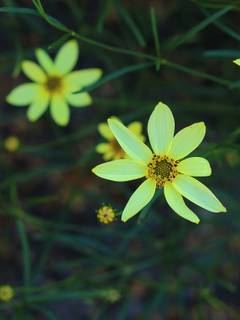 Moonbeam coreopsis, tickseedCoreopsis verticillata 'Moonbeam'
 Limerock ruby coreopsisCoreopsis 'Limerock Ruby'
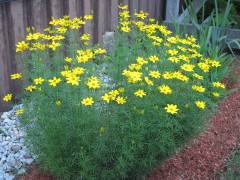 Large-flowered tickseedCoreopsis verticillata 'Grandiflora'
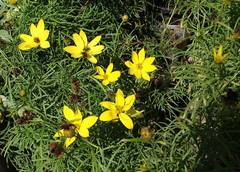 Zagreb coreopsisCoreopsis verticillata 'Zagreb'
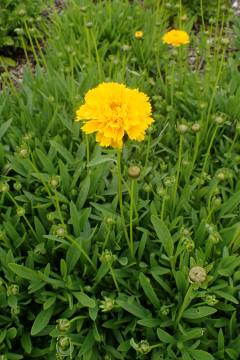 Early sunrise coreopsisCoreopsis grandiflora 'Early Sunrise'
 Lance-leaved coreopsisCoreopsis lanceolata