Coreopsis, Genus, verticillata, Species, 'Grandiflora', Cultivar,
- Genus & species
- Cultivar
large-flowered tickseed
Eastern North America (Maryland to Florida, west to Arkansas)
Overview
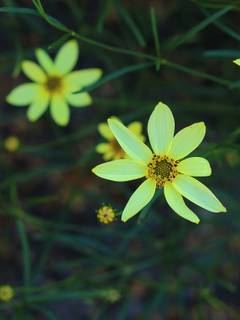
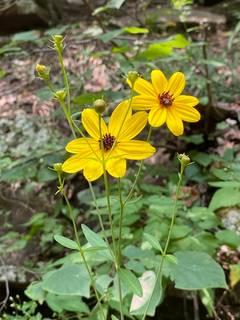
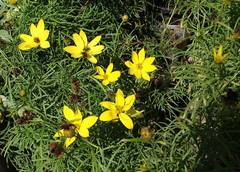
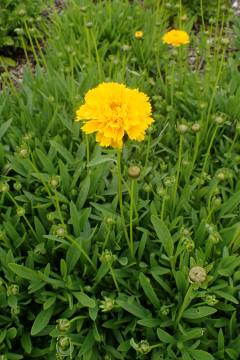
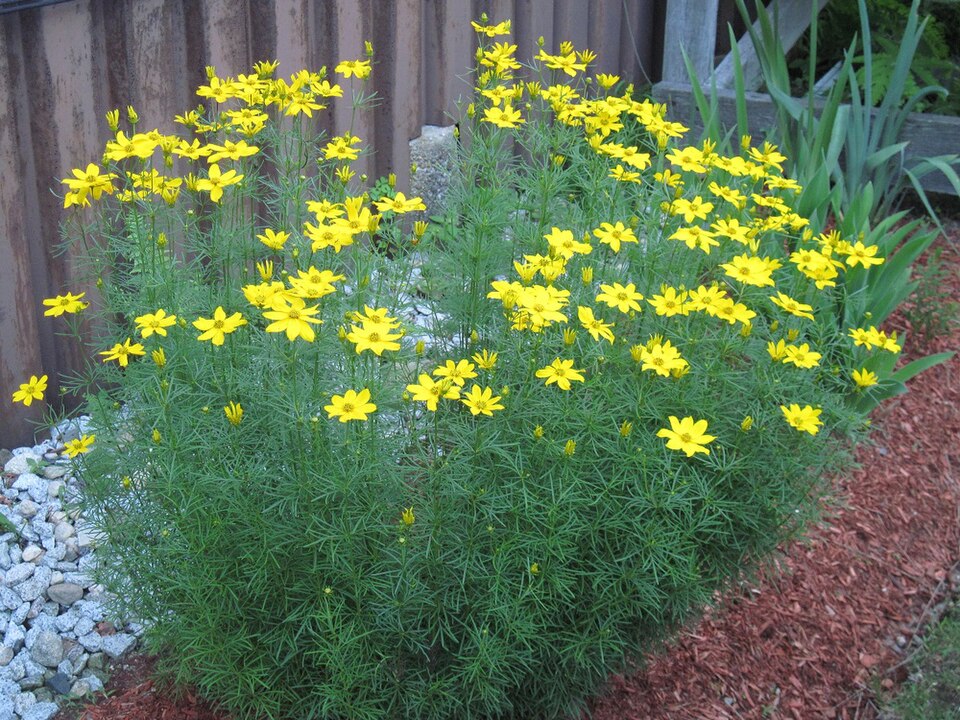
Coreopsis verticillata 'Grandiflora' is a spreading herbaceous perennial reaching 18–24 inches (45–60 cm) tall and 18–24 inches (45–60 cm) wide. The cultivar carries daisy-like bright golden-yellow flowers 2–2.5 inches (5–6 cm) across with yellow ray florets and yellow disc centers from June through September — larger than the 1.5–2 inch (4–5 cm) flowers of C. verticillata 'Zagreb'. Leaves are deeply divided into thread-like needle-thin segments and form an airy fern-like mound. The plant spreads by underground rhizomes to form a gradually expanding colony; the spread can turn aggressive in rich moist soil, while lean poor soil slows the rhizomes and produces more compact growth with heavier flowering. Growth rate is moderate to fast. Regular deadheading extends the bloom season; without it, flowering slows by late August, and a hard cutback by one-half in mid-July produces fresh foliage plus a second fall flush. The cultivar is long-lived and reliable in well-drained soil. Division every 3–4 years controls spread and maintains vigor. The species is native to eastern North America and the genus name Coreopsis comes from the Greek koris + opsis, meaning 'bedbug-like' in reference to the shape of the seeds.
Native Range
The species Coreopsis verticillata is native to eastern North America, from Maryland south to Florida and west to Arkansas, on open woodlands, prairies, and roadsides with dry sandy soil. 'Grandiflora' was selected for larger flower size.Suggested Uses
Used in borders, meadow gardens, and cottage gardens at 18–24 inch (45–60 cm) spacing. The thread-like foliage adds airy texture to mixed plantings, and mass plantings work as a groundcover on dry sites. Bright yellow flowers pair with blue and purple perennials. The cultivar grows in containers of at least 3 gallons (11 L). The rhizomatous spread fills gaps — not used in formal plantings where spread is unwanted.How to Identify
Appearance
Size & Dimensions
Height1'6" - 2'
Width/Spread1'6" - 2'
Bloom Information
Bright golden-yellow daisy-like flowers 2–2.5 inches (5–6 cm) across open from June through September on current-season growth. Continuous bloom depends on regular deadheading; without it, flowering slows by late August. Bloom duration with deadheading is 12–14 weeks. A cutback by one-half in mid-July renews the plant for a fall flush.
Detailed Descriptions
Flower Description
Bright golden-yellow, daisy-like, 2-2.5 inches (5-6 cm) across, with yellow ray florets and yellow disc centersFoliage Description
Medium green, deeply divided into thread-like needle-thin segments creating an airy fern-like textureGrowing Conditions
Sun Requirements
Requires 6-12 hours of direct sunlight daily
• Full Sun: 6+ hours of direct sunlight
• Partial Shade: 3-6 hours of direct sunlight
• Full Shade: Less than 3 hours of direct sunlight
Care & Maintenance
Care Guide
Plant in full sun (6+ hours) in average to poor, well-drained soil. Lean soil slows the rhizomatous spread and produces more compact growth; rich moist soil accelerates the spread. Drought-tolerant once established. Regular deadheading maintains continuous bloom. A cutback by one-half in mid-July renews the mound if flowering slows. Division every 3–4 years controls the expanding colony and maintains vigor. No serious pest or disease problems.Pruning
Regular deadheading runs through the bloom season. A cutback of the entire mound by one-half in mid-July produces fresh foliage and a fall flush if flowering slows. All stems are cut to the ground in late fall or early spring. Division every 3–4 years controls rhizomatous spread.Pruning Schedule
Prune: July
summer
Container Growing
Suitable for container growing
Minimum container size: 3 gallons